JAFFNA — It began as a small miracle on a long road.
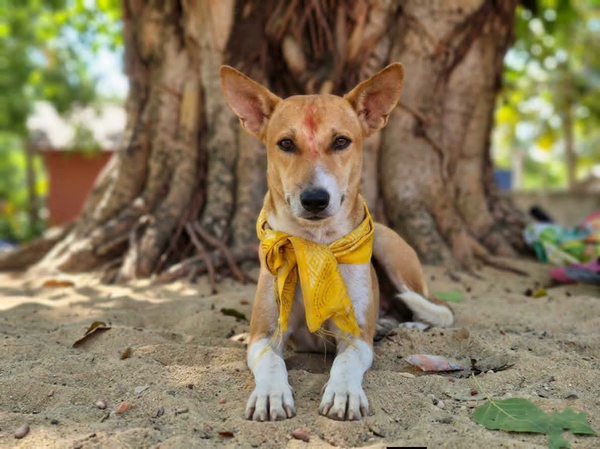
Somewhere along the Pada Yatra, the two-month foot pilgrimage that winds from the Tamil north down to the shrine of Kataragama, in Sri Lanka’s deep south, a stray dog fell in step with the devotees and simply kept walking.
Moved by the animal’s persistence, the pilgrims named him Subramani, another name for Lord Murugan, the deity to whom Kataragama is sacred. It is also the name of the puppy that Kamal Haasan and Sridevi dote on in Balu Mahendra’s 1982 classic, Moondram Pirai. The devotees marked the dog’s forehead with holy ash and watched, with growing wonder, as he walked beside them for hundreds of kilometres.
For more than a month, an animal that had survived on the street and on scraps of meat ate only what the pilgrims put in front of him: biscuits, bread, milk and rice, all vegetarian. To many, he became an emblem of faith and discipline. Carried by social media, his supposed holiness travelled far beyond the pilgrim column. Subramani became a celebrity.
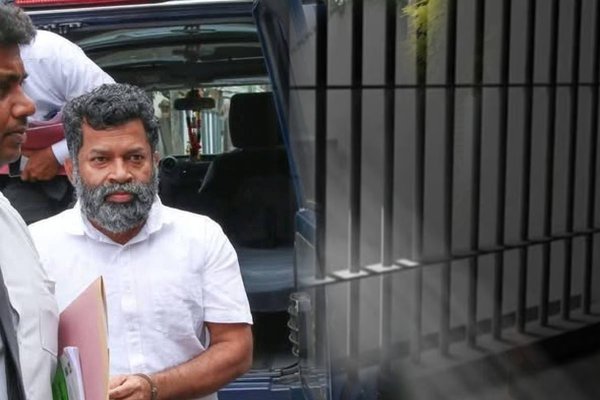
Then, in Kalmunai, a young Muslim man kicked him, for reasons known only to himself.
The act, filmed and shared online, turned a beloved animal into a communal fault line. A section of Tamil Saiva social media erupted. Muslims widely condemned the assault, and the suspect — later arrested and released on bail — apologised. But extremists on both sides seized the moment, and a story about kindness to a stray curdled into something older and more dangerous.
One abusive comment aimed at a Hindu sacred symbol drew a response far more dangerous: an insult against the Prophet Muhammad. The man who posted it, a Sri Lankan Tamil named Anojan who works in Saudi Arabia, was arrested by the Saudi police and is now reportedly under interrogation.
In Saudi Arabia, insulting Islam or the Prophet can carry grave consequences. Online offences may be prosecuted under the kingdom’s cybercrime law, which tends to produce prison terms and heavy fines. Blasphemy and apostasy, however, fall under a religious legal framework that can be treated far more harshly.
The kingdom has no codified penal code; judges rule according to their own interpretation of Sharia, and outcomes are notoriously unpredictable. Rights monitors and the U.S. State Department note that blasphemy can in principle carry the death penalty, though no such sentence for speech alone has been carried out in recent years.
Across Sri Lanka’s Muslim community, many have called for mercy. Some argued that if the Prophet were alive today, he would have forgiven the offence. Others, from a harsher fringe, demanded severe punishment in the name of Sharia.
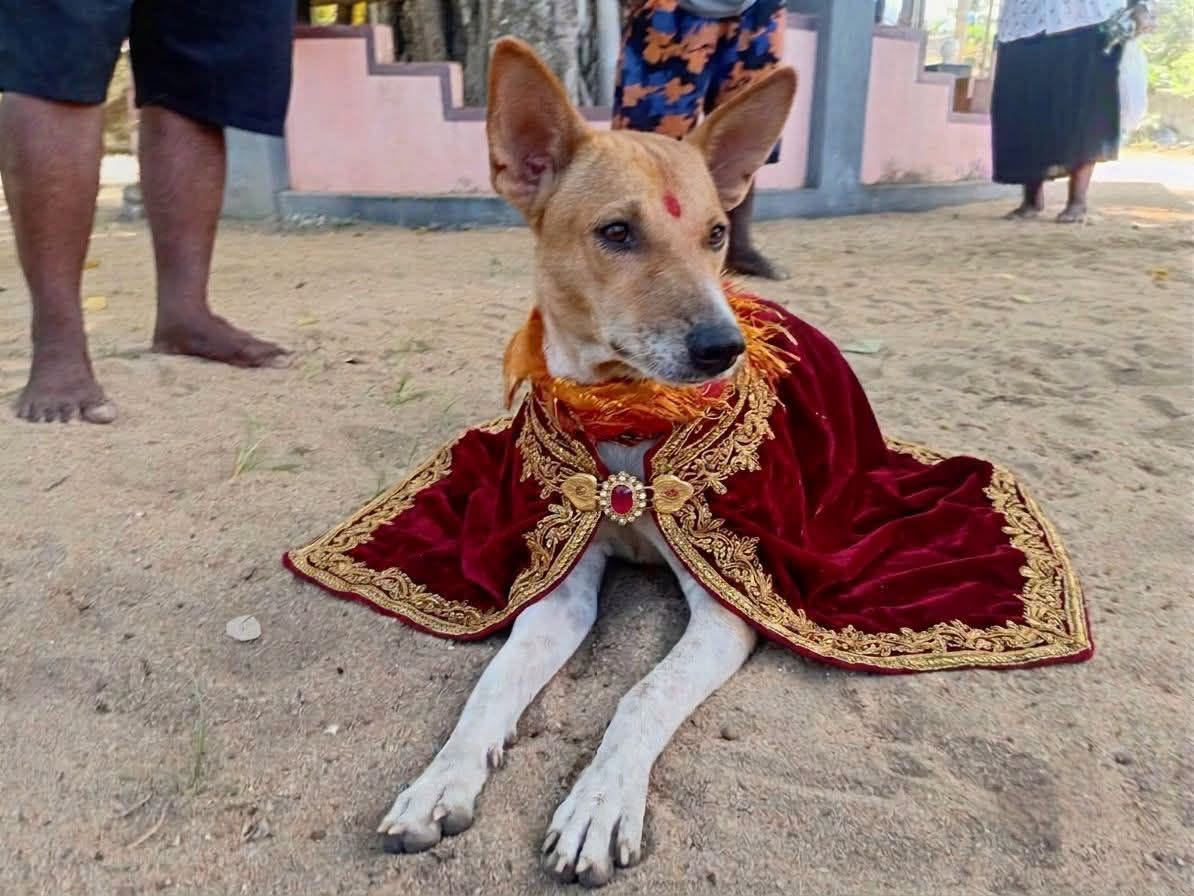
Subramani, meanwhile, keeps making headlines. Officials of the Department of Wildlife Conservation have appealed to the public to stop feeding him sugary yoghurt and milk, warning that the constant offerings appear to have pushed up his blood sugar, and have asked well-wishers not to lift or kiss him.
They have also ruled that the dog will not be allowed to walk the final forest stretch, which begins at the Okanda Murugan Temple, where pilgrims enter dense jungle, because of the risk of leopard attacks. Instead, wildlife officials will take Subramani through the same forest route by vehicle, before reuniting him with the pilgrims at the far end of the jungle so that the little pilgrim can complete the final leg of his journey to Kataragama alongside the devotees.