By M.R. Narayan Swamy
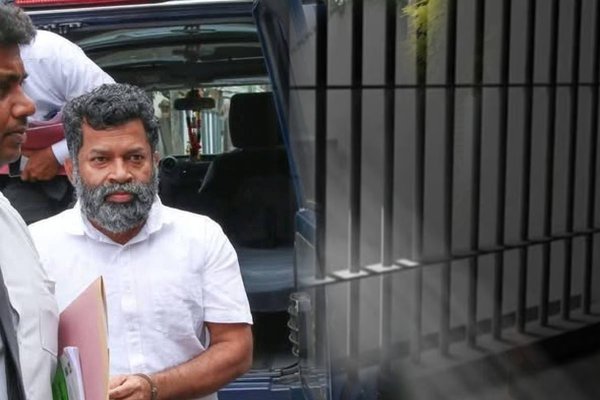
COLOMBO, Sri Lanka – Former Sri Lankan intelligence chief Suresh Sallay has finally ended three weeks of hunger strike, but his legal quagmire seems to be worsening.
Just when it seemed that public opinion was swaying towards Sallay, detained on charges of orchestrating the bloody 2019 Easter bombings, the judiciary has dealt multiple blows at a man who once headed the country’s feared security apparatus.
His family and admirers admit it is going to be a long – and tough – road ahead for the former Director of the State Intelligence Service (SIS), who was arrested in February.
On Wednesday, the Colombo Fort Magistrate’s Court ordered Sallay to provide the passwords to his mobile phone and laptop to the Central Investigation Department (CID) to facilitate further investigation.
This is something the former spymaster had been stalling for more reasons than one.
Magistrate Pasan Amarasena also rejected a plea to remove CID Director Shani Abeysekara – who Sallay feels is responsible for his physical and psychological torture in CID custody – from the ongoing investigation.
Sallay’s plea to be provided with writing materials and his request to make a confidential statement were also turned down.
The court ruling – a rude jolt to Sallay – came hours after his lawyer announced that the ex-SIS Director had agreed to give up his indefinite fast, which he began on the night of June 5 in protest against his alleged degrading treatment in custody.
Two days later, as his health condition deteriorated, he was shifted to the Colombo National Hospital, where he later developed complications of the heart.
Sallay’s wife, Manori, told Jaffna Monitor that the decision to end the hunger strike was taken as doctors felt that would be the best course for him from the medical point of view.
“Dehydration was aggravating the heart problem,” she said. “Accordingly, he ended the fast before the court hearing.”
In no time, doctors allowed Sallay to drink water orally, though he found it difficult to swallow.
The family supplied yoghurt to the hospital on Wednesday night as part of a slow return to normal food intake
The doctors are expected to start administering him semi-solid food to begin with, before switching to solid food. This is expected to be a gradual process.
But the court ruling could mean that with his fast ended, Sallay may be shifted back to the CID detention, which Sallay had earlier said he won’t accept again after calling it a “hell hole”.
A close friend of Sallay called the court ruling “a real blow”.
“This is very, very annoying,” the source said. “It looks like he won’t get any reading or writing material in custody.
“And if he is suddenly sent back to CID custody, it will only add to his health issues as it will take him time to get used to normal food.”
One of the major complaints Sallay made while in CID detention was that the food provided to him was, at times, rotten, and that even rice and curry were given to him on paper, not in a plate.
The next court hearing has been scheduled for September 2. Since the second 90-day period of CID custody will end on August 27, it is feared that his custody will be extended by another 90 days.
“All this is very distressing,” said a family friend who did not want to be quoted by name.
Sallay’s wife, Manori, said she was extremely worried about the impact her husband’s prolonged detention was having on their two children – a boy and a girl.
“Obviously, they are upset, and this is affecting their studies,” she said. “The court case we can fight, but what do I do about the children’s suffering?”
Another family source said Sallay’s lawyer convinced him that he needed to end the fast because he needed energy to fight a long battle against custodial torture and the Prevention of Terrorism Act (PTA).
Sallay has been arrested under the draconian PTA, which was first enacted in 1979 and which successive governments have refused to repeal despite criticism within Sri Lanka and abroad that it has been misused to target government critics, particularly those from the Tamil and Muslim minorities.
Decades of criticism by Tamils about the harsh PTA was generally dismissed by most Sinhalese as unwanted criticism. But the mood has changed among sections of Sinhalese-Buddhist hardliners since Sallay’s own arrest.
On his part, Sallay has repeatedly denied allegations that he was in any way linked to the April 2019 Easter bombings blamed on Islamists, which killed over 260 people and wounded hundreds.
It was the worst terror attack in Sri Lanka since the military crushed the Tamil Tigers in 2009.
The case against Sallay relies primarily on the claim by a Sri Lankan Muslim who alleged, after fleeing to Europe, that he arranged a meeting between Sallay and the Islamists.
The Muslim, widely known as Azad Maulana, quoted Sallay has telling him that Sri Lanka needed to be destabilized so as to bring back to power Gotabaya Rajapakasa, who, as Defence Secretary, oversaw the war against the Tamil Tigers.
Many who knew Azad Maulana have debunked his claim, saying it was made to seek political asylum in Europe. Maulana has refused to return to Sri Lanka.
Sri Lankan ministers have told Parliament that they have enough evidence to act against Sallay, but have produced no proof in any court.
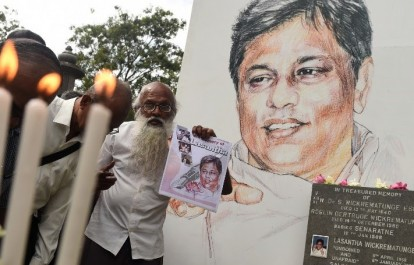
Recently, however, President Anura Dissanayake said that security forces were indeed involved in the Easter bloodbath as well as in the killing of a former newspaper editor and the savage attacks on two other journalists who then fled Sri Lanka.
Authorities have since put a travel ban on former President Gotabaya Rajapaksa, too. A similar travel ban was placed on Sallay before he was taken into custody.