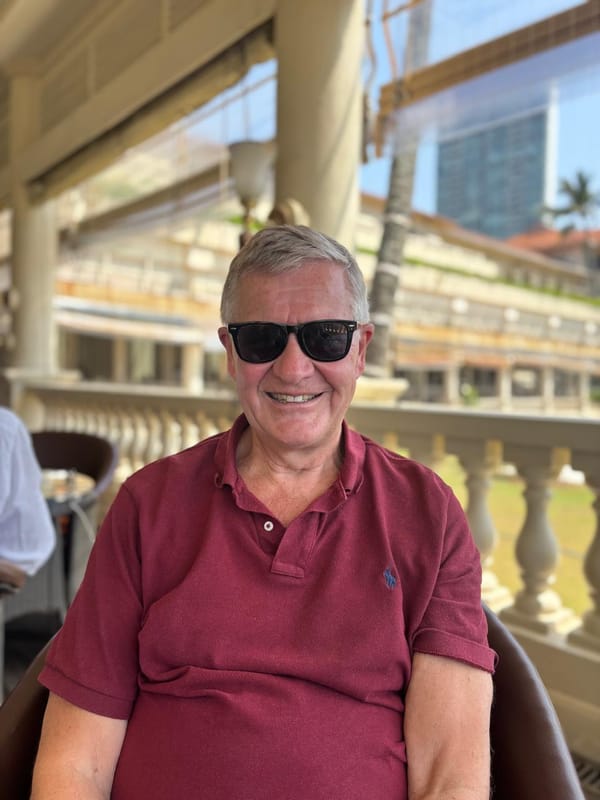
For a generation of Sri Lankans who came of age during the ceasefire years, the name Erik Solheim was never far from the headlines. As Norway’s chief peace facilitator in Sri Lanka’s conflict, he was a constant presence.
For me personally, his name was woven into my teenage years. He was on the news almost daily — praised by some, vilified by others — yet always central to the unfolding drama of a country at war and searching, however briefly, for peace.
Today, Solheim is known globally as an environmental advocate and international statesman. He served as Executive Director of the United Nations Environment Programme and as a United Nations Under-Secretary-General, and continues to engage in climate diplomacy and green development initiatives across Asia and beyond.
In this exclusive interview with Jaffna Monitor, Solheim speaks with unusual candour about the eccentricities of Donald Trump, the shifting balance of global power, China and India’s leadership in green energy, the final months of Sri Lanka’s war, and the rescue plan he says would have saved thousands of lives — including that of Prabhakaran himself.
It sometimes appears that you are in a confrontational mode with U.S. President Donald Trump. You criticise him quite strongly. What prompts this reaction?
In your view, which specific policies or approaches of the Trump administration do you consider potentially destabilising to the existing international order? And why do you feel so strongly about this?
I am not angry with Trump. I am simply analysing what he is doing. In fact, I have even given him credit for trying to push for peace in Gaza and in Ukraine.
However, what we are witnessing now is the decline of American power. For nearly 100 years, the United States was, without comparison, the most powerful nation in the world. It intervened across the globe — in Vietnam, Iraq, Latin America, Afghanistan, and many other places. In many cases, those interventions failed, but the United States remained enormously powerful.
At one point, it accounted for close to half of the world’s economy. Today, however, we are seeing a major shift in global power from the United States toward Asia — particularly toward China, but also India. China may not yet be a military power on the scale of the United States, but it is an economic power.
So what we are seeing is a profound shift in global power away from the United States, and the United States itself is partly responsible for this. History shows that declining powers are often dangerous. The United Kingdom, when it was in decline, made serious mistakes in many parts of the world.
The United States is still very powerful, and it can remain one of the leading nations in the world — but it will no longer be the single supreme power in the global system.
In your understanding, why is Trump interested in Greenland?
I think he has made two arguments, and neither of them makes much sense. His first argument is that Greenland is important for American security. But there is not a single military facility that the United States has proposed to establish in Greenland that has been rejected. Greenland is part of NATO and has accepted the overall U.S. security framework. In fact, over time, the United States has reduced its military presence there because Greenland was no longer considered strategically crucial in that sense.
He also claims that there is significant Chinese and Russian activity in Greenland. But there is no Chinese activity there. Greenland would probably be around number one hundred on Beijing’s list of priorities. It is extremely remote, has very few people, and is essentially a large block of ice. It is not the core infrastructure for China. So the military argument does not make sense. If the United States wanted to establish a base in Greenland, it would most likely receive approval.
Secondly, he argues that Greenland has many natural resources. That is true. But the main reason they are not exploited is that extraction is extremely expensive due to the ice and harsh conditions. If it were easy, American companies would already be operating there.
In fact, that is exactly what Greenland wants. The people of Greenland want independence from Denmark, but they need an economic base for that independence. Nothing would help them more than American companies investing there on commercial terms.
So none of these arguments really make sense.
I therefore believe this comes down to the ego of Mr. Trump. He wants to add a huge piece of land to the United States. This would be the largest expansion of U.S. territory — even larger than the Louisiana Purchase of 1803 or the Alaska Purchase of 1867.
Because none of the arguments he makes are convincing, this seems to be driven primarily by personal vanity.
In your view, why does Donald Trump often appear to behave in an irrational manner?
You must understand Mr. Trump. He is not a politician in the same way as, for example, Prime Minister Modi or President Xi Jinping. They are predictable figures. You can usually predict how Prime Minister Modi will act because he follows a clear strategy — strengthening India and promoting a Hindu-nationalist vision. Over time, his policies have been consistent.
Trump is different. He is not really a politician; he behaves more like a king. He acts on impulse and instinct. He may do something for you today and something entirely different tomorrow, even if the two actions contradict each other.
He has no long-term strategy for strengthening the United States. He resembles an old emperor of China, a Roman ruler, or perhaps a king from ancient Sri Lanka — someone who acts to flatter his own ego rather than to serve the interests of the country.
For example, Trump wants Dallas Airport to be named after him. Would he then also want to rename the Kennedy Center in Washington after himself? These are not normal actions in a democracy. JFK Airport in New York was named after John F. Kennedy only after his death, not while he was still president.
This is about ego, not foreign policy. The one enemy he really wants to defeat is the Democratic Party of the United States — what he calls the “woke, green, liberal elite in Washington.” That is his main target.
That is also why he dislikes Europe. In recent years, most European politicians have supported the U.S. Democrats. So when he fights the European liberal elite, he is also fighting the American liberal elite.
So in a way, because of Trump, do you think there is an emergence of Europe as a more independent power, no longer aligned unquestioningly with the United States?
Yes. When Trump first came to power, Europe’s response was frankly shameful. European leaders flattered him constantly — 365 days a year. This was very different from how China, India, Brazil, or South Africa behaved. They did not flatter him.
European leaders went to the White House, where Trump sat at the main table while they sat in front of him like students. They sent him gifts. NATO Secretary General Mark Rutte even called Trump “daddy,” meaning the person everyone should listen to.
It was absolutely shameful. And it achieved nothing. When you flatter someone excessively, you receive only contempt and scorn in return.
When Trump imposed tariffs on Europe, Europe responded politely. When he imposed bans on European politicians and civil society groups, there was no serious response. When Trump showed open disdain for Europe in his national security strategy, no one pushed back.
There was no resistance — only flattery.
I think the breaking point came later. Europe realised that flattery brings nothing in return. So Europe will now straighten its back and stand up.
China pushed back against Trump and gained respect. India pushed back against Trump and gained respect. If you do not respect yourself, no one else will respect you.
Interestingly, the person who really led this shift was not a European politician, but the Canadian Prime Minister, Mark Carney. He said what many Europeans felt but were afraid to say. He urged “middle powers” to act together, famously stating, “If we’re not at the table, we’re on the menu.”
After that speech, Trump called Canada “ungrateful,” and Carney replied: “Canada doesn’t live because of the United States. Canada thrives because we are Canadian.”
After that, there was no way back to flattering Trump. And I see this clearly in my own country as well. The way our Prime Minister speaks about Trump now is very different from how he spoke before. It is much more critical.
So what do you think Europe should do now?
Europe should tell the world: “We are the largest economy in the world. We are a proud civilisation, rooted in the Roman Empire and in a long Christian and humanist tradition. We brought peace between historic enemies such as France and Germany. And we have among the highest living standards in the world.”
China may be more modern in some ways, but in terms of living standards, people in countries like Germany or France probably enjoy some of the highest levels in the world.
So Europe has much to be proud of — and it should say so.
On that basis, Europe can respect others, but it must also demand respect from others. That is how Europe should move forward, rather than flattering Trump and behaving like a subordinate.
You seem to admire China to a large extent. Could you explain why you admire it so much?
No country in human history has lifted so many people out of poverty in such a short period of time as China.
I first visited China in 1984. At that time, there were no skyscrapers, no private cars, and no metro systems. Travel between major cities was difficult, and people wore very plain clothes. Their diet consisted mainly of rice and noodles.
China was poor then — not unlike many African countries at the time. Today, China is on the verge of becoming a high-income country.
Chinese cities are among the most modern in the world. They have some of the best airports, roads, railways, and metro systems, and they dominate many global industries. China is also one of the most innovative places in the world.
A recent study by the Australia Institute found that China leads in 57 out of the 64 most important technologies globally. There are some areas where the United States may still be ahead — such as vaccine development during COVID, aircraft manufacturing, and possibly artificial intelligence — but even that is no longer clear.
This represents a complete transformation. Ten years ago, China was also heavily polluted. We could not go running in Beijing because the air was unsafe. Today, I run there happily. The air is much cleaner, the sky is blue again, and the environment has improved dramatically.
No country has achieved an economic miracle so fast, and no country has cleaned up its air, soil, and water so quickly. China is now leading in green technologies such as electric vehicles and solar power.
How was China able to achieve this in such a short period of time?
I think there are three main reasons.
First, political leadership. Leaders such as President Xi Jinping — like Prime Minister Modi in India — have consistently driven the country in a green and development-oriented direction. They visit solar factories, electric vehicle plants, and national parks to send a clear message about environmental priorities.
Second, China has a political system that is more efficient and less bureaucratic. It is much easier to get permits for projects like solar farms. In Europe, this can take years; in China, it takes far less time.
For example, in 2008 both China and the United States decided to build high-speed rail networks. Since then, China has built over 50,000 kilometres of high-speed rail — roughly the distance from Paris to Beijing and back three times. The United States has built almost none.
This is because the Chinese political system is very efficient domestically, while the American system is far more complicated.
Third, China benefits from its enormous domestic market. The country stretches from extremely cold regions near Russia to tropical regions near Vietnam, yet it is one unified market of 1.4 billion people. If a company succeeds in such a competitive market, it becomes highly competitive globally.
That is why Chinese firms now produce around 90 per cent of the world’s solar panels. Leadership, an efficient state structure, and a massive market — these are the three key factors.
China today has little to do with classical communism. You rarely hear people speak about Marx or Lenin. Instead, they speak of Confucius and the ancient Chinese empires. In reality, it resembles more a Confucian system than a communist one.
But if someone says China is flourishing economically but is not a democracy, how would you respond?
That is true. It is an authoritarian system. I would describe it as a neo-Confucian system.
Confucius was a political thinker who emphasised harmony and responsibility toward the common good, within a hierarchical social order. In that sense, China remains a Confucian society.
This political system cannot be copied by others. The only country with a somewhat similar system is Vietnam, which is also influenced by Confucian traditions.
The United States will never be China, and China will never be the United States. Both systems have strengths and weaknesses. I see both advantages and disadvantages in the Chinese system, just as I do in the European and American systems.
If someone says you are supporting an authoritarian system more than democracy, what would you say?
If you ask whether Sri Lanka should copy the Chinese system, my answer is clearly no. If you ask whether Germany should copy it, also no.
China has never demanded that other countries copy its political model. It only asks for respect for its own system.
This reflects Eastern political and religious traditions, which are not missionary in nature. Hinduism, for example, does not seek to convert others. No Indian has ever asked me to become Hindu, even though I wear a sacred thread on my hand from Ujjain, where the concept of zero was developed.
Confucianism and Hindu Dharma do not demand that everyone else follow their model. By contrast, Christianity and Islam have missionary traditions and often seek to convert others.
China wants to develop as a modern nation rooted in Confucian values, and India wants to develop as a modern nation rooted in Hindu traditions. The West, however, believed its political system, technology, and religion should be spread universally.
Even my grandmother believed that everyone in the world would be happier if they became Christian, and she donated her savings to missionary causes. That is a very different worldview from that of China or India.
Sri Lanka also has a rich Buddhist heritage, and Buddhism and Confucianism teach similar values. Why do you think the Chinese system cannot be applied in Sri Lanka?
China is unique in the world. It has had a centralised state for about 2,500 years, with only brief periods of fragmentation. It has traditionally been a merit-based system, where people could rise through ability rather than noble birth.
China therefore has a political system that no other country can copy, even if it wanted to.
The system has clear advantages: it is extremely efficient and can mobilise resources in a way few others can. It can dominate emerging industries and implement long-term plans.
But the downside is also serious. When the system goes wrong, the consequences are catastrophic. Events like the Great Leap Forward and the Cultural Revolution led to the deaths of millions of people.
Because power is so concentrated at the top, there are very few mechanisms to correct major mistakes.
If you compare this with India, a vast and diverse democracy, state governments have significant autonomy. Even if there is disagreement at the centre, the system continues to function.
In China, if you are a provincial party secretary, you remain tightly controlled by the central leadership. This makes the system more efficient, but also more dangerous when poor decisions are made at the top.
What Sri Lanka can learn from China is its approach to planning and political leadership. For example, China has just introduced a new five-year plan. Its priorities include the green economy, renewable energy, artificial intelligence, and the digital economy.
Sri Lanka could learn a great deal from this by placing strong emphasis on green growth and the digital economy.
I would also point to another country that Sri Lanka could learn from: Vietnam. Vietnam is probably one of the fastest-growing economies in the world today. It has been remarkably successful in agriculture, transforming itself from one of the world’s largest rice importers into the second-largest rice exporter. It is now also the second-largest coffee producer after Brazil, despite having no traditional coffee culture.
Vietnam’s education system also performs very well. A 15-year-old student in Vietnam often performs better in international tests than students in Europe or the United States, and sometimes even better than those in Singapore.
Vietnam is a small, non-threatening country and could be a good source of inspiration for Sri Lanka. Its economic growth is currently around 8 per cent, which is quite remarkable.
Sri Lanka has witnessed, for the first time in its modern history, the rise of a left-wing government. How do you see this change?
I think this was a necessary change.
For far too long, Sri Lanka was dominated by politicians from Colombo 7, often from politically affluent families. To have a president whose father was a manual labourer in Anuradhapura is a huge and positive change. That in itself is a great achievement.
Prime Minister Modi in India also comes from a very modest background. Likewise, the United States has had presidents who came from very humble beginnings. The best Prime Minister we ever had in Norway, Einar Gerhardsen, was a road worker.
So this shift away from elite political dynasties is, I think, absolutely necessary. However, it also comes with very little experience in governing. Hardly any of the ministers have run government institutions or large enterprises before. They may have been university professors or worked in NGOs, but very few of them have managed big businesses or state organisations. So they are quite inexperienced.
From an outside perspective, the JVP or the NPP has so far made no major mistakes and no seriously harmful decisions. On the other hand, they have also not yet managed to deliver rapid economic development or strong poverty alleviation, apart from taking tough action against corruption, which was their main promise to voters.
I think the President and the Prime Minister are personally quite popular. That is my impression. We see a low-key style of leadership, and the fact that they were not born with silver spoons in their mouths appeals to many people.
Sri Lankan politics has long been shaped by dynasties. You see this in India as well. One reason the BJP is popular there is that it is not a dynastic party. By contrast, the Congress Party is now in its fifth generation of the same family, and many regional parties are also dynastic in nature.
You said the NPP government has so far not made any major mistakes. How do you view the way it handled Cyclone Ditwa? Some even described it as a “second Easter attack,” claiming that the government ignored warnings and failed to mitigate the impact.
I do not know the details of the decision-making process in that case. But clearly, many more people died during Cyclone Ditwa than should have been necessary.
Sri Lanka was somewhat unprepared. In modern times, weather forecasts usually give a fairly clear warning, and authorities should be able to evacuate people from the most dangerous areas using buses and other means. So there should have been better preparedness.
However, I would not place all the blame only on the current political leaders. Responsibility also lies with past governments that failed to strengthen the civil service and disaster-preparedness systems.
The most important lesson for Sri Lanka is that there will be more extreme weather events in the future. This will not be the last such disaster. Sri Lanka lies in a tropical zone where weather is becoming more unpredictable and severe due to climate change.
When a cyclone hit the Indian state of Odisha a few years ago, only about ten people died because the Chief Minister prepared very well and evacuated people in advance. You cannot prevent damage to houses, but in modern times you can save lives.
So the death of around 600 people in Sri Lanka after Cyclone Ditwa is a very high number and should have been avoided.
You are an advocate of green energy. Don’t you think it is strange that Sri Lanka continues to burn coal to generate electricity, yet people protest against windmills? In Mannar, for example, there were large protests against wind farms, but many of the same people seem to have no objection to coal-fired power.
I think everyone should understand that the age of coal is coming to an end.
Coal is becoming obsolete. Solar and wind energy are now much cheaper than coal. In fact, for the first time in human history, last year the world produced more electricity from wind and solar than from coal.
Also for the first time, coal production declined both in China and in India. Sri Lanka should definitely move in this direction. If the country invests seriously in solar and wind energy, it can move much faster than it is doing now.
Of course, there are protests against wind farms everywhere in the world. You cannot place wind farms just anywhere, just as you cannot place solar farms everywhere. The process must be careful and sensitive to local communities.
Sri Lanka, as an island nation, is particularly well suited for wind power. The sea area between India and Sri Lanka is especially suitable because it is very shallow. Wind turbines can be anchored to the seabed with minimal impact.
The impact on fisheries and birds can also be kept very limited. In Norway, offshore wind is much more difficult because the sea is extremely deep. But between India and Sri Lanka, there was even a land bridge in ancient times, which shows how shallow the waters are. This makes the region very suitable for offshore wind farms.
So how can a responsible government convince people that wind farms are not harmful? What should it do?
There are two main ways.
First, there must be dialogue. I visited Mannar a few years ago, and many fears about wind farms were based on misunderstandings. For example, fishermen believe that wind farms will destroy fisheries. I do not believe that wind farms destroy fisheries.
But the government must engage in discussion, explain the science, and perhaps even take a group of fishermen to countries where offshore wind farms already exist, so they can see for themselves that fishing continues there without harm.
Second, local communities must benefit directly. Part of the revenue from wind farms should remain in the local area. This could help improve schools, healthcare, roads, or services for the elderly. There could even be direct financial benefits for local communities.
If people see real benefits in their daily lives, they are much more likely to support such projects.
Do you think there is any hidden agenda behind opposition to windmill projects in Sri Lanka? Some suspect that there may be an “NGO mafia” behind it.
I do not believe there is any NGO mafia. But NGOs, like politicians and businesses, have their own incentives.
Political leaders seek votes, businesses seek profits, and NGOs seek media attention. Media attention is usually attracted by conflict and criticism, not by praise.
If an NGO says, “President A.K.D. is doing an excellent job and has made all the right decisions,” it will receive almost no media attention. But if it mobilises people to protest and criticise the government, it will get headlines.
So I do not think this is malicious, but there is a built-in tendency for NGOs to focus on negative issues because that is what attracts public attention.
How is India performing in the green energy sector?
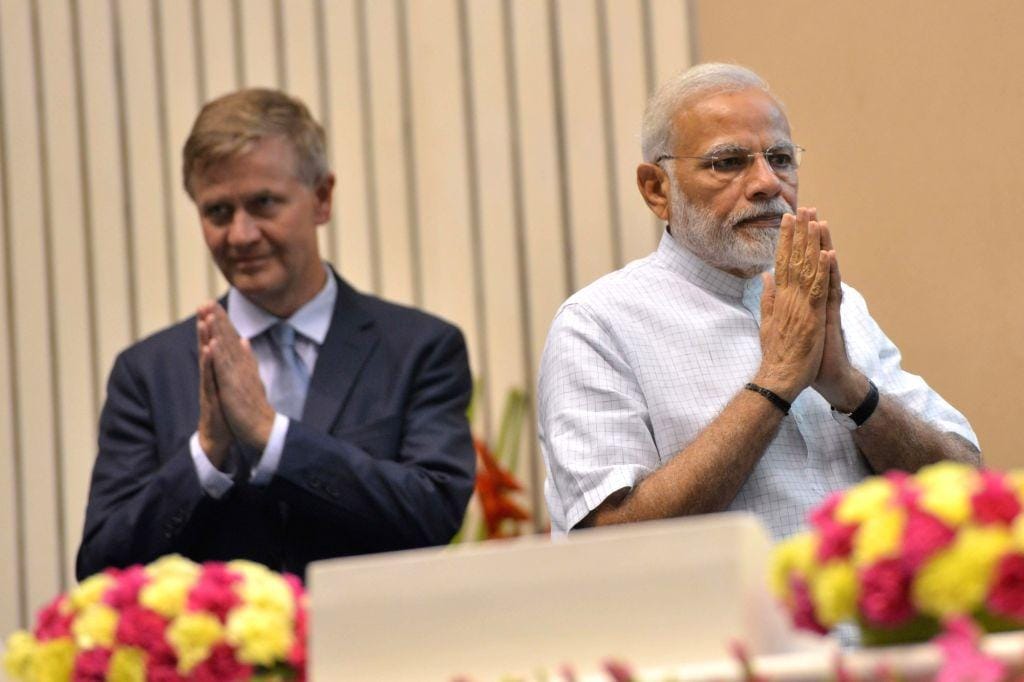
India is doing very well. Last year alone, India added about 40 gigawatts of renewable energy capacity.
For example, in the state of Andhra Pradesh, an Indian company has built the world’s first fully integrated renewable energy project combining solar, wind, and hydropower. During the day, solar power is used to pump water from one reservoir to another, and at night the water is released to generate electricity. This allows energy to be produced 24 hours a day, all year round.
This is the largest such project in the world. Only China has something comparable. There is nothing of this scale in the United States or Europe.
Similar projects are now being developed in Karnataka, Madhya Pradesh, and other parts of India.
India is today the world’s third-largest producer of solar and wind energy, but I am confident it will surpass the United States and take the second spot.
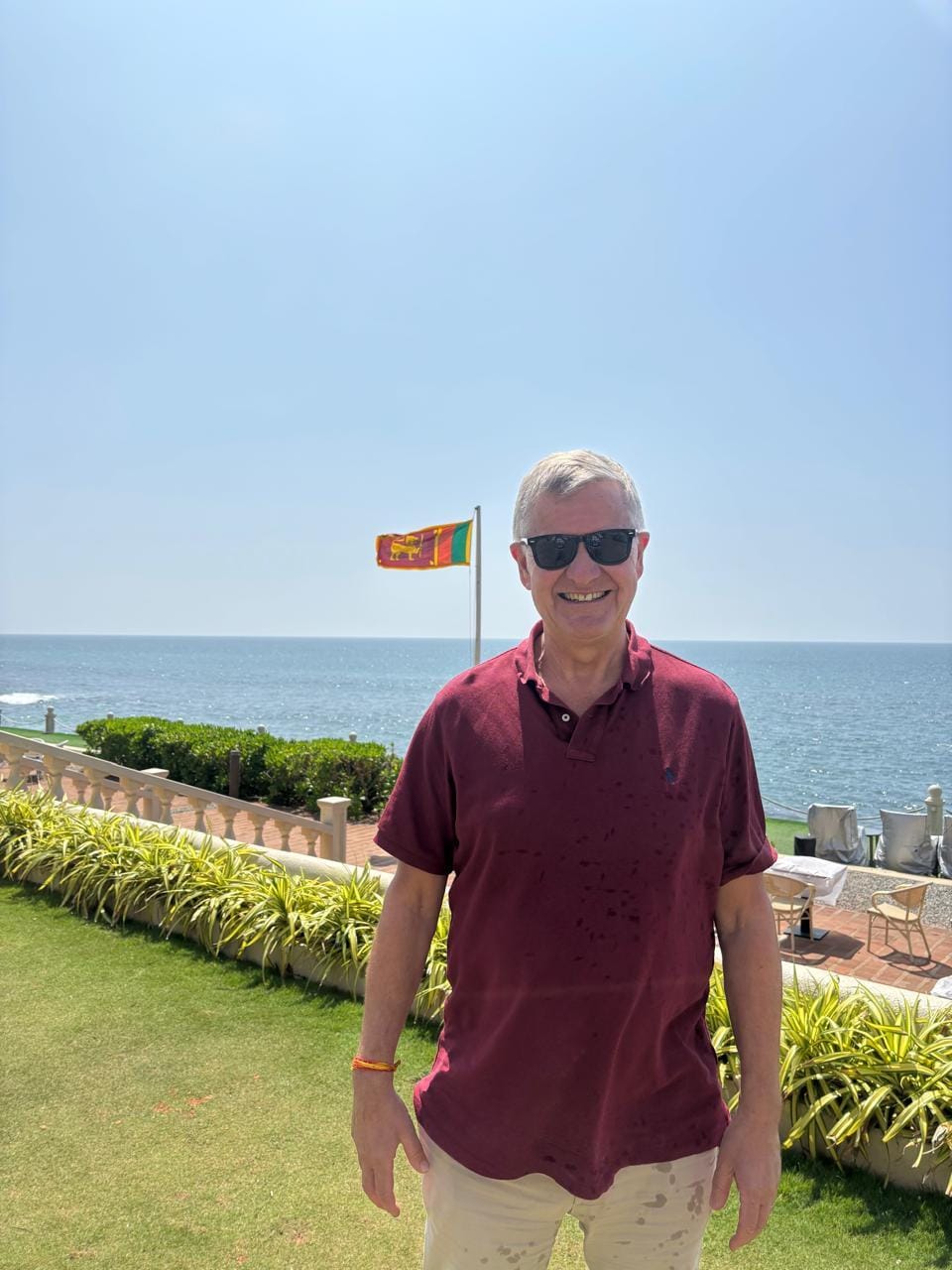
You are back in Sri Lanka after two and a half years. Sri Lanka was an important part of your life. How do you feel about being back?
I always feel very good when I am in Sri Lanka because it is such a beautiful country. It is surely one of the most beautiful islands in the world.
I also meet so many wonderful people whom I am happy to spend time with. So I truly like Sri Lanka. What is absolutely unique about Sri Lanka is that within just a few hours’ drive, you can experience the most beautiful beaches, remarkable historical sites such as the Temple of the Tooth in Kandy, and some of the finest national parks in the world.
It is like a concentrated monument to God’s creation, something you hardly find anywhere else.
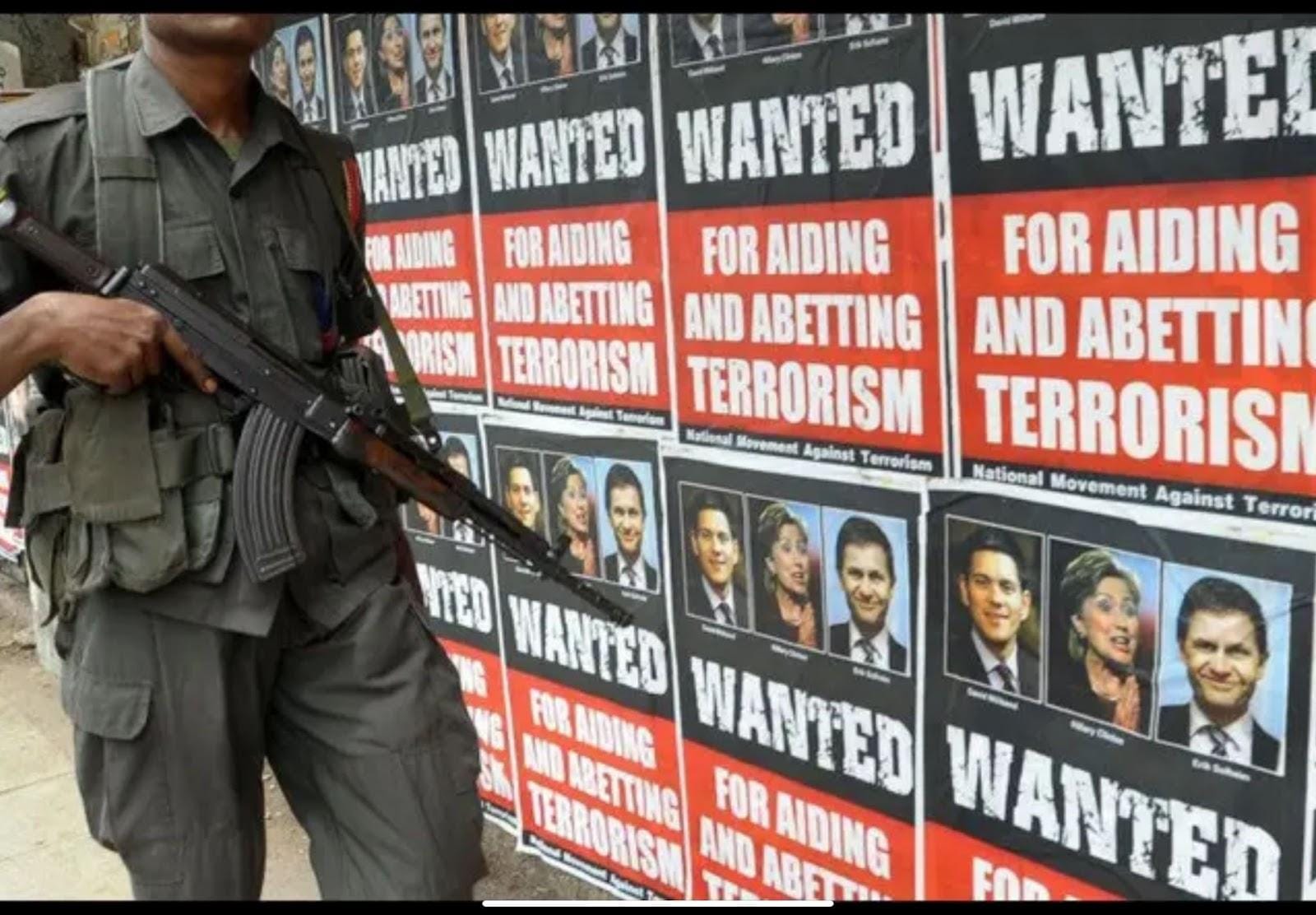
You are criticised from both sides. Hardcore LTTE supporters accuse you and Norway of being responsible for the defeat of the LTTE. At the same time, Sinhala nationalists accuse you and Norway of being too sympathetic towards the LTTE. How do you respond to these accusations?
Look, if you cannot accept this kind of criticism, then you should not take on the role of a mediator in a conflict.
If there were someone who could act as a mediator and be praised by everyone, I would very much like to meet that person.
What is interesting is that during the peace process, the strongest criticism came from Sinhala nationalists. Now, the harshest criticism comes from LTTE remnants who claim that we were responsible for the destruction of the LTTE.
That is, of course, completely wrong.
We had no power to decide the outcome. Mr. Prabhakaran made all the key decisions. If they want to understand why the LTTE was defeated, they should look at the decisions taken by Mr. Prabhakaran himself, not blame us.
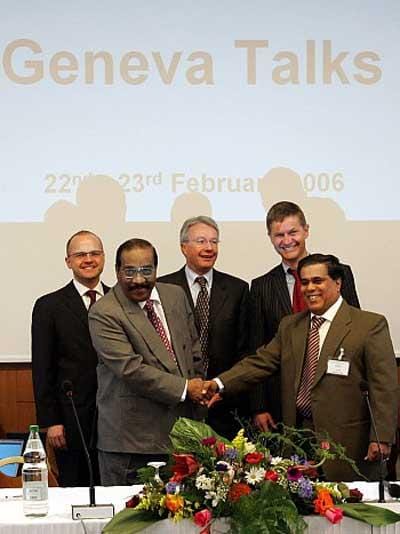
In hindsight, would you recommend foreign facilitation for countries in conflict? Or do you believe they should try to resolve their problems on their own?
I think there are very few examples of conflicts being resolved without some form of mediation.
That mediation does not always have to be foreign; sometimes it can be domestic. But you usually need a third party, because it is extremely difficult for two sides that have been at war or in deep conflict to simply sit down and resolve their issues by themselves.
Of course, there are some examples in history where this has happened, but they are rare.
That is why, in almost every modern conflict, there are always efforts at negotiation. You see this in Ukraine, in Gaza, in Sudan, and in Congo — you see it everywhere.
Some form of third-party assistance is usually necessary to help bring the sides together and move the process forward.
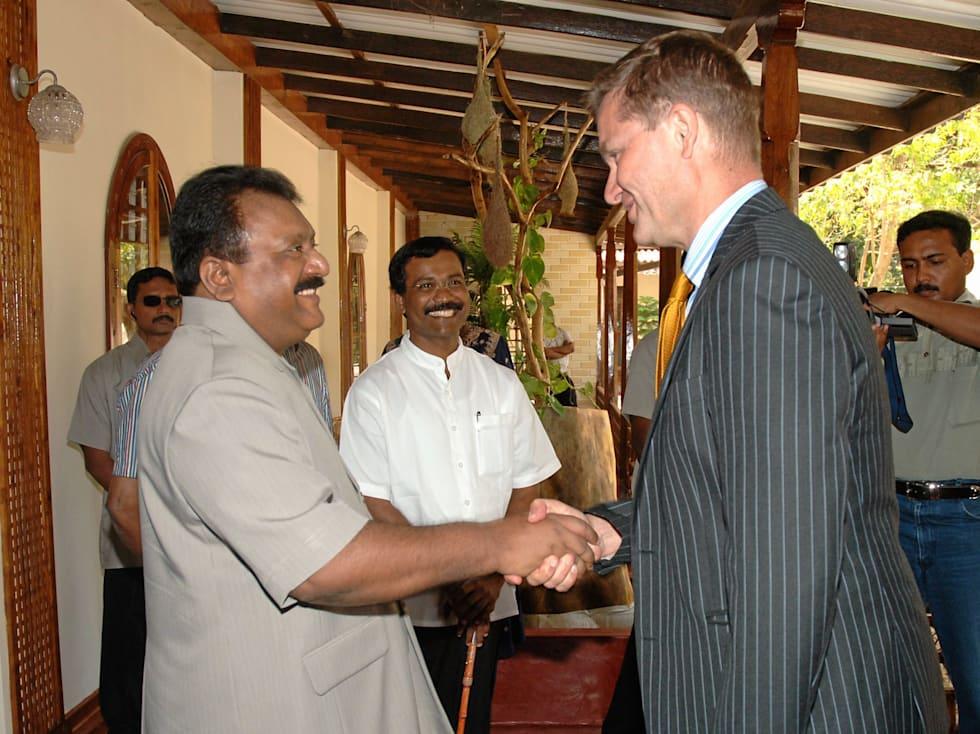
You are the only foreigner who has met Prabhakaran many times. Did you study his psychology and personality?
Of course, the best guide to Prabhakaran’s psychology was Mr. Anton Balasingam.
Balasingam and Prabhakaran had worked closely together for nearly 30 years. He was constantly in and out of meetings with him, and Balasingam explained Prabhakaran’s thinking and psychology to us.
Balasingham used to say that, at his core, Prabhakaran was a warlord — someone who tended to focus on military solutions rather than broader political ones. Prabhakaran too often believed that if someone opposed him, the response was elimination rather than dialogue or negotiation.
Balasingam also told me about Prabhakaran’s softer side. He had three children and a wife, and he was deeply attached to his close family. He enjoyed cooking and loved seafood. He also liked watching movies. Sometimes we brought films for him to watch — in those days, on video cassettes, as this was before digital media.
These were small gestures meant to create a better atmosphere for discussion.
I believe one of the major mistakes of the peace process was that there should have been much more direct dialogue with Prabhakaran himself. The LTTE was not a council; it was essentially a one-man organisation. In the end, all major decisions were made by him alone. Without his approval, nothing could happen.
We should also have involved many more foreign dignitaries. As far as I know, Prabhakaran never met a Sinhalese. He met only a handful of Muslims and very few foreigners.
From his youth until his death, almost everyone he interacted with was Tamil. Many of them simply flattered him, telling him he was a great genius of the Tamil people, rather than offering honest and necessary advice — much like how some European leaders flattered Trump.
Balasingam was the only person I ever saw who tried, at times, to give Prabhakaran genuine advice. But Prabhakaran did not listen to him.
So are you also suggesting that Trump could end up like Prabhakaran?
I still believe that the American system is stronger. I believe that Congress, the people, the courts, and other institutions will ensure that Trump’s powers are kept in check.
However, it is true that he has expanded the power of the presidency in a completely unprecedented way — even beyond what we saw in earlier times. No previous president has exercised as much personal power as Trump has.
It is difficult to imagine that this situation will simply return to how it was before. Even if a Democratic president is elected next, their supporters may argue that the new president should use the same expanded powers that Trump used to advance their own agenda.
So I think that, for the foreseeable future, the United States may have a much stronger presidency and a much weaker Congress than before. This will fundamentally change what we traditionally understood as the balance of power in a democratic system.
Now, looking back, how do you characterise the LTTE and Prabhakaran?
I think they had what I would call a military mindset — a belief that military force was always the most effective means to achieve their goals.
They did not fully understand that military action alone cannot deliver a lasting political solution. At the time, we often referred to the example of Irish leaders, especially Michael Collins. He fought the British Empire with considerable success and was one of the most effective military leaders against British rule.
However, he also understood that he could not defeat the British Empire by military means alone. Therefore, he turned to politics, negotiations, and compromise.
That was the crucial mistake made by Prabhakaran. He did not understand that he could not achieve his objectives through military victory alone. The Sri Lankan state was too strong and too determined to be defeated in that way.
Instead, he should have pursued negotiations, compromises, and political methods, rather than relying almost entirely on military force. That, in my view, was the fundamental error.
You once mentioned to me that Prabhakaran personally asked you to help enrol his daughter, Thuvaraga, in an Irish university. Could you tell us a little more about that?
Yes, absolutely.
This was at a time when the peace process was going quite well. Prabhakaran wanted to send his daughter abroad for her studies. However, this was not easy, because many countries were reluctant to accept her.
So we decided that I should go to Ireland and explore whether an Irish university would be willing to admit her. I travelled to Ireland and spoke with the University of Dublin, as well as with the Irish Foreign Minister and other leaders.
They agreed. They said she could be accepted as a private citizen and accommodated at a university there. It was also planned that her mother would accompany her, which would help her adjust to life in Dublin, since she had never lived in such an environment before.
To Ireland’s credit, they were very helpful and said they would treat her like any other private student from Sri Lanka. She would be able to begin her university studies there.
Was she planning to study medicine?
I believe so, yes.
We chose Ireland because we felt it would be more open to such an arrangement. Sending her to the United Kingdom would have been much more difficult, which is why Ireland was selected.
Why did this plan not materialise?
Because the peace process collapsed soon afterwards — following the tsunami, the assassination of Lakshman Kadirgamar, and the resumption of fighting. As a result, the plan was never carried out.
The killing of then Foreign Minister Lakshman Kadirgamar during the ceasefire period made Norway’s role very difficult. How do you see that episode?
Yes, that was of course a huge setback.
He had been a very key figure on the government side, so his assassination sent an extremely strong signal that the LTTE did not truly believe in the peace process.
This happened after the Sri Lankan government had mishandled the post-tsunami situation. When the tsunami struck Sri Lanka, it created a rare moment of national reconciliation. The Army and the LTTE helped people from different communities, and for a short time there was a strong feeling of national solidarity.
That was why we tried to introduce a joint mechanism for post-tsunami aid. However, the process became stuck in bureaucracy and political disputes, and in the end the Supreme Court struck it down.
After that breakdown, the LTTE responded with the terrible killing of Lakshman Kadirgamar. It might not have happened without the collapse of that mechanism, but in any case, it was a very strong signal that the LTTE no longer believed in the peace process.
After the assassination of Lakshman Kadirgamar, the European Union banned the LTTE. Did that make your monitoring role more difficult?
Of course, all the Nordic countries banned the LTTE. Norway is not a member of the European Union, so Norway itself did not ban the LTTE. We also do not traditionally ban different groups in the same way as some other countries.
The last country to ban the LTTE was Sweden. For a long time, Sweden opposed an EU-wide ban because it supported the peace process. But in the end, Sweden stood alone, and the ban was adopted.
Throughout this period, I told Prabhakaran very clearly: if he continued with assassinations, this would happen. I urged him to stop. Otherwise, he would face international isolation and a ban. Prabhakaran listened to my views but did not always follow my suggestions.
So did Prabhakaran admit to you that he ordered the killing of Lakshman Kadirgamar during the ceasefire period?
Of course, he did not.
But there is no way such a meticulous attack could have been orchestrated by anyone other than the LTTE, and such an operation could not have been carried out within the LTTE without Prabhakaran’s approval. These were not freelance actions. In my understanding, all major military operations of this kind had to be approved either by Prabhakaran himself or by Pottu Amman.
The assassination was meticulously planned. They had to arrange logistics, reconnaissance, and precise timing. They waited for the exact moment when Kadirgamar was at the swimming pool where he was shot.
This level of planning required resources and authority that could only come from the top leadership.
When you told Prabhakaran that he should stop these assassinations, what was his response?
As I mentioned earlier, he listened to my views but did not always follow my suggestions.
Until the end of the peace process, killings continued. These killings were ordered either by the top of the government side — including those carried out by paramilitary groups — or by the top of the LTTE leadership.
How do you view the arrest and imprisonment of Douglas Devananda?
I think it is difficult, at this stage, not to feel some admiration for Douglas.
He is perhaps the greatest survivor of the war. Prabhakaran tried to kill him about ten times, and he survived every attempt. He survived everything.
If you look at other conflicts around the world, there are very few figures like Douglas. He is a survivor in the true sense of the word.
So my personal view is: why not leave him alone now?
So much time has passed. That is my personal opinion and my request.
Douglas went to Palestine in the 1970s to study military tactics with Palestinian groups. He learned guerrilla warfare there. That was nearly fifty years ago.
Since then, he has lived through all of this violence and turmoil.
Personally, I see no real purpose in pursuing him so harshly now. At this stage, I do not see what is achieved by treating him in this way.
In a previous interview, you told me that there was an international rescue operation planned for civilians and LTTE cadres, including top LTTE leaders, during the final phase of the war — and that Prabhakaran rejected it. Can you explain what happened?
Yes. By around March–April 2009, everyone knew that the LTTE was going to be militarily defeated and completely annihilated. At the same time, the humanitarian situation was horrific.
Tens of thousands of Tamil civilians were trapped in a very small area under heavy bombardment by the Sri Lankan military. The suffering was enormous.
Because of this, several initiatives were taken to see whether civilians could be saved. We worked mainly with the United Nations — particularly the UN Secretary-General at the time, Ban Ki-moon — and the United States and India also supported the initiative.
The plan was that boats would take civilians and unarmed LTTE cadres from Mullivaikkal to an international ship. Our proposal included registering every LTTE cadre and every civilian. This would have made it much harder for anyone to harm or kill them, because international actors would be involved in the registration process.
Initially, Prabhakaran said he would accept this offer, but later he refused. The LTTE feared that they would be killed by the Sri Lankan Army. We assured them that this would not happen.
Ordinary cadres would have been taken to Colombo and then allowed either to return to civilian life in Sri Lanka or seek asylum in other countries, if accepted.
Did the Sri Lankan government agree to this plan?
The Sri Lankan government did not formally agree to it. However, it would have been very difficult for them to oppose it, because all the major powers — the UN, the United States, and India — supported the initiative.
Sri Lanka also wanted to maintain good relations with India and the United States. So it would have been politically very difficult for the government to block such a plan.
This would also have paved the way for the LTTE to continue their struggle through political means rather than military ones. Since everyone would have been registered, large-scale killings would have been prevented.
Prabhakaran initially accepted the plan through his mediator, KP, but later rejected it.
Did the plan include the rescue of LTTE leaders such as Prabhakaran and Pottu Amman?
No foreign government was prepared to rescue Prabhakaran or the LTTE as such, except within the framework of a plan to rescue Tamil civilians. Yes, the plan would have included them. At the very least, it would have saved Prabhakaran’s life. We had not decided whether he would go abroad or be held in custody, but he would have been alive.
How serious was the United States about this initiative? Were they ready to send ships?
Yes. Everyone was ready to contribute. The United States and India were very serious about it.
Was China part of this plan?
No, China was not part of this initiative. At that time, it was mainly the United States and India. The United States was extremely supportive and willing to go to great lengths to make it work.
Had Prabhakaran not rejected the proposal, the lives of LTTE leaders, cadres, and Tamil civilians could have been saved.
The Americans and Indians wanted to rescue Tamil civilians trapped in the war zone. They understood that in order to rescue civilians, they would also have to accept the evacuation of LTTE cadres.
Would the LTTE cadres and leaders really have been rehabilitated, or would they have been killed?
I believe they would have remained alive — and that is the most important point.
Because everyone would have been registered under international supervision, it would not have been easy to kill them. And if you are alive, you can continue to fight for Tamil causes through political means — not military means.
You said Prabhakaran initially accepted the proposal but later rejected it. Why did he change his mind?
I cannot say for certain. At that time, we communicated with the LTTE through Nadesan and Pulidevan, but they told us fairy tales, and communication was probably monitored. So our real communication channel was KP, the LTTE’s international representative.
About four to six months before the end of the war, KP was appointed as the foreign policy spokesman of the LTTE. He strongly believed that the LTTE could not win and that this was the only way to save lives. Norway provided security for KP to travel there to discuss the rescue plan.
We had agreed on the final preparations and even had security personnel on the ground. But at the last moment, KP informed us that Prabhakaran had said no.
What do you think made Prabhakaran change his mind?
I do not know.
Perhaps he believed he could still escape, as he had done many times before in his life. He had survived many near-captures and may have believed in another miracle.
He may also have believed that political developments in India — such as a BJP victory — might change his situation. That did not happen, and even if it had, it would not have saved him.
It is also possible that voices from the Tamil diaspora misled him, telling him that European or American governments would intervene. That was pure fantasy.
Prabhakaran had very little understanding of how Washington, Brussels, or New Delhi actually worked. When Balasingam was alive, he gave him realistic advice. After Balasingam’s death, many diaspora voices exaggerated their influence, claiming they could mobilise tens of thousands in London and Paris and pressure governments. That was not true.
No foreign government was prepared to rescue Prabhakaran or the LTTE, except as part of a plan to protect Tamil civilians.
G. L. Peiris told me in an interview that the Tamil diaspora was never ready for a federal solution. Do you agree?
It is easier to call for war if you are sitting in a comfortable restaurant in London than if you are in Vanni or Jaffna.
If you are not suffering the consequences of war, it is easier to encourage it. What G. L. Peiris said is true.
Unfortunately, the Tamil diaspora often gave Prabhakaran very bad advice, telling him that they could create miracles in Europe. They could not. There was no way the Tamil community in Europe could force the British or French governments to intervene.
Meanwhile, Mahinda Rajapaksa created a waterproof system that made Sri Lanka less vulnerable to foreign pressure. He built a wide network of support — buying weapons from China, Israel, and Eastern Europe, and gaining intelligence support from India.
This made it much harder for foreign actors to pressure Sri Lanka.
Recently, a Tamil writer claimed that Norway and you entered the peace process with the sole aim of destroying the LTTE. How do you respond?
That seriously underestimates both Prabhakaran and Balasingam.
They — along with the Sri Lankan government — chose us. We did not choose them. Both sides asked Norway to act as facilitator because they trusted us.
Even in the final days, the LTTE continued communicating with us.
So the idea that we entered the process with a hidden agenda to destroy the LTTE is completely wrong. It also insults Prabhakaran’s intelligence to suggest that he would have been so naïve.