The Illankai Tamil Arasu Kachchi (ITAK) has strongly criticised the National People’s Power (NPP) for what it described as “political showmanship” during President Anura Kumara Dissanayake’s recent visit to Jaffna, accusing the ruling alliance of using public funds to stage partisan events while sidelining other political representatives.
Addressing a media briefing at his office in Jaffna on Monday, ITAK Leader C.V.K. Sivagnanam said the NPP had no mandate to interfere in ITAK’s internal affairs or to comment on its senior leaders, including Members of Parliament M.A. Sumanthiran and S. Shritharan.
“The NPP’s attempt to discredit the Tamil Arasu Kachchi among the Tamil people will never succeed,” Sivagnanam said, warning against what he termed unnecessary political intrusion into the North.
A Walk to Remember
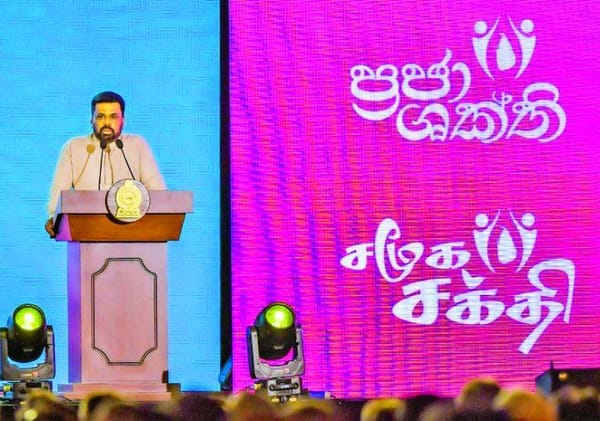
President Anura Kumara Dissanayake was in the Northern Province on a two-day official visit on January 15 and 16, during which he participated in multiple engagements across Jaffna.
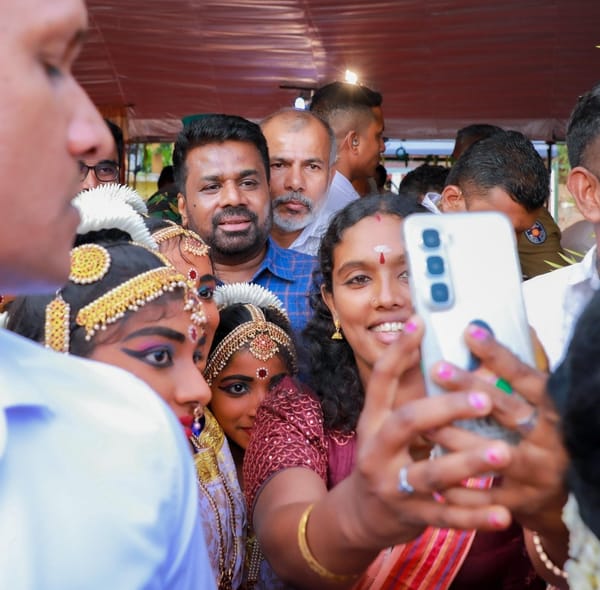
One of the most widely shared moments from the visit was the President taking a casual early-morning walk in Palaly, dressed in a T-shirt and shorts, with minimal security. He was seen greeting residents, speaking with passers-by, and posing for selfies along the route. Images and videos of the walk went viral on social media and were widely praised in Jaffna for projecting simplicity, approachability, and ease of access—qualities rarely associated with Colombo-based political leadership in the North.
Whether the moment reflected genuine connection or carefully calibrated image management is open to political interpretation. What is not in dispute is that it struck a chord.
The President also participated in Pongal celebrations at several locations in Jaffna and attended an anti-drug awareness campaign, further amplifying the public visibility of his Northern visit.
Allegations of Exclusion
However, Sivagnanam alleged that opposition parties and elected representatives, including ITAK, were either not invited or not accorded due recognition at several of these official events.
“Only NPP or JVP members were present at programmes funded by public money,” he claimed, accusing the ruling party of converting state-funded engagements into partisan platforms.
He urged President Dissanayake to take note of these concerns and ensure that official state visits remain inclusive, non-partisan, and respectful of democratic representation.
Political Fallout
The controversy intensified after Fisheries Minister Chandrasekhar publicly criticised ITAK for not attending presidential events during the Jaffna visit. He accused the party of deliberately distancing itself from national-level initiatives and subtly suggested that an ITAK leader—widely understood to be MP S. Shritharan—had wished to attend but refrained from doing so due to the possibility of facing an explanation from the party’s Acting General Secretary, M.A. Sumanthiran.
Responding to these remarks, Sivagnanam asserted that ITAK would not accept criticism motivated by political agendas.
“Our party affairs are ours to manage. We will not accept political attacks carried out under the cover of governance,” he said.
However, Sivagnanam did not address the broader questions increasingly being raised within Tamil political circles about ITAK’s own missteps, internal power struggles, and its apparent talent for self-inflicted wounds—factors that many observers argue helped create the political vacuum in Jaffna. That vacuum, in turn, enabled a Sinhala-majority party, the NPP, to walk away with three parliamentary seats in the last parliamentary election, while the North’s once-dominant Tamil nationalist party, ITAK, was left holding just one seat—and many unanswered questions.