

Lalith–Kugan Case Reaches Critical Stage as Court Presses Gotabaya Rajapaksa

Lalith–Kugan Case Reaches Critical Stage as Court Presses Gotabaya Rajapaksa


Share this post

The Jaffna Magistrate's Court has ordered former President Gotabaya Rajapaksa to submit a sworn affidavit by February 6, 2026, detailing the death threats he claims are preventing his appearance in court for a case involving the enforced disappearance of two political activists 14 years ago.

The directive came after Rajapaksa's legal team informed the court that the former president was unable to travel to Jaffna due to security concerns, specifically citing death threats against him.

The court's order requires Rajapaksa to provide specific, documented evidence of these alleged threats in the form of a legally binding affidavit, rather than relying on verbal representations made through his attorneys.

The 2011 disappearance case
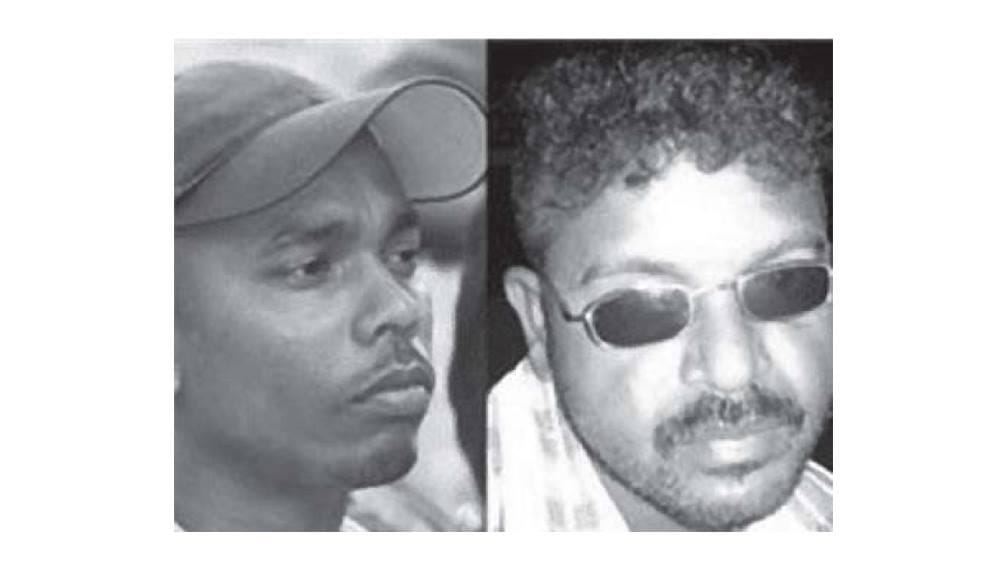
Lalith Kumar Weeraraj and Kugan Muruganandan, the two Front Line Socialist Party activists who disappeared in Jaffna in December 2011.

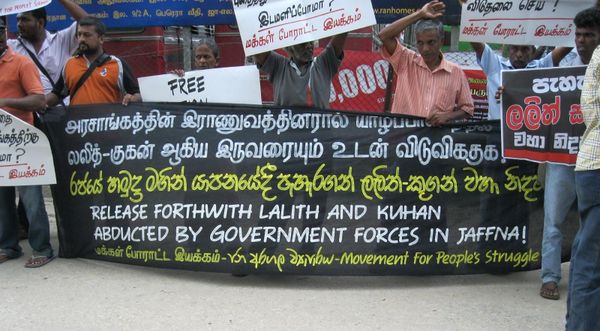
Gotabaya Rajapaksa has been summoned to appear before the Jaffna Magistrate's Court in connection with the abduction of Front Line Socialist Party (FSP) activists Lalith Kumar Weeraraj and Kugan Muruganandan, who were forcibly taken on December 10, 2011.

The two young activists, both in their twenties, were travelling on a motorcycle when they were abducted by unidentified individuals in Jaffna. Despite extensive investigations and numerous witness testimonies, their whereabouts remain unknown.

The abduction occurred during Rajapaksa's tenure as Defence Secretary under the Mahinda Rajapaksa administration, when he exercised broad control over security forces in the immediate post-war period.

Pattern of non-appearance

This is not the first time Gotabaya Rajapaksa has avoided appearing before the Jaffna court in this matter. The former president has been summoned multiple times over the years but has consistently cited security concerns as grounds for non-attendance.

Legal sources say the court's latest order represents a firmer stance, requiring Rajapaksa to formally substantiate his security claims through a sworn statement that carries legal consequences if found to be false or exaggerated.

"An affidavit is not merely a courtesy to the court—it's a legal document that can be challenged and carries penalties for perjury," explained a legal analyst familiar with the case. "The court is essentially saying: prove it."

If Rajapaksa fails to submit the required affidavit by the February 6 deadline, the court could potentially issue an arrest warrant, proceed with the case in absentia, or initiate contempt of court proceedings.

Disappearance Amid Systemic Impunity

The Lalith–Kugan case is among hundreds of unresolved enforced disappearance cases dating back to Sri Lanka’s civil war and its immediate aftermath.

Human rights organisations have documented numerous instances of abductions, extrajudicial killings, and enforced disappearances in the Northern and Eastern Provinces between 2008 and 2012, a period during which Gotabaya Rajapaksa served as Defence Secretary and oversaw security operations.

The two FSP activists had been vocal critics of alleged military abuses in the North, making their case particularly prominent among families seeking justice and answers about their missing relatives.


Share this post

Be the first to know

Join our community and get notified about upcoming stories

Subscribing...
You've been subscribed!
Something went wrong
What Sri Lanka and Gaza Teach Us About the Futility of Armed Struggle

What Sri Lanka and Gaza Teach Us About the Futility of Armed Struggle

“I object to violence because when it appears to do good, the good is temporary; the evil it does is permanent”. Mahatma Gandhi Times of war create the illusion that only force can resolve irreconcilable differences. Some social theorists even justify the inevitability of violence in achieving social change on the basis that groups in power rarely relinquish that privilege voluntarily. In this context, the armed conflicts that plagued Sri Lanka for three decades and continue to unfold in Gaza


Prof. Mahesh Nirmalan

Prof. Mahesh Nirmalan

A Peacemaker’s Belated Wisdom

A Peacemaker’s Belated Wisdom

By: M.R. Narayan Swamy Reading this otherwise invaluable book will give the impression that academic-turned-politician G.L. Peiris was a distant observer of Sri Lanka’s peace process (which collapsed) and not the government’s chief negotiator with the Liberation Tigers of Tamil Eelam (LTTE) and a key player in a dialogue that had been expected to end a protracted and bloody conflict. Peiris raises several vital issues that he feels led the peace process to unfortunately unravel, trig


M.R. Narayan Swamy

M.R. Narayan Swamy

The Promise and Limits of AI in Mental Healthcare

The Promise and Limits of AI in Mental Healthcare

Artificial intelligence (AI) today permeates almost every sphere of modern life, from finance and defence to education and healthcare. While its recent explosion has captured global attention, the roots of AI stretch back several decades. The intellectual groundwork was laid in 1950, when British mathematician Alan Turing posed a revolutionary question in his paper “Computing Machinery and Intelligence”: Can machines think? A few years later, in 1955, computer scientist John McCarthy formally co


Dr Ruwan M. Jayathunga

Dr Ruwan M. Jayathunga

Cricket in Jaffna: Past, Present, Future and the Debate Over a New International Stadium

Cricket in Jaffna: Past, Present, Future and the Debate Over a New International Stadium

Cricket occupies a unique and powerful place in Sri Lanka’s national identity. No other sport evokes the same depth of passion or collective pride. The 1996 Cricket World Cup victory transformed cricket from a popular pastime into a unifying national obsession—an emblem of hope, joy, resilience, and belonging. For decades, Sri Lankans have believed that cricket transcends geography, ethnicity, class, and political divisions. From the urban centres of Colombo, Galle, and Kandy to the rural heartl


Dr. Gamini Goonetilleke

Dr. Gamini Goonetilleke