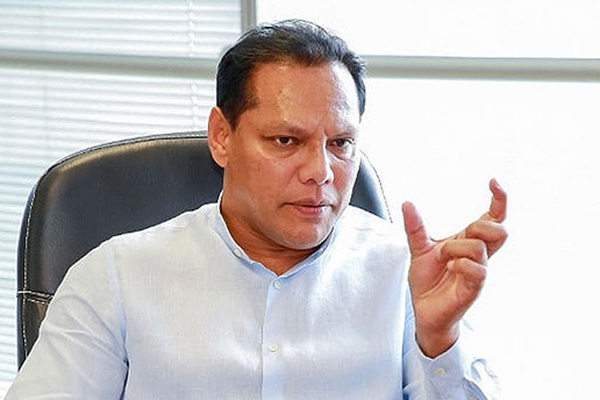
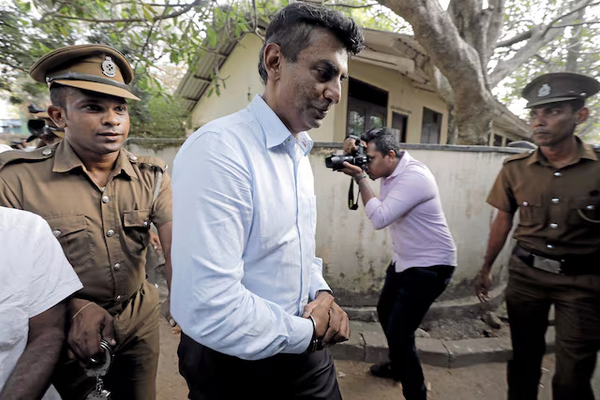
COLOMBO, Sri Lanka — Former Sri Lankan cricket captain Aravinda de Silva told a Colombo magistrate on Tuesday that he personally arranged bail guarantors and sent Rs. 500,000 in cash to secure the release of Kapila Chandrasena, the former SriLankan Airlines chief executive found dead at his Kollupitiya residence last week, and that he repeatedly tried to reassure Mr. Chandrasena in the final hours of his life that a fresh arrest warrant was "a small matter" that could be resolved.
Mr. de Silva was among eight witnesses who gave evidence before Fort Magistrate Pasan Amarasekara at the inquest into Mr. Chandrasena's death on May 12. The Colombo Crimes Division led the proceedings and submitted a further investigative report along with post-mortem annexures. The inquiry is scheduled to continue on May 14.
Mr. Chandrasena, 58, the former chief executive who faced corruption charges linked to a multibillion-dollar aircraft procurement deal, was found hanging inside an upstairs room at Mr. de Silva's Pedris Place residence in Kollupitiya on the morning of May 9. He had been released on bail four days earlier and was facing a rearrest warrant issued the night before his death, after prosecutors alleged he had arranged fraudulent bail sureties.
"Do Not Be Upset. This Is a Small Matter."
Mr. de Silva, one of Sri Lanka's most celebrated cricketers, told the magistrate that Mr. Chandrasena is the husband of his wife's younger sister, making him a brother-in-law by marriage. He said he visited Mr. Chandrasena while he was in remand and later intervened directly when the original bail sureties were found to be invalid.
He testified that he dispatched his office staff member, Ganesh Perumal, to the court with Rs. 500,000 in cash to facilitate alternative bail arrangements, and that he coordinated the securing of Grama Sevaka certificates and replacement guarantors through his own staff and driver.
After Mr. Chandrasena was released on bail on May 5, Mr. de Silva said he brought him to the Pedris Place residence because Mr. Chandrasena had not eaten properly for several days while in remand.
Mr. de Silva told the court that Mr. Chandrasena was visibly and repeatedly distressed about a fresh legal complication and kept returning to the same words: "It has only been one day since I came out, and again they are trying to put me inside."
Mr. de Silva testified that he tried to calm him. "Do not be upset," he said to Mr. Chandrasena. "This is a small matter. Let us solve this." He added, in his evidence, that he told Mr. Chandrasena that the lawyers would sort everything out the following day and that he should not worry about returning to custody.
He described showing Mr. Chandrasena to a separate upstairs room that evening, switching on the air conditioning, and asking him to rest for the night. He testified that even as he left Mr. Chandrasena to sleep, Mr. Chandrasena remained visibly reluctant about the prospect of going back into custody. Mr. de Silva told the magistrate he noticed nothing that led him to suspect foul play.
The Morning: Calls, Knocks, a Master Key
Mr. de Silva said he woke the following morning when his lawyer telephoned to say that Mr. Chandrasena was not answering. He said he tried calling Mr. Chandrasena's room twice, received no response, and then knocked on both the room door and the adjoining bathroom door. Receiving no answer, he told the court, he assumed Mr. Chandrasena might be getting ready and went downstairs to prepare to leave for his office.
He then asked his wife to check on Mr. Chandrasena. Shortly afterward, his wife and the lawyer opened the room using a master key. Mr. de Silva testified that he only briefly looked inside the room and saw "something hanging." Doctors who arrived subsequently confirmed that Mr. Chandrasena had died. Mr. de Silva told the magistrate he did not suspect any foul play in relation to the death.
His Wife: "I Had Taken Just One Step"
Priyangi Anushka Wijenayake, who is both Mr. de Silva’s wife and the sister of Mr. Chandrasena’s wife, Priyanka Neomali Wijenayake, testified as the first witness at the inquest.
She told the magistrate that she woke at around 4 a.m. that morning and that her husband subsequently called her to say the lawyer had arrived and asked her to prepare tea for Mr. Chandrasena. She said her husband tried calling Mr. Chandrasena twice, but there was no response. After that, both of them went with the lawyer to the room and called out to him, but there was no reply.
She testified that she retrieved the master key — which she described as capable of opening all doors in the house — and used it together with the lawyer to open the room door.
"I had taken just one step into the room when the lawyer went inside and came back out, saying Kapila appeared unwell and that we should call for an ambulance," she told the court.
She said an ambulance arrived from Durdans Hospital along with a female doctor, who examined Mr. Chandrasena and informed them that he had died.
Ms. Wijenayake told the magistrate she had no suspicions about the death but said she had observed that Mr. Chandrasena had been under significant stress the previous night. Asked by the court whether she had any view on what might have led to his death, she said: "Maybe because he had to appear in court. He was under a lot of stress."
She said she remained downstairs during the critical moments and did not enter the room herself.
Forensic Inquiries Continuing
Investigators recovered a belt, believed to have been used in the hanging, along with unidentified medication and blood samples from the scene, which have been sent to the Government Analyst for examination, according to information presented in court by the Colombo Crimes Division.
Police also sought the magistrate's approval to send Mr. Chandrasena's iPhone, described as a high-security model, to a specialist institution for analysis after facial recognition on the locked device failed, preventing investigators from accessing its contents.
The full cause of death remains pending toxicology results and the completion of the inquest. No witness who appeared before the magistrate on Tuesday expressed suspicion of foul play.
The inquiry will resume on May 14, when the remaining witnesses are scheduled to give evidence.
In March, CIABOC informed the Colombo Chief Magistrate’s Court that Mr. Chandrasena had told investigators that Rs. 60 million from Airbus-linked bribe funds had been paid to former President Mahinda Rajapaksa in three installments, while an additional Rs. 20 million had allegedly been paid to former Civil Aviation Minister Priyankara Jayaratne.
On the same day those submissions became public, Mr. Chandrasena’s lawyers released a sworn affidavit in which he sought to fully retract the claims. In the affidavit, dated March 18, Mr. Chandrasena alleged that he had been removed from the recording room during questioning and threatened by officials, including CIABOC’s Director General, who he claimed spoke to him in an intimidating manner. He further alleged that investigators warned him of arrest and pressured him to implicate former President Mahinda Rajapaksa, MP Namal Rajapaksa, and his wife, and that any references to those individuals did not represent his voluntary testimony. He also claimed he had been denied access to legal counsel while the statement was being recorded.
CIABOC has not publicly responded to those allegations. Mr. Chandrasena’s death now leaves both the original accusations and his subsequent retraction permanently unresolved.
Legal observers told Jaffna Monitor that the prosecution of Mr. Chandrasena reflected Sri Lanka’s uneven and often reluctant approach to accountability. Mr. Chandrasena and his wife were arrested on money laundering charges in February 2020 during former President Gotabaya Rajapaksa’s administration and remanded by the Colombo Fort Magistrate’s Court after the Attorney General issued arrest warrants based on material submitted by the Criminal Investigation Department. However, the arrests came only after Airbus’s $3.9 billion global corruption settlement publicly exposed allegations involving SriLankan Airlines, placing Sri Lankan authorities under significant international scrutiny. British investigators had specifically identified SriLankan Airlines as a recipient of improper payments, while authorities in the United States, the United Kingdom, and France were all parties to the multinational settlement.
The case subsequently slowed across successive administrations, with numerous high-profile corruption investigations facing delays, withdrawals, or procedural setbacks. Only under later renewed anti-corruption efforts were several such cases, including the Airbus-related prosecution, significantly revived.