Viet Nam—a country that endured one of the most devastating wars of the 20th century and one of the heaviest aerial bombardments in modern history, its cities reduced to rubble and its society fractured by ideology and superpower rivalry—today stands among the fastest-growing economies in the world. The war left behind not only physical destruction but also enduring human images, none more searing than that of nine-year-old Phan Thị Kim Phúc, captured running in agony after a napalm attack.
Nearly half a century after reunification in 1975, Viet Nam’s transformation is striking not only in scale but in speed. The economy grew by 7.09 percent in 2024 and surpassed 8 percent in 2025—placing it among Asia’s fastest-growing economies, and among the few nations that have, within living memory, moved from devastation to dynamism.
Sri Lanka and Viet Nam share a difficult inheritance, but their post-war trajectories have diverged sharply. Both emerged from prolonged conflicts that left deep economic scars, fractured societies, and pronounced regional divides between North and South. In 1975, Viet Nam stood economically shattered and institutionally fragile. Today, it represents one of the most compelling development turnarounds in the Global South. Sri Lanka, by contrast, continues to grapple with the economic and structural consequences of its post-war transition, including persistent regional disparities and uneven development.
The scale of Viet Nam’s transformation is measurable. The country has sustained growth above 7 percent in recent years, expanded total trade to more than USD 930 billion, and reduced poverty from over 58 percent in the early 1990s to below 3 percent today. Equally significant is how that growth has been managed: narrowing regional disparities and integrating once-divided regions into a more cohesive national economy.
What distinguishes Viet Nam’s rise is not only its speed, but its method. Anchored in the Đổi Mới reforms launched in 1986, the country pursued a gradual yet disciplined transition—from a centrally planned, war-ravaged system to a market-oriented economy integrated into global trade networks. Policy consistency, long-term planning, and an emphasis on social stability helped sustain both investor confidence and domestic cohesion.
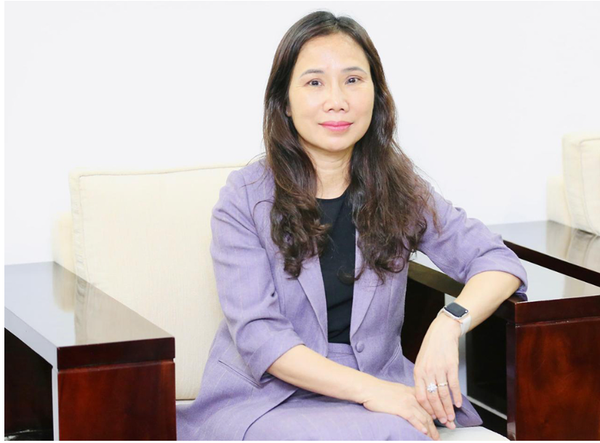
For countries navigating the uncertainties of post-conflict recovery, Viet Nam’s experience offers more than a story—it offers a framework. In this interview with Jaffna Monitor, Viet Nam’s Ambassador to Sri Lanka, Trinh Thi Tam, reflects on the choices that shaped her country’s trajectory and the lessons it may hold for others seeking durable and inclusive growth.
Viet Nam’s development over the past decades has attracted growing international attention. In your view, what makes Viet Nam’s development experience distinctive—and particularly relevant for countries pursuing sustainable growth?
Viet Nam’s development experience reflects a combination of long-term strategic vision, pragmatic reforms, and the resilience of its people. Since the introduction of the Đổi Mới economic reforms in 1986, the country has gradually built a dynamic, market-oriented economy while maintaining social stability and promoting inclusive development.
Over the past decades, it has sustained strong economic momentum. According to official statistics, the economy grew by 7.09% in 2024 and by more than 8% in 2025, placing Viet Nam among the fastest-growing economies in Asia. At the same time, the country has achieved remarkable social progress: the poverty rate has declined from over 58% in the early 1990s to below 3% today.
This transformation has been driven by sustained investment in infrastructure, a strong emphasis on education and human capital, and active international economic integration. With a population of over 100 million people and total trade exceeding USD 930 billion, Viet Nam has emerged as one of the most dynamic economies in the region.
Viet Nam has undergone a remarkable journey of national rebuilding and development in the decades since reunification. What key policies and strategies have driven the country’s economic growth and national development during this period? Looking back, what lessons can be drawn from its experience?
Viet Nam’s transformation has been guided by pragmatic reforms and long-term development planning. In the early stages, priority was given to strengthening agriculture and rural development in order to ensure food security and improve livelihoods. At the same time, Viet Nam invested heavily in infrastructure, including transportation networks and energy systems, which helped connect regions and support economic activity. The country also promoted export-oriented manufacturing and encouraged private enterprise, creating employment and attracting investment. Today, Viet Nam’s total trade volume exceeds 930 billion USD, reflecting its deep integration into global value chains.
An important lesson from Viet Nam’s experience is that sustainable development requires patience and gradual reform rather than abrupt change. Consistency in policy direction helps build confidence among citizens and investors alike. Another key element is the emphasis on inclusive growth, ensuring that economic progress benefits a broad segment of society. These principles have contributed to Viet Nam’s stability and continued development.
Ensuring that economic growth benefits all regions is a challenge for many countries. How has Viet Nam approached balanced regional development?
Balanced regional development has been an important objective in Viet Nam’s development strategy. The government has invested significantly in infrastructure, including highways, ports, airports, and logistics corridors, to improve connectivity between regions and facilitate trade and mobility. Viet Nam has also encouraged the establishment of more than 400 industrial zones and over 1,000 industrial clusters across many provinces, helping distribute investment and employment opportunities more evenly across the country.
In addition, targeted programs have been implemented to improve education, healthcare, and poverty reduction in less-developed areas, particularly in mountainous and remote regions. These efforts aim to ensure that economic progress is inclusive and that all regions can contribute to and benefit from national development.
The economic reforms known as Đổi Mới, launched in 1986, are widely seen as a turning point in Viet Nam’s development. What made these reforms so transformative?
Indeed, Đổi Mới marked a significant shift in Viet Nam’s development approach. It introduced greater economic flexibility and recognized the important role of market mechanisms and private enterprise in driving growth. At the same time, the reforms maintained strategic state guidance to ensure that economic transformation aligned with broader development goals.
The reform process was implemented gradually and pragmatically, allowing institutions, enterprises, and citizens to adapt to new economic conditions. As a result, Viet Nam was able to expand agricultural production, develop manufacturing industries, and integrate more deeply into the global economy.
Economic transformation often requires deep structural reforms. In Viet Nam’s experience, what were some of the most challenging aspects of this transformation?
One of the most challenging aspects of Viet Nam’s reform process was modernizing institutions to support a rapidly evolving economy. As market-oriented reforms expanded, Viet Nam needed to strengthen regulatory frameworks and improve public administration in order to facilitate business activity and investment. Another challenge was the need to invest simultaneously in infrastructure and human capital. Economic growth increased demand for transportation systems, energy supply, and a skilled workforce capable of supporting industrial development. Maintaining policy consistency and social consensus during a period of transformation was also essential to ensure stability and long-term progress.
Effective governance is often considered an important factor in national development. How has Viet Nam strengthened policy implementation and administrative effectiveness during its reform process?
Effective governance has played an important role in Viet Nam’s development. Over the years, the country has worked to improve public administration, simplify procedures, and enhance transparency in government operations. Viet Nam also places strong emphasis on long-term socio-economic planning, which provides clear direction for development priorities and investment. Coordination between central and local authorities helps ensure that policies are implemented effectively across different regions. More recently, Viet Nam has promoted digital transformation in public services to improve efficiency and accessibility. These efforts contribute to a governance environment that supports economic growth and sustainable development.
Viet Nam has become an increasingly attractive destination for international investment. What factors have helped build investor confidence in Viet Nam’s economy?
Today, Viet Nam attracts strong foreign investment inflows. In recent years, the country has recorded approximately USD 37–38 billion in registered FDI annually, particularly in manufacturing, electronics, technology, and renewable energy.
Viet Nam has worked consistently to build a stable and predictable environment for investment. Macroeconomic stability, clear development strategies, and continuous improvement of the legal framework have helped strengthen investor confidence. The government has also simplified administrative procedures and improved infrastructure in industrial zones and economic corridors. Viet Nam’s participation in various international trade agreements has further expanded market access and reinforced its reputation as a reliable economic partner. In addition, the country benefits from a young and dynamic workforce. Together, these factors have helped position Viet Nam as an attractive destination for long-term investment and manufacturing activities.
Viet Nam’s economic growth has been supported by both international investment and domestic enterprises. How does Viet Nam encourage the development of its domestic private sector?
Foreign investment has played an important role in Viet Nam’s export growth and industrial development. At the same time, the government recognizes the importance of strengthening domestic enterprises so they can participate more effectively in global value chains. Policies therefore aim to improve the business environment for local companies, particularly small and medium-sized enterprises. Efforts include expanding access to finance, encouraging innovation, and supporting technology adoption. Viet Nam also promotes stronger linkages between foreign-invested firms and domestic suppliers. By developing both international partnerships and domestic capabilities, Viet Nam seeks to create a more balanced and sustainable economic structure.
In an increasingly interconnected global economy, resilience and diversification are becoming more important. How is Viet Nam preparing its economy for future challenges, what lessons can be drawn from Viet Nam’s experience?
In an increasingly complex global economic environment, Viet Nam places strong emphasis on economic resilience and diversification. The country continues to expand its industrial base while promoting innovation and technological upgrading. Policies also aim to strengthen domestic value chains and reduce vulnerabilities within supply networks. At the same time, Viet Nam is investing in emerging sectors such as the digital economy, green energy, and high-value manufacturing. These efforts help prepare the economy for future challenges while sustaining growth momentum. For many developing economies, Viet Nam’s experience highlights the importance of diversification, adaptability, and continuous reform.
One factor frequently cited in Viet Nam’s development story is the country’s strong investment in education and human capital, particularly in science, engineering, and technical training. How important was education in Viet Nam’s economic transformation, and what role does human capital play in sustaining long-term development?
Education has been a cornerstone of Viet Nam’s development strategy. The government has consistently invested in expanding access to education and improving the quality of teaching and training. Particular attention has been given to science, engineering, and vocational education in order to meet the needs of a modernizing economy. As a result, Viet Nam has developed a young and skilled workforce capable of adapting to technological change. Human capital development not only supports economic growth but also promotes social mobility and innovation. In the long term, education remains essential for sustaining Viet Nam’s transition toward a knowledge-based economy.
For ordinary citizens, development is experienced in more tangible ways: jobs, roads, education, and opportunities for social mobility. In your view, what made economic growth feel real and meaningful to Viet Namese people, particularly in regions that were once devastated by war?
Economic growth becomes meaningful when it translates into tangible improvements in people’s lives. In Viet Nam, development has been accompanied by significant progress in infrastructure, healthcare, and education. Rural roads, improved housing, and expanded access to electricity and clean water have transformed living conditions in many communities. At the same time, economic reforms have created employment opportunities and expanded access to education and professional advancement. Poverty rates have declined dramatically over the past decades. These improvements help ensure that economic progress is widely shared and that citizens experience development not only through statistics but also in their everyday lives.
If a Sri Lankan policy delegation were to spend a week in Viet Nam trying to understand the country’s transformation seriously—beyond ceremonial meetings—which sectors or institutions would you recommend they study first?
Several areas may be particularly relevant to Sri Lanka’s interests. These include industrial zone development, export-oriented manufacturing, agricultural modernization, and digital transformation in public administration. Viet Nam has also gained valuable experience in developing small and medium-sized enterprises and integrating them into global value chains. Another area of interest is education and vocational training systems that support workforce development. Exchanges in these sectors could provide valuable opportunities for sharing knowledge and exploring practical cooperation between the two countries. As a close partner and friend, Viet Nam stands ready to share relevant information and experience with Sri Lanka.
Viet Nam today is an increasingly influential actor within the Association of Southeast Asian Nations (ASEAN). How has Viet Nam’s regional engagement through ASEAN contributed to its economic rise and international standing? And are there lessons for countries like Sri Lanka seeking to strengthen their regional economic partnerships?
Regional cooperation has been an important pillar of Viet Nam’s foreign policy and economic development. Through ASEAN, Viet Nam has expanded trade relations, strengthened economic connectivity, and contributed to regional stability and cooperation. Participation in ASEAN economic initiatives has also helped Viet Nam integrate more deeply into regional supply chains and markets. Beyond economic benefits, ASEAN provides a platform for dialogue, confidence-building, and multilateral cooperation. For many countries, regional frameworks can support development by promoting open markets, connectivity, and collaboration on shared challenges. Sri Lanka’s interest in becoming a Sectoral Dialogue Partner of ASEAN is a positive step toward strengthening its regional engagement.
Viet Nam and Sri Lanka are marking 55 years of diplomatic relations, and both countries have expressed their ambition to increase bilateral trade to $1 billion. Trade remains well below that level today. What practical steps could move the relationship from goodwill toward a more substantive economic partnership?
We share a long-standing friendship and strong potential for expanding economic cooperation. At present, however, two-way trade remains relatively modest, staying below 300 million USD in recent years, indicating significant room for further expansion. Both sides can explore opportunities in sectors such as agriculture, fisheries, food processing, textiles, tourism, and information technology. Business exchanges, trade promotion activities, and improved logistics connectivity could help facilitate greater commercial interaction. By strengthening partnerships between enterprises and encouraging investment, Viet Nam and Sri Lanka can work toward realizing their shared goal of expanding bilateral trade and economic cooperation.
You recently visited Jaffna, a region that still carries the legacy of Sri Lanka’s civil conflict but also holds significant economic potential.
What impressions did you take away from that visit? And how does Viet Nam view the possibilities for investment and economic cooperation in Sri Lanka’s Northern and Eastern Provinces?
My visit to Jaffna left a very positive impression. The region possesses considerable potential in areas such as agriculture, fisheries, education, tourism, and renewable energy, among others. Its rich cultural heritage and strategic location also create significant opportunities for economic development and international cooperation. Viet Nam is interested in exploring opportunities for people-to-people exchanges, academic collaboration, and business partnerships that could contribute to local development. Encouraging connections between communities and enterprises in both countries may help unlock new avenues for cooperation while supporting sustainable development in Northern Sri Lanka.
Viet Nam has achieved remarkable progress over the past four decades, lifting millions out of poverty and becoming a major manufacturing hub in Asia.
Looking ahead to the next twenty years, what do you see as the next stage of Viet Nam’s development journey? Will the focus shift toward technology, innovation, green energy, and higher-value industries?
Viet Nam is focusing on a new stage of development centered on innovation, sustainability, and higher-value industries. The country aims to strengthen the digital economy, promote green growth, and invest in advanced manufacturing and technology sectors. At the same time, Viet Nam continues to prioritize human capital development and infrastructure modernization. These efforts are intended to enhance productivity and ensure that economic growth remains sustainable in the long term. By combining innovation with inclusive development, Viet Nam hopes to continue improving the well-being of its people while contributing to regional prosperity.
Like Sri Lanka, Viet Nam also spent decades fighting a devastating war, yet today it stands as one of the most dynamic economies in Asia. If there is one lesson from Viet Nam’s journey—from war to prosperity—that every post-conflict country should remember, what would it be?
Viet Nam’s journey over the past decades demonstrates the importance of perseverance, unity, and long-term vision in national development. Economic progress does not occur overnight; it requires patience, consistent policies, and the collective efforts of society. Viet Nam’s experience shows that when a country focuses on education, economic openness, and inclusive growth, it can gradually transform challenges into opportunities.
If there is one lesson from Viet Nam’s development journey, it is that peace, unity, and long-term vision are the foundation of sustainable development. When a country mobilizes the energy and creativity of its people toward shared goals, remarkable transformation becomes possible.