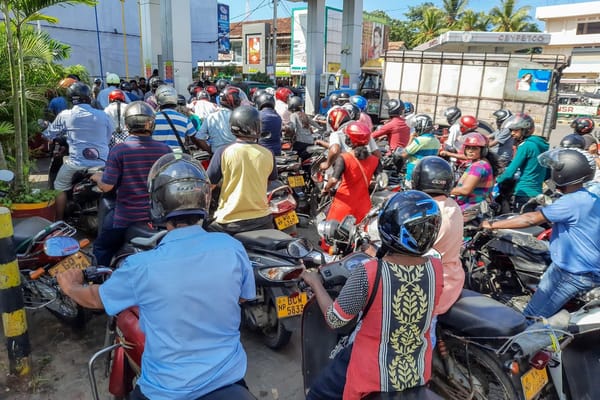
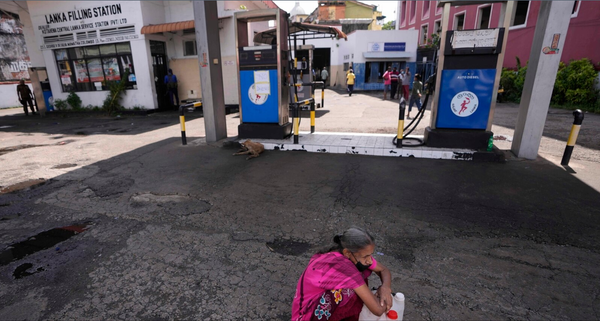
March 21, 2026, COLOMBO — The ruling National People’s Power (NPP) government sharply raised fuel prices from midnight on Saturday, with increases ranging from roughly 21 to 26 percent — a move expected to ripple through transportation networks, food supply chains, and household budgets across a country still struggling to recover from a crippling economic collapse.
The price hike is likely to intensify pressure on ordinary Sri Lankans, whose incomes have largely stagnated and are unlikely to keep pace with the rising cost of living.
The revisions, announced by the Ceylon Petroleum Corporation, took effect from midnight on Saturday.
Petrol 92 rose from Rs. 317 to Rs. 398 — an increase of more than 25 percent. Auto diesel climbed from Rs. 303 to Rs. 382, while Petrol 95 and super diesel recorded similar jumps of nearly a quarter.
Kerosene — a critical fuel for many of Sri Lanka’s poorest households, used for cooking and lighting — saw the steepest increase, rising by about 31 percent, from Rs. 195 to Rs. 255 per litre.
At the same time, the government raised weekly fuel quotas under its QR code–based rationing system, allowing private cars to purchase up to 25 litres per week, up from 15, and buses to access 100 litres, up from 60.
It remains unclear, however, whether the alternate-day QR system — widely criticized as poorly designed — will continue to be enforced. The government has made no formal announcement on the matter, leading observers to believe that the system is likely to remain in place for now.
The Transport Chain Braces for Impact
The most immediate effects are likely to be felt on the roads. Three-wheeler operators, intercity bus services, and fishing vessels that rely on diesel now face sharply higher operating costs.
Fuel prices are a primary driver of inflation in Sri Lanka’s import-dependent economy. As costs rise, so too will the expense of transporting vegetables, fish from coastal markets and construction materials across the island.
Economists warn that a second wave of inflation — typically following fuel price adjustments by several weeks or months — could be significant in scale.
Revised Fuel Prices at a Glance
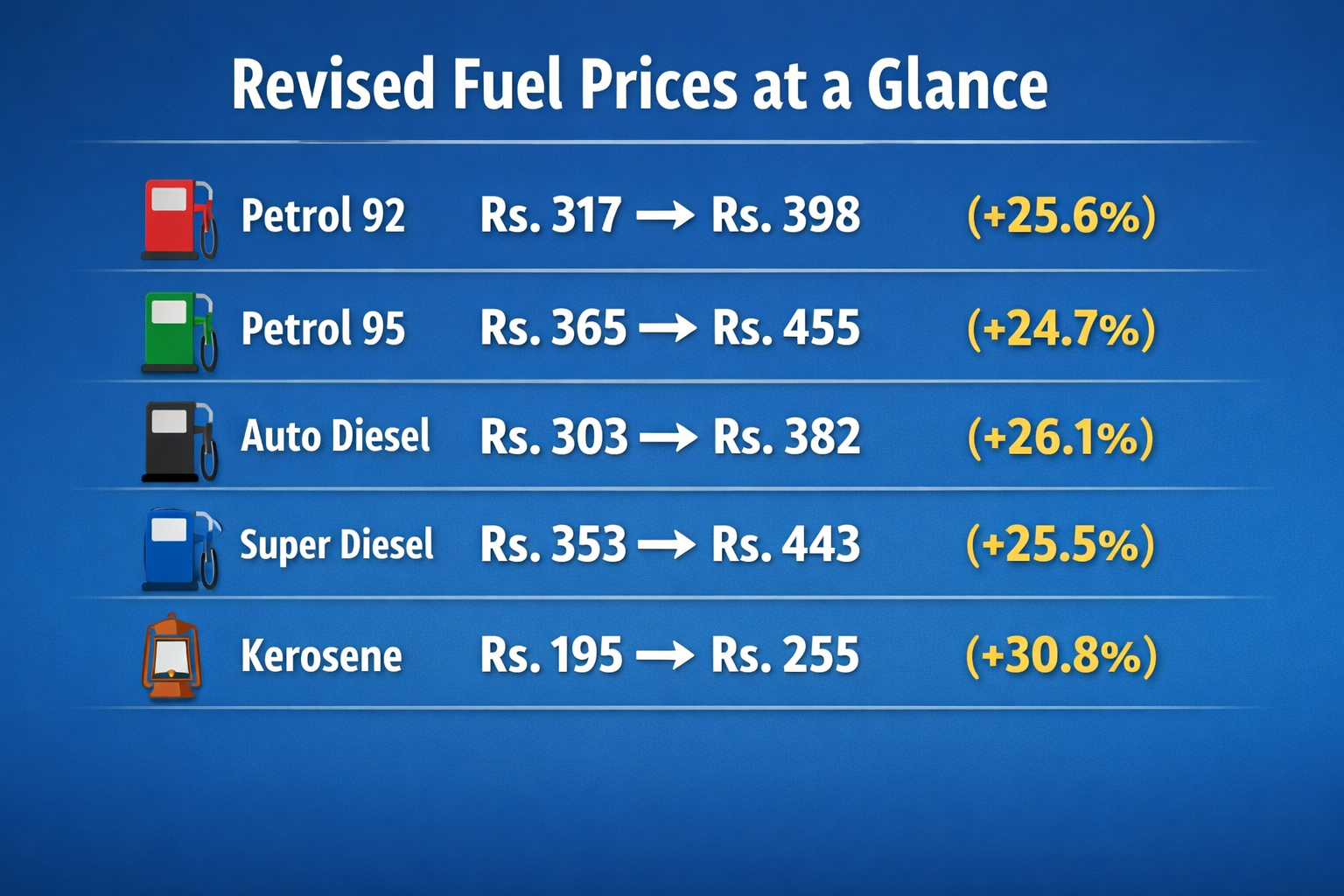
Petrol 92 Rs. 317 → Rs. 398 (+25.6%)
Petrol 95 Rs. 365 → Rs. 455 (+24.7%)
Auto Diesel Rs. 303 → Rs. 382 (+26.1%)
Super Diesel Rs. 353 → Rs. 443 (+25.5%)
Kerosene Rs. 195 → Rs. 255 (+30.8%)
The government has offered no public explanation for the formula behind Saturday’s pricing decision. The Ceylon Petroleum Corporation has previously said that adjustments are linked to global oil prices and exchange rate movements, but critics argue that the mechanism lacks transparency — a concern they say continues to undermine public trust.