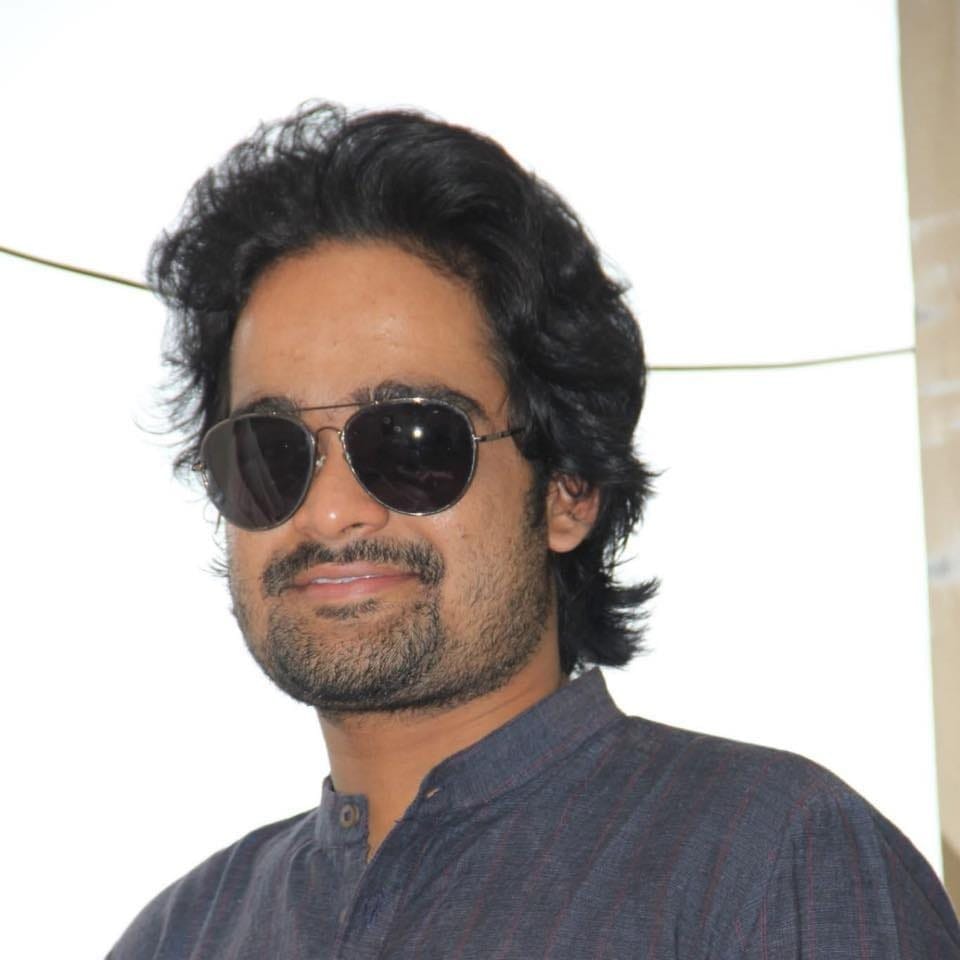
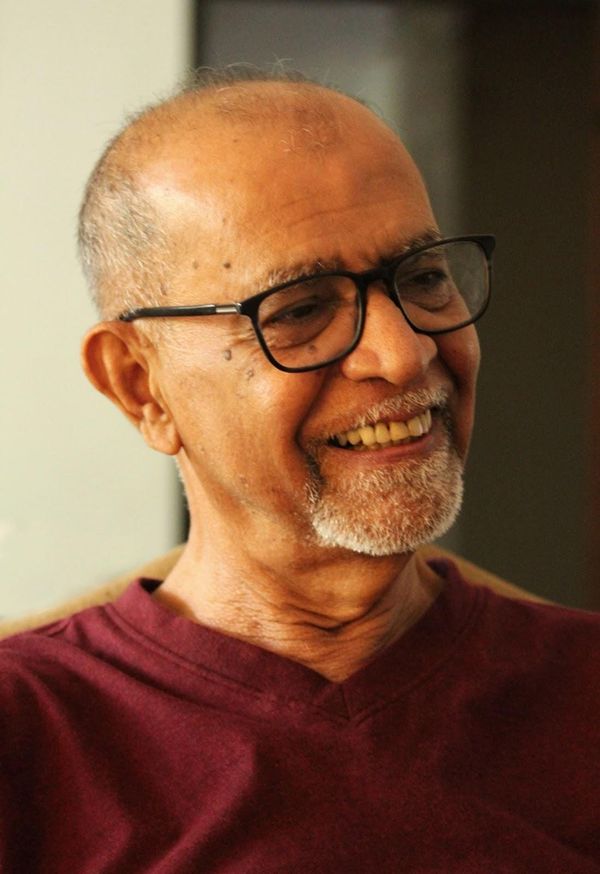
Jayadeva Uyangoda, Professor Emeritus of Political Science at the University of Colombo, is one of Sri Lanka’s leading scholars on ethnic conflict, peace processes, nationalism, democracy, and leftist politics. Before becoming one of the country’s most influential political scientists, Uyangoda had been briefly involved with the early Janatha Vimukthi Peramuna (JVP) movement founded by Rohana Wijeweera and was imprisoned after the 1971 uprising.
A former activist with a Ph.D. from Colombo, he has spent decades dissecting Sri Lanka’s post-independence political struggles—majoritarian ethnocracy, civil war legacies, militarization, and the rise of populist forces—while advocating pluralist, class-sensitive paths toward reconciliation and genuine democratization.
His landmark recent work is the two-volume Democracy and Democratisation in Sri Lanka: Paths, Trends and Imaginations (2023). Through incisive academic analysis and public commentary, Uyangoda has emerged as a principled left-liberal critic of both Sinhala and Tamil elite nationalisms, arguing that ethnic justice must be intertwined with broader social emancipation in South Asia’s most fractious democracy.
This is his exclusive interview with Jaffna Monitor.
The JVP led two violent insurrections in 1971 and 1987–89 that resulted in the deaths of tens of thousands of mainly Sinhala youth, many of them killed by the state’s security forces. Today, the NPP governs the very police and military institutions that once hunted and destroyed the JVP. How do you explain this transformation—from insurgent movement to custodian of the state? Is it comparable to other revolutionary movements’ transitions into democratic politics, or is it fundamentally different because the JVP never underwent a genuine political or moral reckoning with its violent past?
Revolutionary movements are almost always guided by visions and projects aimed at capturing and exercising state power. Some have succeeded through revolution itself. Many of them have been nationalist in character, others socialist, and still others religious-nationalist.
The JVP’s path to political power has been long, protracted, and tortuous. There were two attempts to capture state power through armed uprisings, both of which proved extremely costly. After the failure of the revolutionary path, the JVP gradually explored the peaceful and electoral route to power. That transformation itself took a considerable amount of time.
There are several historical examples of revolutionary movements that have successfully transformed themselves into parliamentary parties and become part of the political mainstream. One well-known case is Sinn Féin, closely associated with the Irish Republican Army in Northern Ireland. The armed struggle against British rule there had a long history spanning more than 150 years. The conflict formally came to an end in 1998 with the Good Friday Agreement between the British government and the republican leadership. In the years that followed, Sinn Féin contested elections, won seats in the Northern Ireland Assembly, and became one of the principal governing parties. Today it is widely regarded as a legitimate and respected political force.
A second example comes from South Asia, specifically Nepal. The Communist Party of Nepal (Maoist) led a guerrilla war against the monarchy. Following the UN-mediated peace accord in 2006, the Maoists entered parliamentary politics, won national elections, and formed a coalition government with other left-wing parties. Led by Pushpa Kamal Dahal, the Maoists governed Nepal twice. However, after embracing parliamentary politics and moving into the political mainstream, the Maoist movement gradually lost much of its radical socialist fervour and came to resemble a conventional political party. This transformation involved politically and ethically costly compromises, as former rebels became part of a parliamentary system long troubled by corruption and transactional politics. For some observers, Nepal’s Maoists provide a sobering example of how the institutional pressures of parliamentary politics can reshape revolutionary movements.
There are several additional examples from Africa and Latin America. The African National Congress in South Africa, the Sandinista National Liberation Front in Nicaragua, and the Farabundo Martí National Liberation Front in El Salvador all followed comparable trajectories. In South Africa, for instance, critics argue that after the death of Nelson Mandela, sections of the ANC leadership lost much of their liberationist vision and became associated with corruption and the pursuit of power. Many senior figures and mid-level cadres were seen to have undergone what critics described as “bourgeoisification.” In Nicaragua, too, elements of the Sandinista leadership were widely perceived as succumbing to the temptations of power and wealth, while democratic ideals became increasingly marginalized. Most of these examples suggest that ex-rebel movements that have taken the risk of joining the political mainstream should be cautious of the trap of de-radicalization.
Sri Lanka’s own experience also offers examples. Several Tamil militant groups that entered mainstream politics after the Indo-Lanka Accord followed a similar trajectory of political degeneration. Some of them became aligned with rival factions of the Sinhala ruling class—particularly the Sri Lanka Freedom Party and the United National Party—in exchange for cabinet positions and other material benefits. In the end, their pursuit of power and patronage undermined their political credibility and largely ended their relevance.
The JVP therefore carries a historically significant responsibility: to prove itself an exception to this pattern—to demonstrate that a former revolutionary movement can enter parliamentary politics without abandoning its founding ideals. The JVP leaders appear to be aware of the crucial need to avoid the political and moral costs of de-radicalization.
The JVP’s transformation also has a distinctive history. In many countries, revolutionary movements enter parliamentary politics through negotiated peace agreements mediated by external actors. Such agreements usually involve the surrender of weapons, the dismantling of armed units, the reintegration of fighters into civilian life, incentives to join mainstream politics, and security guarantees.
By contrast, the JVP’s decision to enter parliamentary politics in the early 1990s was taken unilaterally by its new leadership. There were no formal conditions imposed by the Sri Lankan state or by any external mediator to shape its post-insurgency trajectory.
In that sense, the JVP’s case is unique. Its shift toward democratic politics was a voluntary and autonomous decision. There was no negotiated peace settlement, no security guarantees, and no institutional process such as a Truth and Reconciliation Commission to facilitate public acknowledgement of past violence by all parties involved.
Yet these absences should not diminish the significance of the JVP’s decision to enter democratic politics without external pressure. It is also worth recalling that its leaders have, on several occasions, expressed regret about the violence of the past. One example is the speech delivered in Parliament by Bimal Rathnayake during the debate on the Batalanda Commission Report. His remarks, which appeared to draw inspiration from figures such as Nelson Mandela and Barack Obama, were widely seen as morally persuasive.
A contrasting experience can be seen in Tamil insurgent organizations such as the Eelam People's Revolutionary Liberation Front, People's Liberation Organisation of Tamil Eelam, and the Eelam People's Democratic Party, which entered mainstream politics after the Indo-Lanka Accord under political and security guarantees provided by both the Indian and Sri Lankan states.
The key question now concerns the kind of democratic politics the JVP intends to pursue. The party has pledged to cleanse democratic institutions and political processes of corruption and authoritarian control, and to free Sri Lanka’s democracy from its illiberal and authoritarian constraints. No other political party in Sri Lanka has undertaken—or even claimed to undertake—such an ambitious and difficult task.
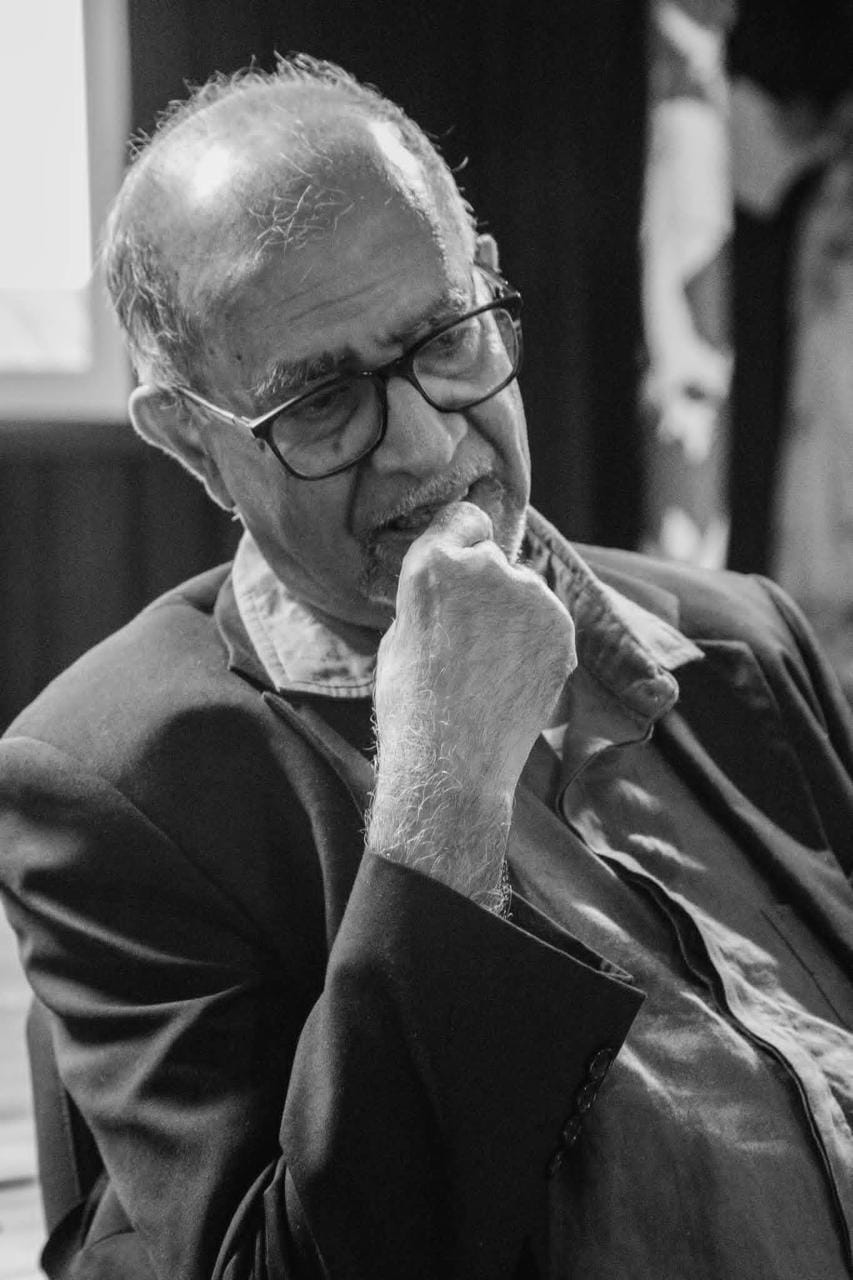
You have argued that Sri Lankan democracy operates through what you call “authoritarian constitutionalism.” The NPP came to power promising systemic change, yet now governs within the same executive-presidential framework and relies on coercive laws such as the PTA and proposed PSTA. Can a government realistically reform a structure from which it derives power, or will it reproduce the same authoritarian patterns as its predecessors?
If a government believes that the constitutional source of its power is morally flawed, even if it remains legally valid, it has the authority to alter that source of power and derive both legality and legitimacy by establishing a new constitutional order. The question you appear to raise is whether the NPP government will choose to do so. It certainly possesses both legal and moral authority, derived directly from the people through the most recent presidential and parliamentary elections. But does it have the political will? That, perhaps, is the real question.
Personally, I am also puzzled by the government’s apparent reluctance to abrogate the existing Constitution and substantially revise the Prevention of Terrorism Act (PTA) within the framework of the rule of law and a more advanced system of procedural democracy. At this stage, I can only offer speculation, speaking as a political commentator.
My speculative thesis is as follows: The NPP government has a transformative agenda. It is not a revolutionary agenda. Nor is it merely reformist, as has been the case with most of the governments we have had in the past. Transformation represents a stage of change that lies between reform and revolution. Policy reforms are adjustments that introduce relatively minor changes and usually generate only mild resistance in society. By contrast, transformative efforts by a government to remake the familiar order through drastic systemic changes can provoke sustained resistance, particularly from those who have benefited from the old system. Even corrupt and inefficient systems of governance produce their own beneficiaries, who will resist any attempt to alter the rules of the game. The resistance of the guardians of the ancien régime can be unpredictable and may even turn violent in one form or another. When the contradictions between the old and the new order sharpen, what will ultimately be at stake is state power. Instinctively, the NPP leadership must be aware that it may have to prepare for an open confrontation between the old and the new political classes.
You have argued that resolving Sri Lanka’s ethnic conflict requires Sinhala society to recognize Tamil political agency, not merely offer administrative decentralization. The NPP promises Provincial Council elections but avoids discussing enhancement of the 13th Amendment, while its Sinhala-Buddhist support base includes strong currents historically opposed to devolution. Taken together, does this indicate that the NPP is not truly prepared to offer meaningful power-sharing to Tamil areas? In your view, is the party fundamentally willing to devolve political power to Tamils, or does it still interpret the Tamil question primarily as a class or economic problem rather than an ethnic and political one?
In my view, a new phase of dialogue toward a constitutional settlement must begin, given that a new government—one that claims to represent a break from the policies of previous administrations—is now in power. Tamil political leaders, however, appear to expect the NPP government to continue the same negotiation framework they had established with earlier Sri Lankan governments, the old ruling class, and the Indian state, leaving little independent political agency to the NPP leadership. Labelling the NPP as merely “another Sinhala government” reflects a sense of political impatience and despair, and it risks sending counterproductive signals both to the government and to the Tamil people.
What is urgently needed is direct engagement between the NPP government and Tamil political leaders to explore a genuinely new beginning—to develop a new political vocabulary capable of enabling meaningful and productive dialogue, and to inaugurate a new discourse within which a constitutional settlement can be imagined beyond the limitations of the traditional devolution framework, toward the deepening of democracy.
Let me offer one example of the limitations of the much-venerated devolution framework as a starting point for fresh thinking about a democratic solution to what has long been understood as Sri Lanka’s ethnic problem. It is time to recognize, even if belatedly, that ethnic problems do not necessarily have purely ethnic solutions, as Tamil nationalist politics has often assumed for decades. This is a fundamental lesson drawn from the experiences of many other societies. What is required instead are democratic solutions capable of reconciling nationalist aspirations for regional autonomy with the demands for political, social, and class emancipation of ethnic minority communities.
In Sri Lanka, a democratic solution to minority ethnic grievances has often been imagined as one that enables regional minority elites to emerge as regional ruling classes. This approach overlooks the aspirations for political recognition, representation, and self-rule among smaller regional and local minorities. Almost all provinces—including the Northern, Eastern, Central, and Western provinces—contain not only regional majorities but also regional and local minorities, whose identities are shaped by both ethnic and social differences.
Viewed from this perspective, conventional models of devolution appear increasingly inadequate, as they fail to address the sovereign rights to political equality and representation of smaller and dispersed minority communities within provinces and districts. In other words, a genuinely democratic solution to Sri Lanka’s ethnic question requires deep democratic alternatives. This calls for revising our political vocabulary itself: moving from federalism to deep federalization, from devolution to deep power-sharing, and from decentralization to genuine local democracy. Empowering local communities of ordinary citizens is as important as elevating regional elites to positions of authority.
You have shown how the old left (LSSP and CP) abandoned its internationalist principles by accommodating Sinhala nationalism in the 1950s–70s, and how it failed to develop a serious theoretical engagement with Tamil nationalism—often dismissing it as false consciousness or elite manipulation. Colvin R. de Silva’s shift from “two languages, one nation” to endorsing the 1972 Constitution symbolized this collapse of anti-chauvinist politics. The NPP/JVP is now the first left government since that era. In your view, is it repeating the old left’s historic pattern of subordinating minority justice to majoritarian politics, or has it genuinely broken from that legacy? And on what grounds should Tamils believe that this time will be different?
There is continuity as well as a break. The nationalist turn of the JVP in the 1980s has a parallel with the shift of the Left toward Sinhala nationalism during the 1960s and early 1970s. From the very beginning, the JVP’s ideology also contained an element of mild nationalism, which at the time was described as ‘patriotism.’ Many Left movements in colonial and post-colonial societies contained this element of mild nationalism, based on the argument that nationalist movements could play a progressive role in struggles against imperialism and colonial capitalism.
While the Old Left deserves to be critiqued for its capitulation to the Sinhala nationalism of the SLFP, we must not ignore the Left’s seminal contribution to advancing a powerful discourse on ethnic minority rights since the 1940s and again after the late 1970s. In the past, the Left was an influential political and ideological force in the North, shaping several generations of Tamil political activists and intellectuals who were committed to the ideal of socialist equality beyond narrow ethnic identity politics.
My answer to your question is that, under the present leadership, the JVP and the NPP have made a break from their Sinhala nationalist past. You may have observed that this shift began to become evident after Wimal Weerawansa—who was the JVP’s Sinhala nationalist voice at the time—left the party and joined Mahinda Rajapaksa’s camp. That split was obviously the result of a major internal debate between two tendencies regarding the JVP’s ideology and political path.
You might also recall some of the excellent speeches Anura Kumara Dissanayake made in Parliament defending the rights of Tamil people living in Colombo, when Gotabaya Rajapaksa, as Defence Secretary, initiated a campaign of forcible relocation targeting Tamils who were living in or visiting the city. That period marked a moment when the JVP, perhaps under new leadership, began to shed its Sinhala nationalist politics and move toward embracing the politics of pluralism.
It was also during this period that JVP and TNA parliamentarians began to initiate dialogue and even develop personal friendships. In my view, the JVP is now a changed political entity—changed in terms of its leadership, ideology, political orientation, and overall political project.
My suspicion is that Tamil nationalist political actors among the elite, along with sections of the Tamil diaspora, will continue to label the NPP as merely a continuation of its old Sinhala nationalism under a new disguise. However, non-elite and ordinary Tamils appear to have begun to see the NPP differently—as a progressive Sinhala political force that brings together the politics of ethnicity and social class.
The time has come for all of us to recognize that ethnic and class politics—or identity politics and social justice politics—can no longer be approached as two separate paths to political emancipation. In my view, this is also the message the NPP seeks to convey to the Tamil and Muslim communities, particularly in the North and East.
You have argued that class politics in Sri Lanka cannot be separated from ethnic identity. Yet the NPP’s economic platform emphasizes anti-corruption and efficiency rather than addressing how economic marginalization overlaps with ethnic geography. Does this suggest that left politics in Sri Lanka must subordinate class analysis to ethnic accommodation?
There was a time when the Left politics subordinated ethnic politics to class politics, particularly after the Federal Party was formed to advance its federalist demand. It was a Tamil Marxist theoretician of the LSSP, V. Karalasingham, who wrote the famous pamphlet The Way Out for the Tamil Speaking People of Sri Lanka in 1962. In that essay, comrade Karalisingham argued that the federalist demand came from the ‘Tamil bourgeoisie’. He characterised federalism as a reactionary demand that would divide the Sinhalese and Tamil working masses and drive them away from class politics which alone could bring true emancipation. On that basis, he also defended the unitary state model.
However, after 1972, there was a shift in the position of some radical sections of the Left to argue that the Left should support the evolving struggle of the Tamil people for resolving the national question by accommodating their demand for self-determination. The Nava Sama Samaja Party, LSSP( R), Revolutionary Communist League and a number of other Trotskyite groups, openly defended the right of the Tamil-speaking people for self-determination. This was the key demand of the TULF after it was formed. I also began to share this position around 1975-76 when I was still in jail as a JVP political prisoner.
Meanwhile, I had the opportunity to have brief political conversations when I was in jail with some young Tamil political activists about their politics. I think Kasi Anandan from Batticaloa was one among them. That was also the time when I began to develop the idea that class and ethnicity are co-present and intertwined in Sri Lanka’s anti-systemic and progressive politics for change. Later on, after 1977, my conversations with Kethesh Loganathan and some of the founders of the EPRLF and EROS enabled me to see how the Left had a role to play in bringing class politics to Tamil nationalist politics.
After I was released from jail, I openly supported the TULF and the radical Tamil demand for the right of Self - determination. I wrote newspaper articles supporting the demand for self-determination rights of the ethnic minorities. I was also influenced by Lenin’s position on this issue. Mr. Amirthalingam even quoted me when he gave evidence before the Sansoni Commission to make the point that even the Sinhalese intellectuals support the just demands for national rights by the Tamil political parties. ‘Ethnic politics has no ethnic solutions; it can only highlight ethnic grievances. It needs democratic and social justice solutions.’ This is the formula I apply to the present stage of Sri Lanka’s debate on the ethnic problem as well.
Amidst these developments, and reflecting on the rise of the LTTE-brand of ethno-nationalist politics and its parallels in other societies, I began to re-think and revise my position on nationalist politics as a whole.
I share the revised Left position, which can be stated as follows: class politics without ethnic accommodation runs the risk of becoming majoritarian in multi-ethnic, plural societies. Similarly, ethnic accommodation without class analysis abandons the oppressed masses to the mercy of capitalist and professional elites who have a narrow and patronising world view on issues of justice, rights and equality.
The NPP has embraced IMF restructuring despite its historical anti-imperialist rhetoric. Is this pragmatic adaptation to global capitalism, or does it reveal that the JVP’s socialism was always more nationalist than Marxist?
I have a very different reading of the issue you raise. The NPP did not come to power through a socialist or nationalist revolution promising a complete, radical and immediate break from the past. Nor is it a radical socialist party. Rather, it is a progressive reformist party that has assumed power through peaceful parliamentary means.
The NPP leadership appears to have chosen a path that avoids open and hostile confrontation with domestic capitalist classes, global capitalism, or its institutional structures. The government’s economic and foreign policy directions seem to be shaped by pragmatism, rather than by ideological adventurism in the name of radicalism.
My assessment is that the NPP leadership envisions remaining in power beyond a single term, operating within a democratic framework while gradually implementing its transformative agenda. This approach appears to emphasize patience, caution, and strategic prudence, particularly in managing resistance and emerging threats from the ancien régime.
You describe Sri Lanka as having undergone “violent state-making,” producing a powerful military-security apparatus. The NPP inherits a highly militarized state. Can a civilian government realistically subordinate the military and intelligence services, or have these institutions become autonomous political actors?
Transforming a national-security-oriented and ethnocratic state into a democratic state in the aftermath of civil war is an extraordinarily difficult, complex, and high-risk undertaking. It is far easier to articulate such a transformation in theory than to achieve it in practice.
With regard to your second point, the management of civil–military relations in post-war Sri Lanka is considerably less complicated than it was during the years of armed conflict. Sri Lanka’s traditional political establishment, which has since lost power, nevertheless maintained a system in which the military remained firmly under civilian political control. The National People’s Power (NPP) government must preserve this tradition of civilian oversight while gradually demilitarizing the state through the strengthening of democratic institutions and processes. Ultimately, a resilient democratic system remains the most effective safeguard for the protection of democracy itself.
Regarding your final question, the Sri Lankan military has not historically emerged as an autonomous center of political power, even during the war years. However, the conflict did significantly enhance the military’s bargaining power in its dealings with successive governments. The political rift between the Rajapaksa leadership and former Army Commander Sarath Fonseka can be interpreted as a moment that revealed tensions associated with a possible shift toward greater military influence in the political sphere.
It is therefore fair to say that the military has evolved into an important stakeholder in Sri Lanka’s national security decision-making structure, possessing its own ideological perspectives and strategic doctrines regarding national security. Unfortunately, there has been little meaningful public dialogue between the military and civilian experts in security studies on these critical issues. In my view, the military’s national security doctrine should be subject to open scrutiny, examination, and critique by civilian security specialists, the media, and political actors. Such engagement is essential for strengthening democratic accountability and informed policy-making in the sphere of national security.
The military continues to control land, businesses, and infrastructure in the North and East, yet the NPP government has made no visible moves to reverse this. Does this reflect a fear of military backlash, or an acceptance of militarization as a permanent feature of governance in Tamil areas?
My knowledge of the current ground situation in Jaffna on this specific issue is somewhat limited. However, it is clear that demilitarization in Jaffna remains an enormously challenging task for any Sri Lankan government—unless the military itself becomes a coalition partner within the governing political framework.
During Mahinda Rajapaksa’s presidency, for example, there existed something close to a civil–military partnership even after the war had ended. Yet that partnership effectively reinforced a process of continued militarization rather than reversing it.
In my view, meaningful demilitarization in Jaffna—and more broadly within the Sri Lankan state—will require the emergence of a new generation of military leadership as well as new generations of both Sinhala and Tamil political leadership. For now, it appears that society will have to wait patiently for such changes to take shape.
Paradoxically, it is also possible that a radical socialist transformation could produce even greater militarization in places like Jaffna. What may be required instead is a left-liberal government in Colombo working alongside a left-liberal Tamil political leadership in Jaffna.
I realize that this assessment may disappoint many of my Tamil nationalist-liberal friends, but the political realities surrounding demilitarization are far more complex than they are often presented.
You have written that Sinhala society has not fully confronted the violence committed in its name during the war. Why has this reckoning not taken place? What social or institutional barriers prevent moral and historical accountability?
To my knowledge, the only society that has confronted large-scale violence from its past in a systematic and meaningful way is South Africa. That experience was made possible by a unique historical moment. South Africa had the African National Congress led by a remarkable humanist, Nelson Mandela, and the Methodist Church guided by another extraordinary moral figure, Bishop Desmond Tutu.
Together, they created the moral and political conditions that made the Truth and Reconciliation process possible. But such moments are exceedingly rare in human history. They depend on a convergence of leadership, institutions, and social readiness that does not occur often.
In that sense, South Africa remains an exception rather than a rule. It was, in many ways, a historical wonder. And wonders, as we know, do not repeat themselves very often.
Large numbers of people disappeared during both the 1987–89 JVP insurrection (mostly Sinhala youth) and the northern war (mostly Tamils). Yet the NPP appears far more vocal about JVP-era victims than about Tamil disappearances. Does this reflect an unequal moral recognition of suffering across ethnic lines?
President Anura Kumara Dissanayake, Minister Bimal Rathnayake, and several other leaders of the National People’s Power have, on a number of occasions, expressed solidarity with Tamil victims of the civil war and with their families. I recall hearing President Dissanayake, in a speech delivered in the North, speak passionately about how the NPP identifies both with militant Tamil youth and with the victims of the war as fellow victims of state violence.
However, it appears that such expressions of solidarity may not have been made frequently enough to leave a lasting impression in the collective memory of Tamil victims of state violence. Another possibility is that these messages and events have not been communicated effectively to the Tamil public.
What continues to intrigue me is the apparent weakness of the NPP government in political communication with minority communities. At times, the leadership also seems to underestimate the crucial importance of ideological engagement while in power. Even a counter-systemic political movement that has come to govern cannot afford to neglect the ideological arena. The struggle over ideas and narratives remains central, even — and perhaps especially — when a movement transitions from opposition to government.
How can a Tamil with a moral conscience come to terms with the fact that the JVP—which actively supported the war that led to the deaths of thousands of Tamils—has now emerged as a major political force in Tamil-majority areas?
I think this is, to some extent, an elite-driven question. It implicitly assumes that ordinary Tamil citizens who have voted for the NPP lack a moral conscience. In reality, the moral economy of ordinary citizens often contains a strong element of pragmatism and practical wisdom, enabling them to make political judgments shaped by their lived experience and by what one might call the political unconscious of their own class.
In that sense, your question reminds me of Their Morals and Ours by Leon Trotsky, which reflected on how moral reasoning operates differently in political struggles.
At the same time, there is another dimension to the issue you raise—one that concerns political conscience. It is a difficult and uncomfortable problem that many political actors in Sri Lanka, both in the North and the South and across elite and non-elite groups, will have to confront when they face their own histories.
Sri Lanka is a society in which both state and non-state actors have, at different times, competed with one another in demonstrating their capacity for brutality, often directed even against civilian populations. Yet there has been very little tradition of open acknowledgement or moral reckoning. I sometimes feel that societies shaped by non-Christian cultural traditions, particularly in South Asia, are less accustomed to the practice of public confession or admission of guilt—except, perhaps, under the coercive conditions of police interrogation.
You have met families of the disappeared from both communities. What differences have you observed in how Sinhala and Tamil families articulate justice, and does the state respond differently based on ethnicity?
Many families of the disappeared, both in the North and in the South, continue to wait for redress and compensation from the state. Disappointment and despair are experiences they share, regardless of their ethnic background. Many of them had expected the NPP government to expedite this process as part of a broader effort toward reconciliation and peace-building.
Another common experience among these families—both in the North and the South—has been the political exploitation of their grievances. Their suffering has often been invoked in political discourse without meaningful progress toward justice.
Personally, I feel deeply saddened whenever I see reports and images of these families still standing in protests, holding photographs of their missing loved ones and demanding answers. The fact that such demonstrations continue, even under the present NPP government, is a painful reminder that their quest for justice remains unresolved.
The NPP proposes a Truth and Reconciliation Commission (TRC) while rejecting international mechanisms. Given the failure of past domestic accountability bodies, is this genuine commitment or performative politics to deflect external pressure? What failures within Tamil politics enabled the NPP to win three parliamentary seats in Jaffna, the traditional heartland of Tamil nationalist politics?
Any government will need a great deal of political will, courage, and moral strength to establish a TRC in Sri Lanka in line with international standards and practices. This is an issue that will continue to test the leadership of the NPP.
I am not very optimistic that these promises will now be fulfilled. It may already be too late for the NPP government to move beyond what it has done so far. Any government that fails to initiate the TRC process within its first year in office may find it extremely difficult to do so later. Such a process usually needs to begin when there is a strong sense of collective political optimism in the country, soon after a major political change supported by the public.
Launching a TRC process in a country that has endured a protracted civil war—with immense human cost, violence, and deeply bitter political memories and enmities—is no less a challenge than initiating a moral revolution among the people.
In Sri Lanka, the continuing paradox surrounding the TRC option is that both its necessity and its difficulty are closely intertwined. I can only wish the government good luck if it is genuinely committed to pursuing a meaningful TRC process in Sri Lanka.
You have described Tamil politics as “victimhood without strategic vision.” What would a more mature Tamil political ideology look like—beyond reactive nationalism toward constructive state-building?
I may have made that comment some time ago, in the context of the 2005 presidential election, when Tamil voters were persuaded by both the LTTE and sections of the moderate Tamil leadership to boycott the poll. That boycott enabled Mahinda Rajapaksa to win the presidency. The situation has since changed. Even in the post-civil war and post-secession context, Tamil political elites appear to be struggling to make sense of the futility of the old political path, which has now clearly reached a dead end.
If Tamil politics is to emerge from its present impasse, it is crucial that the more advanced sections of liberal Tamil political leadership recognize that Sri Lankan politics—including politics within Tamil society—has entered a new historical phase. In this new context, outdated forms of identity politics are unlikely to suit the post-Aragalaya realities.
I hope what I say will not be interpreted as the perspective of a Sinhala majoritarian academic. I approach the national question from a left-liberal standpoint. From that perspective, I can recognize both the strengths and the democratic limits of nationalist politics. While I politically defend ethnic “minority” politics, I remain aware of the critical limitations of such movements when they ignore substantive democracy, social justice, and social equality—values that go beyond the narrow procedural democracy of liberal constitutionalism.
At times, I remind myself that Tamil nationalist politics, as well as Sri Lanka’s constitutional thinking more broadly, has remained confined for too long within the narrow framework of liberal procedural democracy. The time has come for those of us with a left intellectual background to highlight the limitations of older forms of ethnic nationalism—whether Sinhala or Tamil, often articulated by brilliant lawyers and academics.
I hope that comrade Ayathurai Santhan’s new novel, Twice Upon a Time, may stimulate a healthy debate in the North on these questions.
From my limited understanding of the evolving political dynamics in the Northern Province, traditional elite politics—long dominated by bourgeois political parties and leaderships—appears to be gradually declining. A similar trend can also be observed within Muslim politics. In other words, the sociology of representative politics in both Tamil and Muslim societies is undergoing rapid change.
It is this social and political transformation in the way democracy operates among people in Jaffna that has enabled the NPP to emerge as a new force within Tamil and Muslim politics across the Northern, Eastern, Central, and Western provinces.
At present, progressive nationalists in the North have a significant opportunity and political space to initiate a movement that can free minority politics from conservative elite control. Such a project could inaugurate a new form of nationalist-class politics that combines national emancipation with social emancipation. Ultimately, that would amount to building a new political bridge linking the North-East, the Centre, and the South.
Given that Sinhala nationalist discourse treats even the 13th Amendment as excessive, is meaningful federalism politically impossible in Sri Lanka, or could the NPP realistically reshape Sinhala opinion?
The term ‘federalism’ comes from what I would call our outdated political vocabulary. My view is that the historical role of the concept of federalism, and the political imaginations it once inspired, has effectively come to an end. I say this both as a political theorist and as someone who has, in a way, been a small actor in Sri Lankan politics.
Federalist expectations and aspirations brought the Tamil community together. They gave the community a deep sense of political solidarity and even a bond that enabled it to imagine nationhood and self-determination. These are positive and undeniable contributions made by that concept.
However, it has also had negative consequences. It has emerged as a wall of separation between the Sinhala and Tamil communities within the same nation-state.
My view is that in Sri Lanka we now need a new political vocabulary—one that can bring together Sinhala, North-East Tamil, Malayaha Tamil, and Muslim communities as a multiplicity of regional, local, and dispersed minorities under a banner of deep devolution, or deep power-sharing. It should be a banner inscribed with the slogan: “Unity in Diversity and Diversity in Unity.”
In fact, political theory has advanced considerably on many of these issues, but the thinking of our ethnic entrepreneurs has not.
You’ve been attacked by Sinhala nationalists as pro-Tamil and by some Tamil activists as pro-state. How do you maintain intellectual integrity in such a polarized landscape?
Being attacked by my political or ideological adversaries, or by those who simply disagree with me, does not bother me at all. I have learned not to be moved by such attacks. In that sense, over the years I have cultivated a Buddhist and liberal ethic of tolerance and forbearance.
Sri Lankan academia—both Sinhala and Tamil—largely failed to critically challenge ethnic nationalism during the war years. And in the post-war period, has scholarship done any better in questioning dominant nationalist narratives and producing genuinely critical, independent analysis?
The assumption underlying this question is not correct. There is a substantial body of literature produced by progressive Tamil and Sinhalese scholars. Institutions such as the Social Scientists’ Association, the International Centre for Ethnic Studies, and the Centre for Policy Alternatives have played a key non-state role in Colombo through research, policy advocacy, publications, and public education.
In all three languages, a new strand of political and social thought has emerged—remarkably rich in both quality and depth—on issues such as peacebuilding, democracy, democratization, constitutionalism, multiculturalism, pluralism, power-sharing, and nation-building.
This interview will be read mainly by Tamils in Jaffna and the diaspora who have lived through state violence and broken promises. What would you say to them about why they should place hope—if at all—in yet another Colombo government promising change?
In my approach to politics, no community can be considered homogeneous, whether Sinhala or Tamil, in terms of class, social status, gender, or political identity.
My view is that the NPP’s appeal is particularly attractive to the non-elite social classes within Jaffna Tamil society, as well as to progressive sections among Tamil citizens who hold Left or Left-liberal political leanings.
For the Tamil political elite, who largely come from upper-class and upper-caste social backgrounds, my message is that the time has come for them to broaden their ethnic-identity politics by opening the doors to the oppressed Tamil masses and to women. They should also cease to think of non-elite Tamil citizens merely as voters to be mobilized during elections.
The social democratization of Tamil nationalist politics has become a historical necessity.
This transformation has already taken place in Sinhala society, and the NPP represents the concretization of that shift toward what may be called “civic nationalism.”
The time has come in Sri Lanka to move toward a civic-nationalist vision for nation-building. Civic nationalist imaginations can creatively combine three types of democratic solutions to Sri Lanka’s ethnic conflict—namely, liberal, republican, and communitarian approaches.
Such a future would have the capacity and flexibility to facilitate coexistence between Sinhala, Tamil, and Muslim ethnic nationalisms within a broader framework of a civic-nationalist Sri Lankan nation-state.
After all, Sri Lanka is supposed to be a “Democratic Socialist Republic,” isn’t it? Strangely, the solutions are already enshrined in the very name of our modern nation-state, long unnoticed by all of us.