By M.R. Narayan Swamy
NEW DELHI — Sri Lanka’s JVP-led government will not go for the much-delayed Provincial Council elections because the results will dominantly go against them, ‘Indian Tamil’ leader and multi-time MP Mano Ganesan has said.
“I will be happy to be proved wrong,” he quickly added, when asked why President Anura Dissanayake’s government had not kept its election pledge to hold the polls in all nine provinces within a year of taking office.
“They will not hold the Provincial Council elections,” the Tamil Progressive Alliance (TPA) leader said, referring to the ruling NPP alliance that is headed by Dissanayake’s Marxist Janatha Vimukthi Peramuna (JVP).
He said this was not because the JVP was against power sharing – a position it held in earlier times.
“They know the elections won’t be favourable for them,” Ganesan said. “If the elections are held, they will be exposed... The results will be negative for them.”
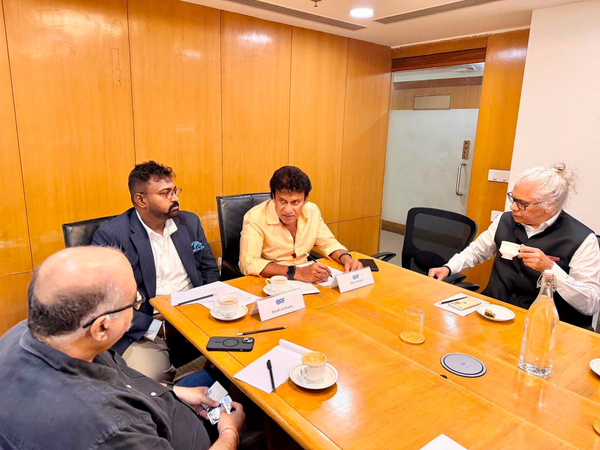
The 66-year-old veteran leader of the Indian-origin Tamil community said this in a brief interview hours before flying back to Sri Lanka after three days of meetings with policymakers and others in New Delhi.
Ganesan said the JVP had created a perception of popularity for its government with the help of friendly social media.
“It is a constructed popularity… They have created an artificial picture,” he said. “They know the reality due to intelligence reports. And we also know the truth.”
Elections to Sri Lanka’s nine Provincial Councils, a product of the 1987 India-Sri Lanka Accord, have not been held by successive governments since 2014, undermining the system of devolved governance.
Dissanayake and the now-ruling National People’s Power (NPP) promised to hold them within a year of taking office. Dissanayake became the president in 2024 and led the NPP-JVP combine to a sweeping win in parliamentary elections in 2025.
Local body elections held also in 2025, however, saw the alliance lose millions of votes, although it managed to outsmart a divided opposition. The opposition alleges the government’s appeal has since eroded due to a variety of reasons.
Ganesan is one of four opposition members of the Parliamentary Select Committee to decide about Provincial Council elections. The next meeting of the committee is slated for July 10.
The entire opposition and civil organisations want the Provincial Council battle to be held under the present electoral system. But the NPP, citing quotas for women, wants a new framework which, if enforced, will further delay the already delayed electoral battle.
“We are not against women’s representation,” the MP said. “But in the name of women’s quotas, everyone is being denied their democratic rights.”
The NPP’s insistence on a new system, he felt, was a ruse to put off the elections.
A combative Ganesan, who otherwise counts President Dissanayake as a personal friend, added that the JVP had become “arrogant” since it stormed to power.
“They are arrogant because they fail to recognize and respect the opinions of others,” said the former minister. “They are shamelessly taking credit for even the achievements of the past governments.
“Anura comes to parliament one day and seeks cooperation from the opposition. But when we try to get across with ideas, he says ‘No, thanks’.”
The TPA leader agreed that Dissanayake was more popular than the NPP-JVP alliance but said the president found it difficult to carry everyone in the ideologically driven JVP with him.
Ganesan is among the key leaders of the 1.6 million-strong Tamil community of Indian origin whose ancestors were primarily shipped to Sri Lanka during the British colonial rule to work in the island nation’s plantations.
The community has, over the decades, made major strides socially and economically. Today, only around 100,000 ‘Indian Tamils’, as they are widely known, are employed in the tea industry.
While the community now asserts its identity as a separate ethnic group besides the Sinhalese, indigenous Tamils, and Muslims, its members are still among the poorest in Sri Lanka.
On top of the economic deprivation, those employed in the tea plantations still largely do not have ownership of the land where they live.
“The right to land is our primary demand,” Ganesan said, adding that New Delhi’s financial assistance to build houses for the ‘Indian Tamil’ community could not proceed without the government first providing land.
Some 10,000 of the promised 14,000 houses remain to be built, he said, pointing out that the Indian aid for every dwelling had risen from 900,000 SLR in the original MoU to 2.8 million SLR now.
Ganesan reiterated his community’s demand for a Non-Territorial Community Centre (NTCC) as an administrative entity for the ‘Hill Country Tamils’.
The NTCC has been proposed as part of the promised constitutional reforms to better represent the widely dispersed community, which spans six of the country’s nine provinces rather than being concentrated in one region.
The NTCC is designed to protect the minority community’s identity and advocate for its specific socio-economic needs. It will include as members MPs, provincial councillors and local government leaders from the ‘Indian Tamil’ community.