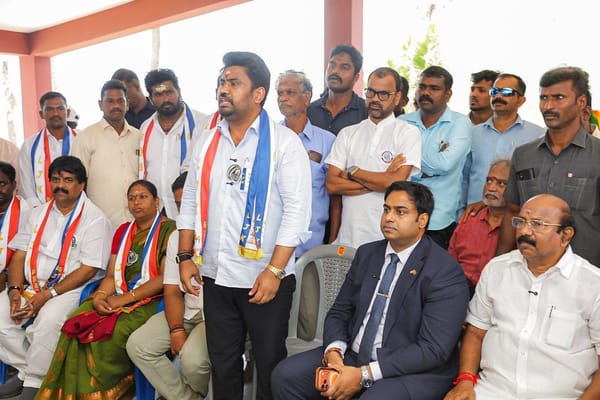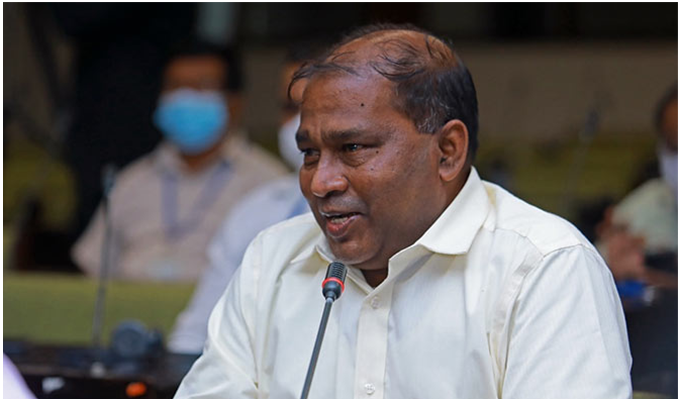
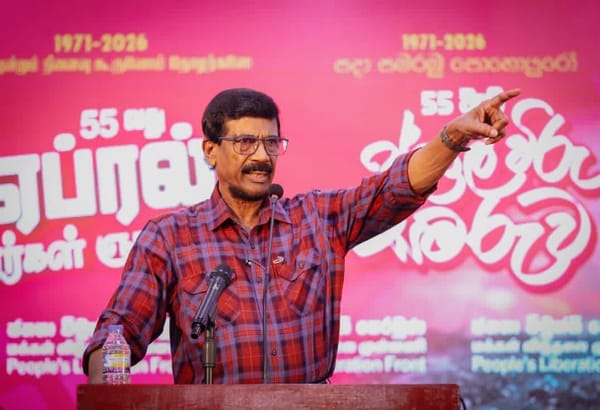
VAVUNIYA, Sri Lanka — April 6, 2026 — Tilvin Silva, general secretary of the Janatha Vimukthi Peramuna (JVP) and widely regarded as a key behind-the-scenes figure in Sri Lanka’s ruling establishment, said on Sunday that the truth behind the 2019 Easter Sunday bombings would “emerge very soon,” while casting suspicion on individuals promoting alternative narratives through recent book publications.
Speaking at the 55th April Heroes’ Commemoration in Vavuniya, Mr. Silva suggested that some of those involved in publishing or promoting books questioning the identity of the attacks’ “mastermind” were themselves “key figures” connected to the issue. He did not name any individuals or provide evidence.
While he did not name individuals, his remarks appeared to target Searching for the Mastermind Behind the Easter Sunday Attacks, a recently released book by Udaya Gammanpila, a lawyer and former minister. The book was launched on March 31 at an event attended by several prominent political figures, including former Presidents Mahinda Rajapaksa and Gotabaya Rajapaksa, as well as Opposition Leader Sajith Premadasa.
“Proper investigations are underway,” Mr. Silva said. “The truth will come out very soon. There is no need for confusion.”
Seven years after the coordinated suicide bombings that killed more than 250 people, questions over accountability and the identity of those ultimately responsible continue to shape Sri Lanka’s political discourse. Competing narratives — advanced by politicians, investigators and independent commentators — have deepened public uncertainty rather than resolved it.
Mr. Silva used the platform to mount a broader defense of the government, accusing opposition parties of attempting to destabilize the administration through what he described as false allegations amplified by sections of the media. He argued that the government, elected on a mandate to dismantle entrenched political and institutional structures, required time to deliver meaningful change.
“It is not possible to develop a country or transform a society in a single day,” he said, describing the existing system as the product of more than seven decades of political evolution. “Countries like Singapore and China took between 10 to 25 years to achieve such transformations. We cannot complete this work within five years.”
He said the government must be protected until its objectives are achieved, expressing confidence that the public would continue to support it. “There is a belief that the people will stand with the government,” he said, adding that, if necessary, they would take to the streets to defend it rather than attempt to overthrow it.
Mr. Silva also sought to place responsibility for Sri Lanka’s economic crisis on past political leadership, citing a Supreme Court determination on the country’s financial collapse. He said the current administration remained focused on structural reforms while attempting to stabilize the economy.
Referring to global tensions, including developments in the Middle East, he said the government was taking steps to mitigate potential economic fallout, particularly disruptions to fuel supply, and urged the public to avoid hoarding and profiteering.
He dismissed suggestions that public unrest would intensify in the coming months, saying the government had withstood sustained criticism in the past and would not be weakened by allegations.
Mr. Silva said the administration remained committed to addressing long-standing structural challenges while fostering unity across ethnic and social divides.