GALLE, Sri Lanka — Sri Lanka found itself unexpectedly drawn into a widening Middle East conflict on Wednesday after the United States confirmed that one of its submarines had torpedoed and sunk an Iranian warship in waters less than 40 nautical miles off the island’s southern coast.
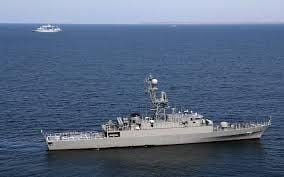
U.S. Defense Secretary Pete Hegseth said at a briefing in Washington that an American submarine had destroyed the Iranian frigate IRIS Dena with a torpedo. The strike, he said, was part of a broader campaign targeting Iran’s naval capabilities.
The confirmation transformed what Sri Lankan authorities had initially described as a maritime emergency into a geopolitical incident unfolding within the country’s search-and-rescue zone.
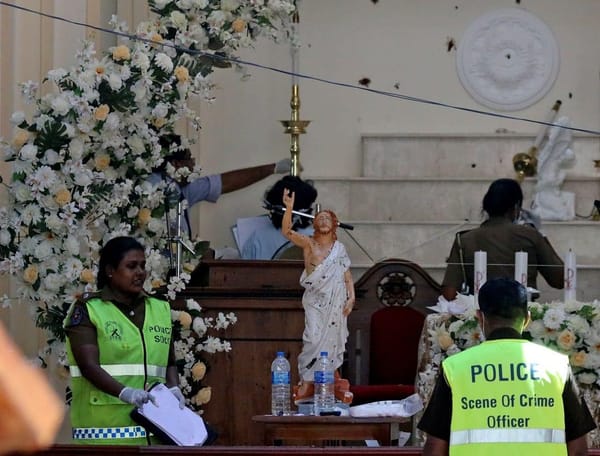
More than 100 Iranian sailors remain missing, according to Sri Lankan officials, while 32 survivors were rescued and taken to Karapitiya Teaching Hospital in Galle, where doctors were treating injuries ranging from burns and blast trauma to severe hypothermia.
Sri Lankan authorities said they had received no advance warning of the attack and had responded solely in accordance with international maritime obligations.
Sri Lanka Responds to Distress Call
The incident began early Wednesday morning when the IRIS Dena, a Moudge-class frigate belonging to Iran’s Southern Fleet, issued a distress call in waters south of Galle.
Sri Lanka’s navy and air force dispatched two naval vessels and a surveillance aircraft to the area.
Rescue teams arriving at the scene found the warship rapidly taking on water. Despite attempts to assist, the vessel sank during the rescue operation.
“We responded to the distress call under our international obligations, as this falls within our search-and-rescue area in the Indian Ocean,” said Buddhika Sampath, spokesman for the Sri Lanka Navy.
Several bodies were recovered from the sea, and naval vessels continued search operations throughout the day.
Pentagon Confirmation
Hours after the rescue operation began, the United States publicly confirmed the cause of the sinking.
“A U.S. submarine sank the Iranian warship IRIS Dena off the coast of Sri Lanka with a torpedo,” Defense Secretary Pete Hegseth said.
The Pentagon described the strike as part of an expanding military campaign against Iranian naval assets.
The United States has already acknowledged destroying multiple Iranian vessels since hostilities escalated in late February.
Military analysts say submarine attacks against surface warships are extremely rare in modern conflicts, making the incident a notable escalation.
“The submarine strike occurred near a major international shipping corridor,” defence analysts told Jaffna Monitor, noting that such an attack in these waters is highly unusual and could carry broader strategic ripple effects across the Indian Ocean region.
Sri Lanka’s Delicate Position
For Sri Lanka, the incident presents an immediate diplomatic challenge.
The island nation, which has long pursued a non-aligned foreign policy, has sought to avoid taking sides in major geopolitical rivalries despite its strategic position along one of the world’s busiest maritime routes.
Officials in Colombo said the government had not been notified prior to the attack and only became aware of the incident when the distress signal was received.
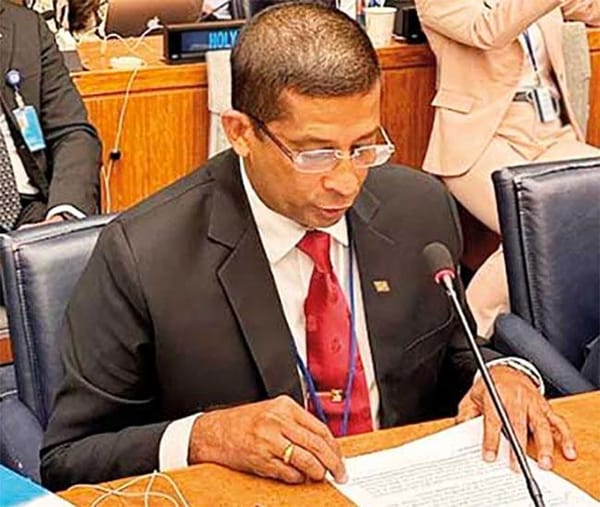
In parliament earlier in the day, Foreign Minister Vijitha Herath confirmed that Sri Lankan forces had conducted rescue operations but did not comment on the cause of the sinking.
Iranian embassy officials in Colombo later travelled to Galle to meet survivors and coordinate with Sri Lankan authorities.
Police tightened security around the hospital where the injured sailors were being treated.
War Expands Beyond the Gulf
The sinking comes amid a rapidly escalating conflict between the United States, Israel, and Iran that began on February 28 following coordinated strikes against Iranian targets.
The war has already spread across multiple theatres in the Middle East and the Persian Gulf.
Iran has launched drone and missile attacks against Israeli territory and U.S. military installations across the region, while Washington has targeted Iranian military infrastructure and naval assets.
Until Wednesday’s incident, however, the fighting had largely been confined to the Gulf region.
The attack near Sri Lanka suggests the conflict may now be extending into the wider Indian Ocean.
Search Operations Continue
Sri Lankan naval vessels continued search operations into the evening, though officials said the chances of finding additional survivors were diminishing.
“We are continuing the search,” a defence ministry official said, speaking on condition of anonymity. “But we do not yet know what happened to the remaining crew.”
The IRIS Dena, carrying roughly 180 sailors, had recently participated in the Milan 2026 International Fleet Review hosted by the Indian Navy in Visakhapatnam before beginning its return voyage to Iran.
Its sinking now places Sri Lanka at the edge of a conflict it has no role in shaping but whose consequences could ripple across the Indian Ocean.
The episode also highlights a deeper strategic reality: Sri Lanka’s location — long regarded as an economic and maritime advantage — can just as easily draw the island into global crises it neither controls nor can afford to be part of.