


JAFFNA, Sri Lanka —A coalition of doctors, engineers, journalists and educators in Jaffna is urging the governor and relevant government agencies to support an ambitious plan aimed at making the Jaffna Peninsula more resilient to climate stress, seeking to move the proposal from concept to implementation.
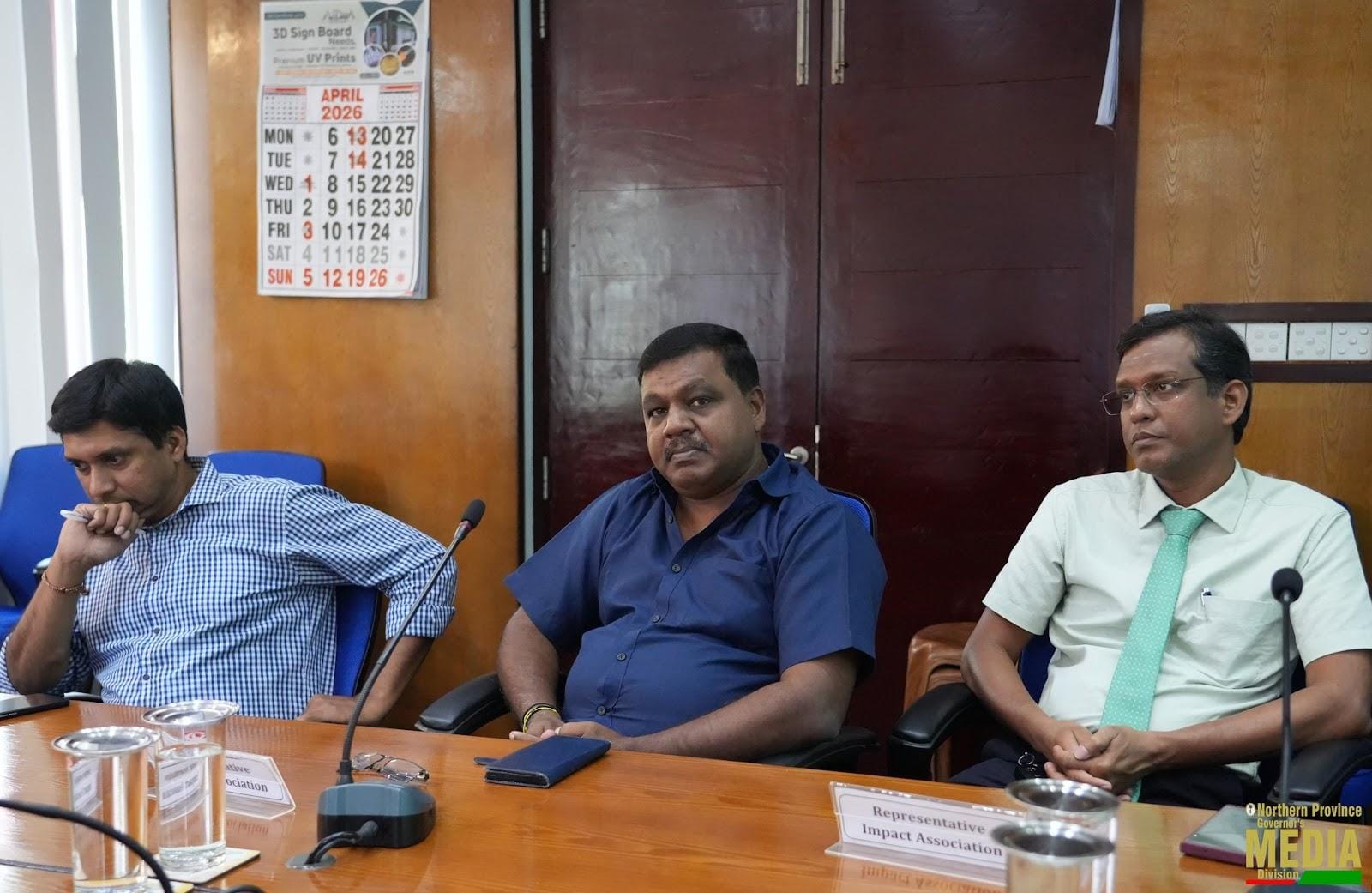
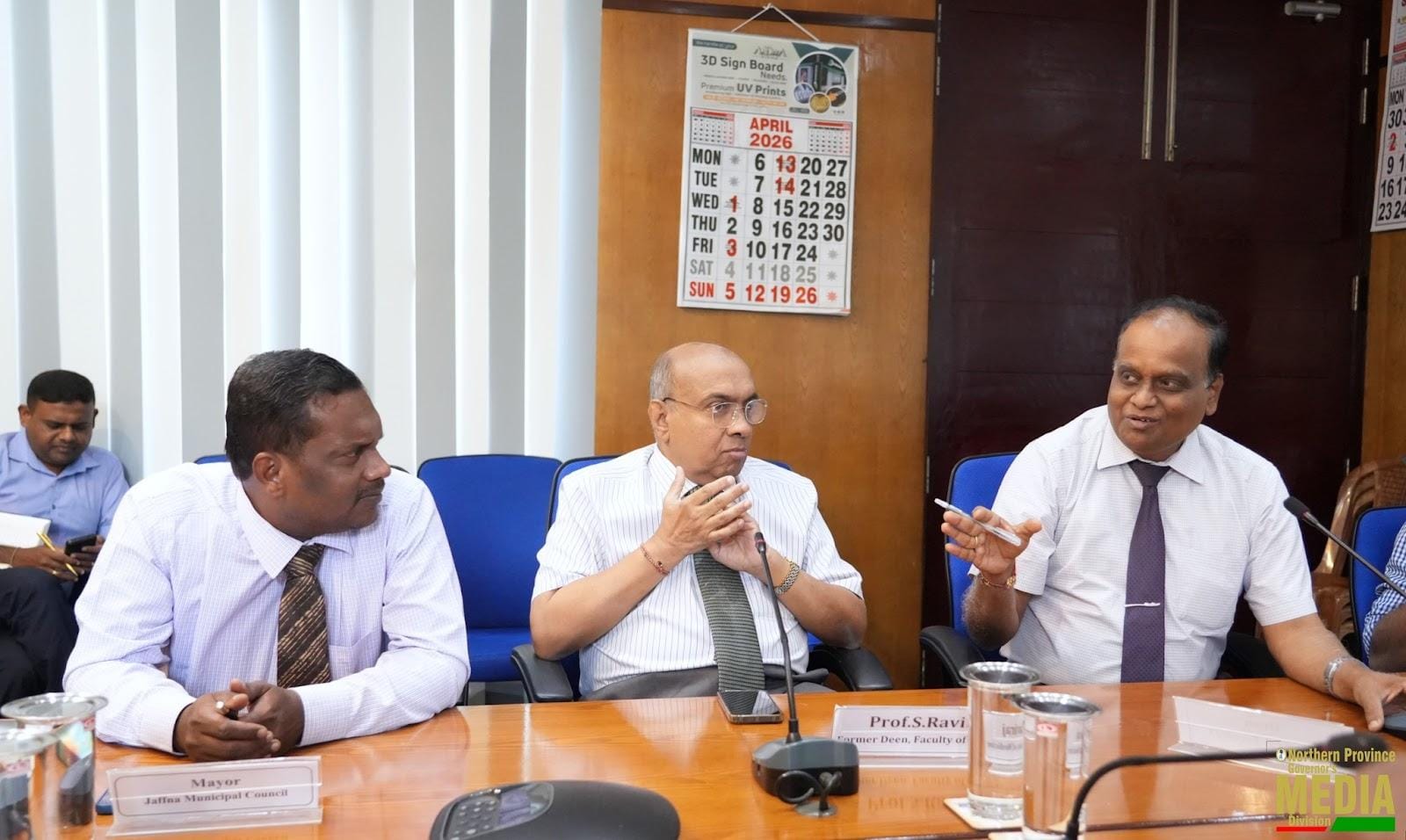
The initiative, titled “Green Jaffna,” was presented Tuesday at the Governor’s Secretariat, where Governor N. Vethanayagan reviewed a pilot proposal submitted by IMPACT — Interdisciplinary Multifaceted Professionals for Active Community Transformation — a civic forum comprising Jaffna-based professionals across multiple disciplines. Officials from the Jaffna Municipal Council, the Central Environmental Authority, the Ceylon Electricity Board, and the University of Jaffna’s medical faculty also attended the discussion.
Organizers said the project does not seek direct government funding. Instead, they requested administrative coordination and procedural facilitation to enable implementation across multiple regulatory domains.
A Plan Centered on Measurable Outcomes
The first phase calls for planting 1,000 trees, establishing a small urban forest, greening school compounds and public institutions, and setting up two to three organic composting units. Organizers say the emphasis is not merely on planting but on long-term viability, with a target survival rate of at least 80 percent for the trees.
To meet that benchmark, IMPACT plans to use geographic information systems to identify and map planting sites, conduct weekly inspections, and issue quarterly monitoring reports. Tree-adoption programs, volunteer networks, and institutional partnerships are intended to sustain the effort beyond its initial phase.
In a peninsula already grappling with groundwater salinization, rising surface temperatures, and coastal land degradation, environmental planners have cautioned that structured reforestation and coordinated urban greening may be necessary to ease mounting ecological pressures.
The Coordination Challenge
Representatives of IMPACT told officials that their principal concern is interagency coordination. They requested that agencies such as the Ceylon Electricity Board, the National Water Supply and Drainage Board, land authorities, Pradeshiya Sabhas, and the Jaffna Municipal Council serve as institutional partners to prevent regulatory and administrative delays during site preparation and planting. They also asked the governor to facilitate coordination among the relevant authorities, a request to which he responded positively.
Development initiatives in northern Sri Lanka have historically encountered procedural slowdowns across agencies, often complicating implementation timelines even when political support exists.
Officials at Tuesday’s meeting agreed to convene a broader stakeholder consultation to identify and finalize pilot locations.
A Vulnerable Landscape
Jaffna sits on a low-lying limestone peninsula with limited freshwater reserves and sparse forest cover to moderate temperatures or stabilize soil. Groundwater — the region’s principal source of drinking water and irrigation — has grown increasingly saline because of over-extraction and seawater intrusion into its porous aquifer system. Rapid urban expansion has further reduced vegetation, intensifying heat retention across densely built neighborhoods.
Residents say temperatures have become noticeably harsher in recent years, while concerns about air quality have grown. Although some attribute these shifts to broader climatic changes and transnational pollution patterns, environmentalists also trace the strain to the large-scale loss of tree cover during nearly three decades of armed conflict, when extensive vegetation was cleared or destroyed.
Meteorological and environmental data reinforce those observations. National climate assessments indicate a steady warming trend across Sri Lanka, marked by fewer consecutive wet days and lengthening dry spells. In Jaffna, research conducted by scholars affiliated with the University of Jaffna has documented a 1.6-fold increase in groundwater salinity over the past two decades. Nearly 59 percent of agricultural wells now record salinity levels considered unsuitable for irrigation — a shift attributed largely to excessive pumping and seawater intrusion into the peninsula’s fragile limestone aquifer.
Environmental scientists say expanded tree cover — if carefully calibrated — can play a supporting role in easing these pressures. Studies from seasonally dry tropical regions suggest that intermediate densities of deep-rooted native species can improve soil structure and enhance rainwater infiltration, strengthening natural groundwater recharge cycles. Tree canopies also lower surface temperatures and slow soil moisture evaporation.
The relationship between tree cover and groundwater, however, is complex. Dense planting can increase water consumption through transpiration, potentially offsetting recharge gains. Experts caution that reforestation alone cannot reverse seawater intrusion driven by excessive extraction. Still, they say that well-planned native tree cover, paired with responsible water management and soil conservation, can help stabilize aquifer systems over time.
Without such integrated measures, planners warn, heat retention and groundwater stress across the peninsula are likely to intensify.
Previous greening efforts in the region have often been episodic, lacking systematic monitoring or long-term maintenance frameworks. IMPACT’s proposal seeks to distinguish itself through structured oversight and professional stewardship, drawing participation from surgeons, consultant physicians, lawyers, teachers, engineers, and journalists.
Forum members say they have identified plant species suited to Jaffna’s soil composition and climatic conditions. Rather than relying solely on saplings, organizers intend to plant partially matured trees to improve survival rates and accelerate canopy development.
Even so, environmental specialists caution that tree-planting campaigns are no substitute for comprehensive land-use planning. Survival rates can decline sharply without sustained maintenance, particularly in areas where groundwater is already saline and irrigation resources are limited. Past initiatives in the peninsula faltered not because of insufficient enthusiasm, but because long-term stewardship mechanisms were never fully institutionalized. IMPACT acknowledges the same risk: without consistent monitoring, genuine community ownership, and dependable interagency coordination, even well-designed interventions can remain symbolic rather than transformative.
Public participation, IMPACT argues, is central to avoiding that outcome. Residents are envisioned not merely as beneficiaries but as stakeholders. Under the proposal, roadside trees would be informally linked to adjacent households, with families encouraged to oversee their care.
If a tree is planted in front of a home, organizers envision that household — including children — taking part in its planting and upkeep. The aim is to foster local ownership, ensuring that the trees are seen not simply as organizational installations but as shared civic assets.
While numerous environmental initiatives are already underway in Jaffna, the forum says its objective is to coordinate rather than duplicate existing efforts.
“We are not seeking credit,” said Prof. Balagopi, a Urological Surgeon and vice secretary of IMPACT. “We simply want good to come to Jaffna.”
Another member offered a rural proverb to capture the sentiment: it matters less who strikes the paddy, he said, so long as rice reaches the plate.