By M.R. Narayan Swamy
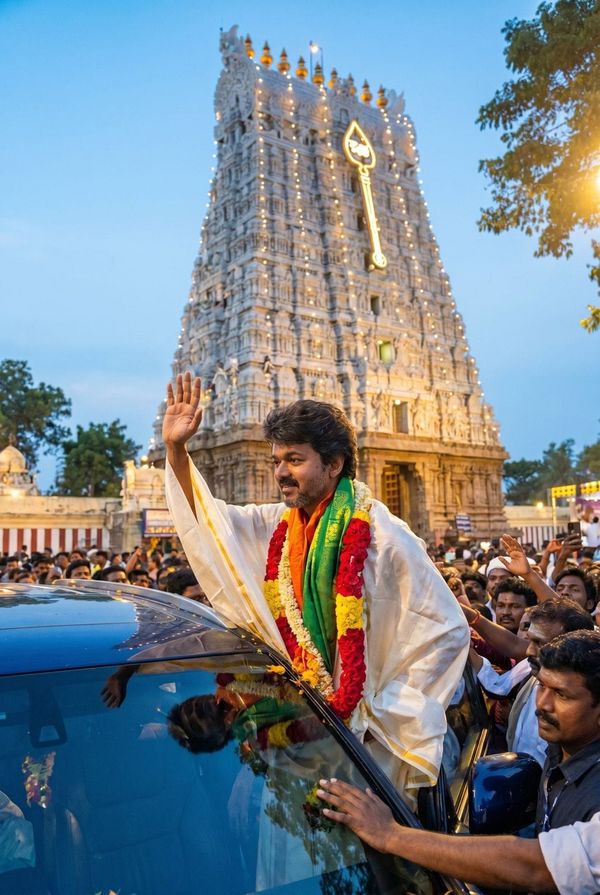
Popular Tamil film actor Vijay triggered a political tsunami in Tamil Nadu on Monday as his two-year-old TVK party was on its way to an unexpected but history-making victory in elections, burying six decades of Dravidian rule in one of India’s most economically developed states.
The 51-year-old star pulled off a sensational performance as his Tamilaga Vettri Kazhagam (TVK) appeared set to win more than 100 seats in the 234-member Tamil Nadu Assembly, where a party or coalition needs 118 seats to achieve a simple majority.
According to trends from vote-counting centers across the sprawling coastal state, the main opposition AIADMK, founded by the legendary late M.G. Ramachandran, later led by J. Jayalalithaa, was in second place, while the ruling DMK, captained by M.K. Stalin was relegated to a shocking third spot.
Even if TVK fails to reach the magic mark of 118 seats, Vijay is widely expected to secure legislative support from smaller parties and form a government. Vijay has, however, made it clear that he is firmly opposed to the Bharatiya Janata Party (BJP) and refuses to ally with it.
If and when Vijay stakes claim to power, it would be the first time since 1967 that Tamil Nadu, now with 85 million people, will see a non-Dravidian party in Chennai’s Fort St George, where the state secretariat is located.
A Vijay victory would also rekindle the way the AIADMK, led by MGR, as the hugely popular actor Ramachandran was known, stormed to power in Tamil Nadu in 1977 and went on to rule the state until his death in December 1987.
But in contrast to Vijay, MGR could taste victory only five years after forming his party, during which time he converted his whopping fan devotion into an institutional political machine.
The then undivided DMK stormed to power in the state for the first time in 1967, ending decades of Congress rule on the strength of a powerful Dravidian movement that launched emotive campaigns against Hindi imposition as well as Brahminical domination of politics and administration.
Since then, Tamil Nadu has always been ruled by either the DMK or the AIADMK, which MGR, as the actor Ramachandran was known, founded in 1972 after breaking away from the DMK.
After Tamil Nadu voted on April 23 this year, most exit polls predicted that Vijay’s party would perform strongly on the strength of his popularity and could even emerge as a kingmaker. Only one exit poll projected that TVK would become the single largest party in the state.
But the DMK, whose overconfident cadres had been lampooning Vijay and his party for some two years, was confident of winning a second straight five-year term in power.
Naturally, as the election results began to emerge, there were noisy, wild celebrations at TVK offices in Chennai and across Tamil Nadu, while the DMK was in a state of shock over the sheer scale of its reverses.
In a most shocking development, outgoing chief minister and DMK stalwart Stalin was trailing by over 7,000 votes in the Kolathur constituency in Chennai to V.S. Balu of the TVK. Kolathur has been Stalin’s stronghold for four decades, and he defeated the AIADMK there by almost 49,000 votes in the last election in 2021.
Stalin’s son and heir apparent Udhayanidhi Stalin, however, led by some 3,000 votes over his TVK rival in the Chepauk-Thiruvallikeni seat, also in Chennai. Several bigwigs in the DMK, including ministers, were on the road to defeat in the state, election officials said.
The Congress, the DMK’s long-term ally, also suffered losses.
Till about 2 pm, there was no public reaction from Vijay, whose real name is Joseph Vijay Chandrasekhar. But TVK spokesman Felix Gerlad said: “The DMK was running about in a dark room. Now they know the reality. We will form a government on our own.”
Vijay, born in Madras (now Chennai) on June 22, 1974, has appeared in nearly 70 films as a lead actor since making his debut as a child actor in 1984.
Born to a Christian father and a Hindu mother, Vijay is one of India's highest-paid actors. He has won several awards and is addressed as Thalapathy or Commander by his supporters.
It was in February 2024 that Vijay formally entered politics with the launch of TVK, announcing that he would retire from films after completing his final project, Jananayagan.
Like most Tamil Nadu politicians, Vijay has spoken on issues related to Sri Lanka.
In late 2025, he told an election rally that the Sri Lankan Tamils’ voices must be heard and their dreams must be respected.
In the same meeting, he referred to Tamil Tigers leader Velupillai Prabhakaran as a “mother” to Sri Lankan Tamils. The statement triggered a row.
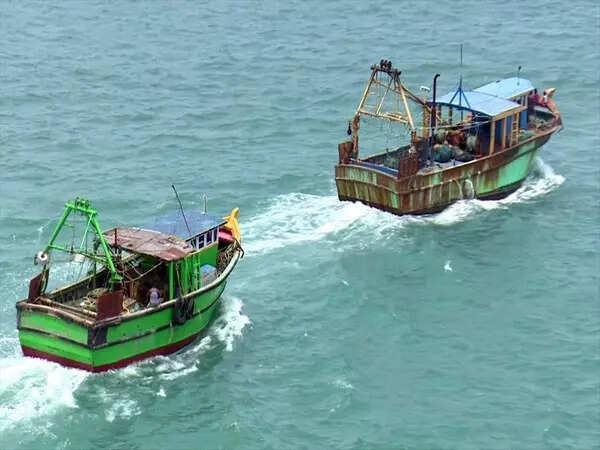
But when Vijay criticized New Delhi for not protecting Tamil Nadu fishermen in the sea dividing India and Sri Lanka and called for retrieving Katchatheevu islet from Colombo, Sri Lankan Foreign Minister Vijitha Herath asserted that Katchatheevu belonged to the island nation.