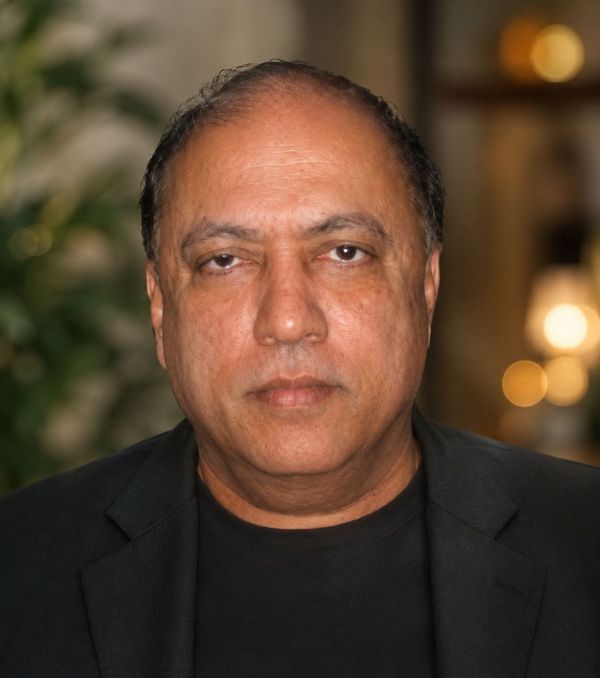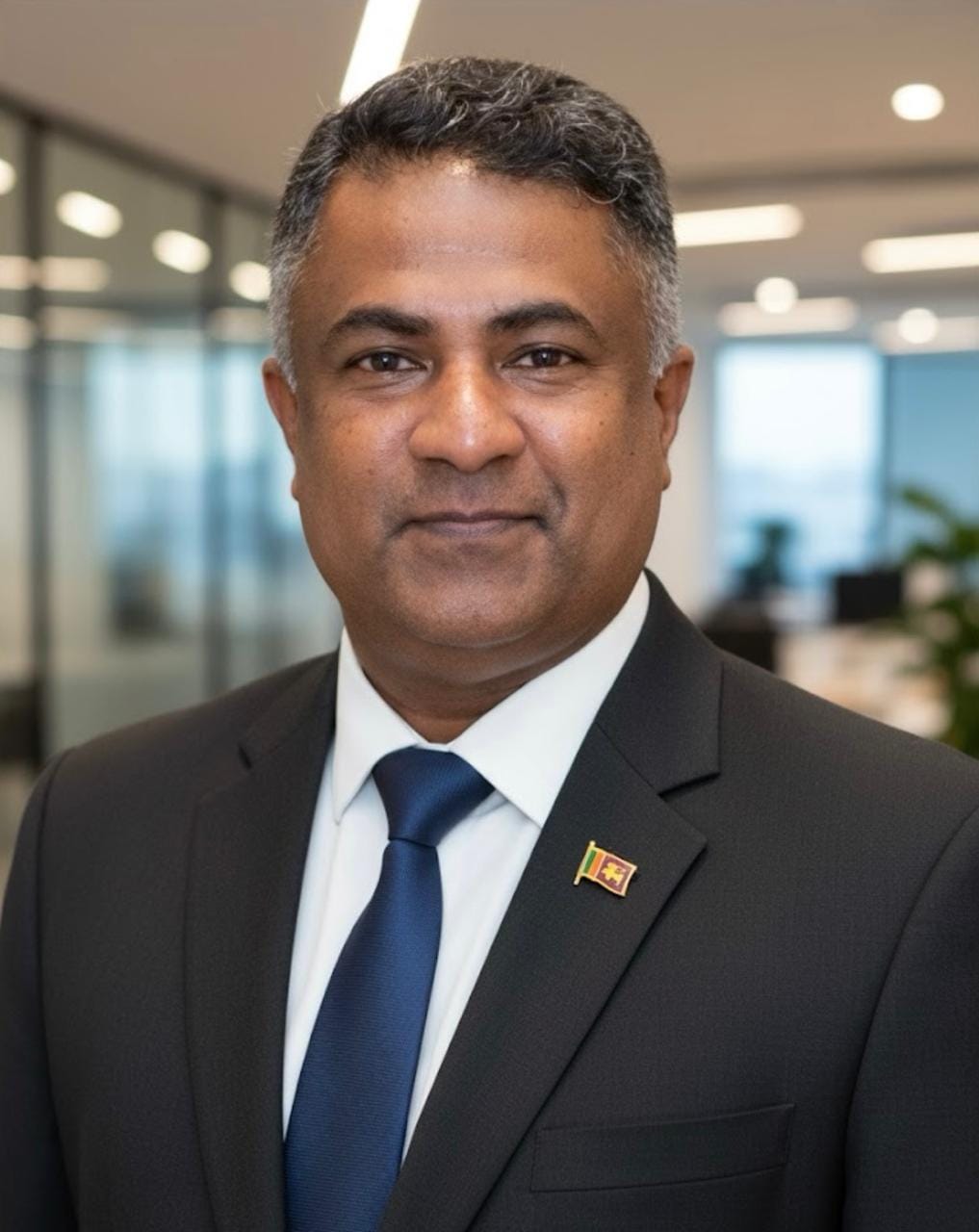
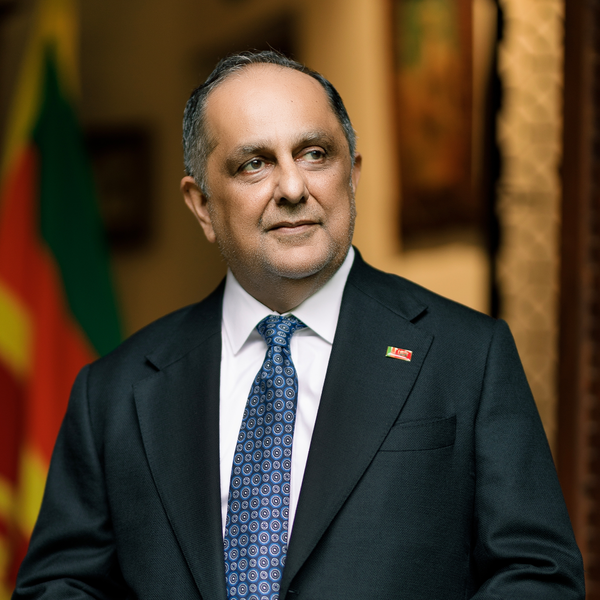
COLOMBO — Western Province Governor and business tycoon Hanif Yusoof has announced his resignation, submitting his letter to President Anura Kumara Dissanayake, according to senior government sources. Following the submission, the President is said to have requested that he remain in office for approximately one more month to ensure administrative continuity during the transition period, according to credible sources who spoke with Jaffna Monitor.
The resignation, if formally accepted, ends one of the more unconventional gubernatorial tenures in recent Sri Lankan political history and brings to a close less than two years in a post the logistics magnate had taken on with considerable public goodwill.
Who is Hanif Yusoof
Born in Kollupitiya in 1958 to Gujarati parents, Yusoof was educated at Royal College, Colombo, and went on to co-found Expolanka Holdings, which under his leadership grew to become the largest company by market capitalisation in Sri Lanka. Starting out making deliveries on a Honda motorcycle, he built what would become a global multinational with offices in 39 countries, eventually attracting a buyout from Sagawa, the Japanese logistics giant.
After President Dissanayake’s election victory in September 2024, Yusoof was appointed Governor of the Western Province on 28 September 2024. He was one of several technocratic and civil society figures the new NPP government installed as governors across the country’s nine provinces, in a deliberate break from the practice of rewarding loyalist politicians with ceremonial postings.
At the time of his swearing-in, Yusoof stated that the President had appointed him “with a clear objective to bring about meaningful change to the system, uplift the poor and strengthen the public sector,” and expressed his commitment to ending corruption and bribery.
What went wrong
The official reason cited is personal, with sources describing a tension between public duty and private business. His resignation has been linked to difficulties in balancing his official responsibilities with private business interests, which sources claim became increasingly constrained after assuming public office.
That tension became politically charged early this year. On 29 January 2025, allegations surfaced accusing Yusoof of being connected to the unauthorised release of 323 containers by Sri Lanka Customs without inspection. Opposition MPs and social media users alleged that his former company, Expolanka Holdings, had facilitated the clearance.
Yusoof vehemently denied the accusations, calling them “malicious and fabricated,” adding: “I have been bombarded with untruths, malicious social media posts, and statements from politicians who have not even been elected by the people.”
Sri Lanka Customs formally denied the allegations, confirming that the containers were released by a Screening Unit appointed in July 2024 to ease container traffic congestion, and that Expolanka containers were not among them. Yusoof himself stressed that he held no decision-making position within Expolanka, having resigned from all positions following the company’s delisting from the stock market, and was serving only as an advisor.
Then, in August 2025, resignation rumours surfaced publicly for the first time. Yusoof dismissed those reports as “baseless and untrue,” reaffirming his commitment to President Dissanayake’s vision and saying he had “dedicated myself fully to the mission of rebuilding our nation, without pause or hesitation.”
The Special Envoy appointment
In October 2025, President Dissanayake appointed Yusoof as the President’s Special Envoy for Foreign Investment, in recognition of his experience in global investment partnerships — a role he was to undertake as an honorary service in addition to his duties as Governor. The dual appointment was widely read as a face-saving arrangement, one that gave the businessman a more natural role while keeping him within the government’s orbit. The dual appointment has now evidently proven insufficient to retain him in the gubernatorial post itself
The political backdrop
Yusoof’s departure raises questions about the NPP government’s ability to hold its technocratic appointees — figures brought in from outside partisan politics, whose value lies precisely in their distance from it, but who lack the ideological or political incentive to endure the pressures public office brings.
The Western Province governorship is not a ceremonial footnote. It covers Sri Lanka’s most populous and economically consequential province, home to Colombo, the country’s primary port, commercial district, and administrative hub. Who fills the post, and how, carries real consequence for the government’s economic narrative as Sri Lanka continues its IMF-backed recovery.
No official statement has yet been issued by the President’s office or the Governor’s office confirming the resignation. The search for a successor, if one is underway, has not been publicly acknowledged.