Sri Lanka's government spent a year telling its people one story. When it appeared before a court, it told another.
On April 8, 2025, the Criminal Investigation Department arrested Sivanesathurai Chandrakanthan — widely known as Pillayan — at the TMVP headquarters in Batticaloa. Within two days, Public Security Minister Ananda Wijepala stood in Parliament and declared that significant information had emerged linking Pillayan to the Easter Sunday bombings of April 21, 2019 — the worst terrorist attack in Sri Lanka's history, which killed 269 people. President Anura Kumara Dissanayake, who had built his entire political campaign around the promise of exposing those responsible, referenced the arrest in the same breath at campaign rallies.
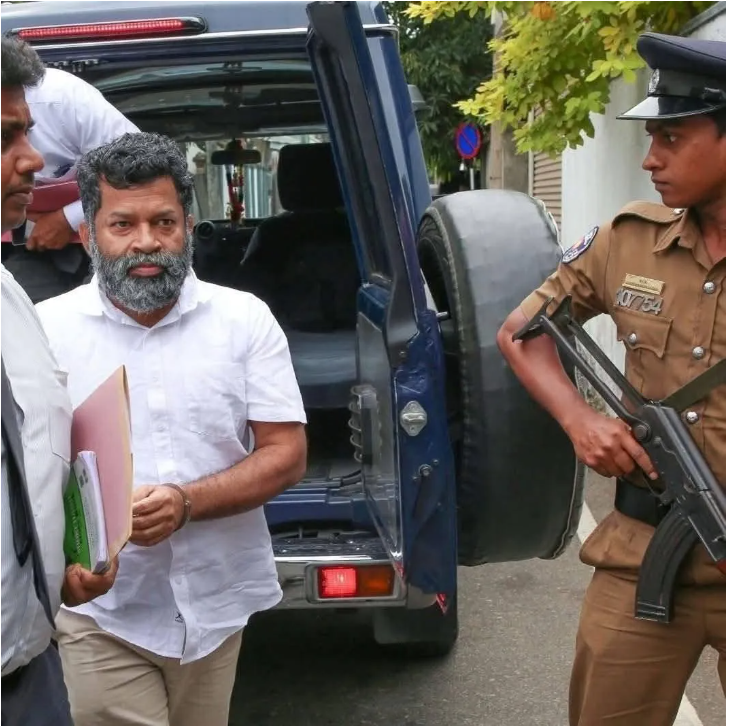
The government held Pillayan for 359 days under the Prevention of Terrorism Act without producing him before a court. Then, on April 2, 2026, it brought him before the Mount Lavinia Magistrate. Not one Easter Sunday charge was filed. The case before the court was the 2006 abduction and murder of a university vice chancellor.
The magistrate remanded Pillayan pending advice from the Attorney General.
Where They Said It
On April 10, 2025, two days after the arrest, Minister Wijepala told Parliament that substantial evidence had emerged linking Pillayan to the bombings. On April 12, President Dissanayake went further, connecting the arrest to his government's flagship promise to deliver Easter justice. As the May 2025 local council elections approached, the arrest was presented to voters as proof that the NPP government was doing what its predecessors had refused to do.
In July 2025, during an adjournment debate on the Easter Sunday attacks investigations initiated by ITAK MP Shanakiyan Rasamanickam, Minister Wijepala returned to Parliament with a more detailed account. He stated that Pillayan — who was in remand custody at Batticaloa Prison at the time of the attacks — had prior knowledge of the 2019 Easter Sunday bombings. He added that Pillayan had met NTJ leader Zahran Hashim and had subsequently given a secret statement to a magistrate about the attacks.
'Investigations have revealed that he had knowledge of the attacks,' the Minister said. 'However, I will not disclose further details at this point as inquiries are ongoing.'
The Minister also referenced the November 30, 2018 killing of two police officers in the Batticaloa area. He noted that a former LTTE member named Ajantha had been arrested after allegedly confessing, but that CID investigations later revealed Ajantha had been framed — a riding jacket belonging to him had been used to plant false evidence — in order to conceal the real perpetrators and their possible links to the wider Easter conspiracy.
These were not vague suggestions. They were detailed, named, and presented to Parliament as the fruit of active investigation. The minister spoke with the authority of the state.
Not one of these claims produced a charge.
The Shield That Made It Possible
Under Article 67 of the Constitution and the Parliament (Powers and Privileges) Act No. 21 of 1953, as amended, speech, debate, and proceedings in Parliament are absolutely protected. The Act is explicit: parliamentary speech and proceedings 'shall not be liable to be impeached or questioned in any Court or place out of Parliament.' A minister who names a man as a terrorism suspect from the dispatch box faces no defamation claim, no criminal proceeding, and no evidentiary standard of any kind.
Parliamentary privilege was designed to protect free legislative debate — not to provide cover for unverifiable accusations against individuals.
In this case, the Easter allegations lived entirely within that protected space. President Dissanayake referenced the arrest in connection with Easter at campaign rallies — political statements, not legally testable ones. Neither he nor Minister Wijepala made the Easter connection in any forum subject to defamation law or evidentiary scrutiny.
The CID issued no official public statement confirming what Pillayan had or had not disclosed. The government made its case to the country in forums where it could not be challenged — and presented its case to the court on entirely different grounds.
The Case the Government Actually Filed
The case prosecutors brought before the Mount Lavinia Magistrate's Court on April 2 was real, and it was serious — but it had nothing to do with Easter.
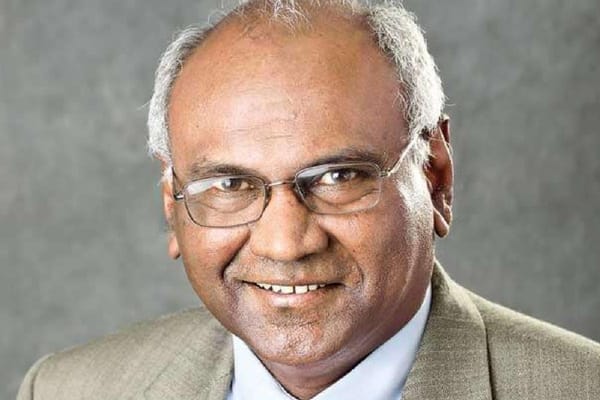
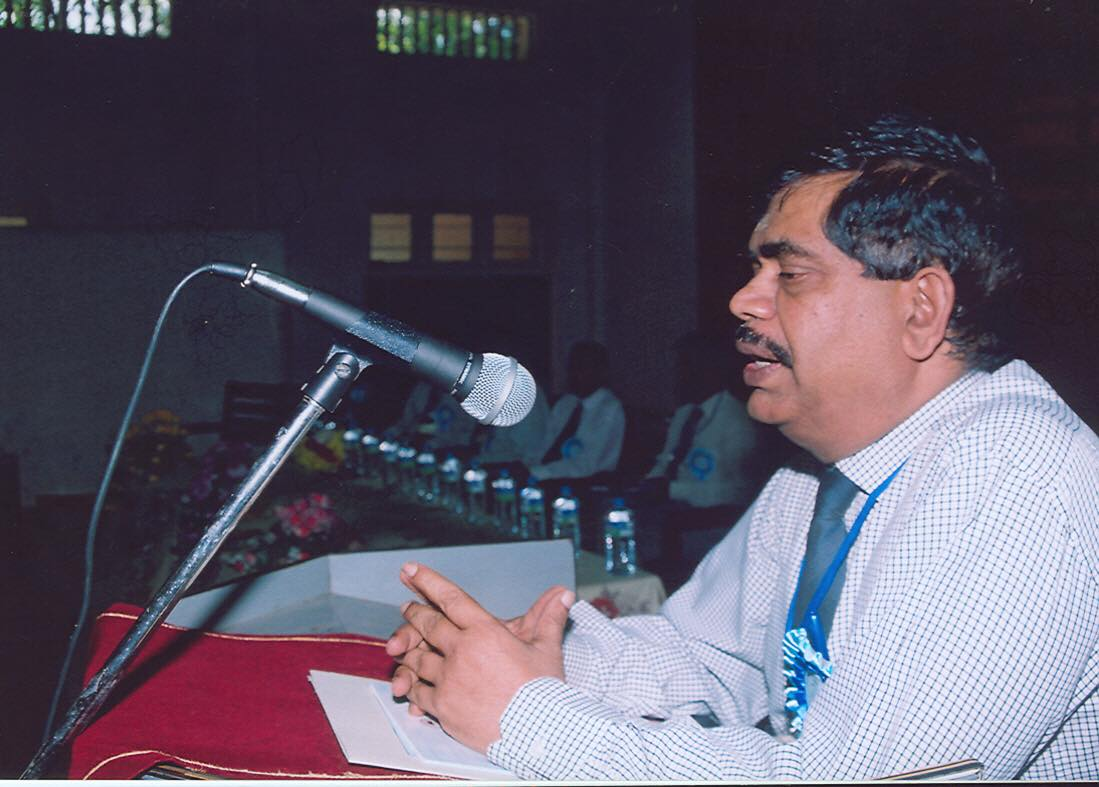
Professor Sivasubramaniam Raveendranath, Vice Chancellor of the Eastern University of Sri Lanka, disappeared on December 15, 2006. He had attended the annual conference of the Sri Lanka Association for the Advancement of Science at the Science House in Colombo 07. An armed group allegedly linked to Pillayan's Tamil Makkal Viduthalai Pulikal had previously abducted the Dean of the Faculty of Arts and held him until Raveendranath agreed to resign. He submitted his resignation. He was told it could not be accepted — his was a presidential appointment. He continued working from Colombo.
On December 15, 2006, he attended what his daughter said was meant to be his final administrative meeting before returning home. She called at 2:45 p.m. His phone was off. He was never seen again.
CID investigators told the magistrate that Raveendranath had been taken to an illegal detention and torture facility in Sevanapitiya — a site in the Eastern Province — where he was murdered and his body burned. They named Pillayan as the first and primary suspect. They described Sevanapitiya as a facility where civilians, government officials, and businessmen were held, tortured, and killed, and said the evidence confirmed that Pillayan had led what investigators characterised as a part of Sri Lanka's notorious 'white van' abduction culture.
They also disclosed that 362 T-56 assault rifles, 36 9mm pistols, and one micro pistol issued to Pillayan's group under the Mahinda Rajapaksa government had never been returned to the state.
Udaya Gammanpila — Pillayan's lawyer and the leader of the Pivithuru Hela Urumaya party — spoke to reporters after the April 2 court appearance. He said he would challenge the remand order before the Court of Appeal, and characterised the government's conduct in terms that, given the complete absence of any Easter-related charge, were difficult to dismiss.
'The claims made by President Dissanayake and Public Security Minister Wijepala that Pillayan was arrested under the PTA for the Easter Sunday investigations have been proven to be a lie,' he said. 'One year has passed. Not a single Easter charge has been filed. What was said in Parliament was said only in Parliament — because it could not be said anywhere else.'
The PTA as a Political Instrument
Sri Lanka's Prevention of Terrorism Act has been criticised for decades by the United Nations Human Rights Council, Amnesty International, Human Rights Watch, and multiple UN Special Rapporteurs. Its defining feature — the power to detain a person for extended periods under executive order, without judicial oversight and without charge — has been disproportionately applied against Tamil suspects and former combatants. President Dissanayake himself pledged during his 2024 election campaign to replace the PTA with legislation that would address security threats without curtailing civil liberties.
A Case Still Unfolding
The prosecution of Pillayan now proceeds on the basis of the 2006 abduction and murder of Professor Sivasubramaniam Raveendranath. His family has waited nearly two decades for accountability, and the case warrants a full and transparent prosecution.
The same standard applies to the Easter Sunday attacks. The victims and their families are owed a process grounded in evidence and tested in a court of law — not one shaped by allegations made in Parliament under privilege, timed to election cycles, and quietly abandoned when a courtroom required more than words.
THE RECORD
April 8, 2025: Pillayan arrested in Batticaloa under the Prevention of Terrorism Act.
April 10, 2025: Public Security Minister Wijepala tells Parliament: significant information links Pillayan to the Easter Sunday attacks.
April 12, 2025: President Dissanayake references the arrest in connection with Easter at campaign events.
July 2025: Minister Wijepala tells Parliament: Pillayan had prior knowledge of the Easter attacks, met NTJ leader Zahran Hashim, and gave a secret statement to a magistrate about the bombings.
April 2, 2026: Pillayan produced before the Mount Lavinia Magistrate's Court after 359 days in CID custody.
Easter charges filed: Zero.
Case before the court: The 2006 abduction and murder of a university vice chancellor.
Outcome: Remanded pending the Attorney General's advice.