

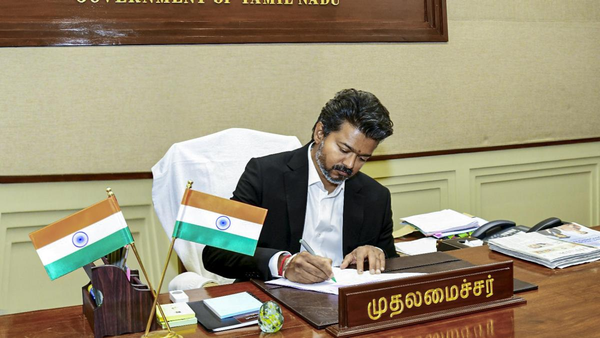
CHENNAI — Gajendrakumar Ponnambalam, leader of Sri Lanka’s Tamil National People’s Front (TNPF), has formally urged newly sworn-in Tamil Nadu Chief Minister C. Joseph Vijay to declare May 18 as Mullivaikkal Genocide Remembrance Day through an official resolution in the Tamil Nadu Legislative Assembly.
Mr. Ponnambalam sent the letter following Mr. Vijay's swearing-in on May 10 as Tamil Nadu's ninth chief minister — the first to lead a government formed by Tamilaga Vettri Kazhagam, the party Mr. Vijay founded in 2024 after a career as one of Tamil cinema's most prominent actors. TVK won the April 23 state assembly elections in a result that ended a 59-year unbroken hold on power by the DMK-AIADMK duopoly.
In the letter, Mr. Ponnambalam called on Mr. Vijay to move the resolution during the legislature's first sitting under his government. He pointed to a 2013 Tamil Nadu Assembly resolution that unanimously recognised the atrocities committed against Sri Lankan Tamils in the final stages of the civil war as genocide and called for an independent international investigation, and urged the new government to reaffirm that commitment.
"It is essential that during the very first sitting of the Assembly under your leadership, a resolution be passed declaring May 18 as Mullivaikkal Genocide Day," Mr. Ponnambalam wrote, according to the letter.
May 18 marks the date in 2009 when Sri Lankan forces militarily defeated the Liberation Tigers of Tamil Eelam, ending a decades-long civil war. Tamil communities around the world commemorate the date as a day of mourning for the tens of thousands of Tamil civilians who died during the final offensive. The Sri Lankan government has consistently rejected the characterisation of those events as genocide.
Mr. Ponnambalam argued that a formal declaration by Tamil Nadu would strengthen international Tamil advocacy for criminal accountability and signal continuity with the state's historical political position on Sri Lankan Tamil rights.
Legal experts, however, cautioned that the genocide characterisation remains contested under international law and may have complicated Tamil advocacy in some Western capitals.
While credible allegations of mass atrocities during the final offensive are extensively documented, including indiscriminate shelling of civilian populations in designated No Fire Zones, attacks on hospitals, and enforced disappearances, several analysts said the legal threshold for genocide under international law is more difficult to establish than the threshold for war crimes or crimes against humanity.
"The scale of civilian suffering and alleged violations is undeniable," said one expert familiar with international humanitarian law, who spoke on condition of anonymity because of the sensitivity of ongoing advocacy efforts. "But when advocacy centres on terminology that remains legally disputed, it can sometimes distract from the substantial evidence of grave abuses that is more firmly grounded in established international legal frameworks."
The experts stressed that calls for justice, accountability, and independent investigations remain legitimate and urgent regardless of the legal classification ultimately applied.
Mr. Vijay’s office did not respond to requests for comment before publication, ahead of the first sitting of the Tamil Nadu Legislative Assembly scheduled for today, Monday, May 11 , and Tamil Nadu government officials could not be reached.