
Just off the western coast of the Jaffna peninsula, across causeways and narrow spits of land edged by prawn and sea cucumber farms, lie the quiet islands of Pungudutivu and Nainativu—places rich in history, hardship, and humanity. Though I had previously set foot on nearby islands like Mandativu, Kayts, Nainativu, and Karainagar during the war years, Pungudutivu remained a name I’d only heard in passing—until now.
Prompted by a doctor’s account of the resilience and trials faced at the Pungudutivu Divisional Hospital, I set out on a recent visit, determined to witness life in this overlooked corner of Sri Lanka. The journey along the Pannai Causeway itself is a feast for the eyes—fishermen casting nets, salt-tinged winds sweeping across prawn and sea cucumber aquaculture ponds, and Palmyrah silhouettes marking the edge of each island.
Pungudutivu, home to about 3,000 people, seemed untouched by time. Its dusty roads were largely empty save for the occasional motorbike or three-wheeler. Some homes still bore the scars of war, their crumbling walls whispering stories of conflict. Yet, life pulses on—elderly men gather near roadside boutiques, schoolchildren walk or cycle in groups in their school uniforms, and toddy tappers climb the tall Palmyrah palms.
Electricity is intermittent, there is no Wi-Fi, only one post office serves the entire island, and there are no banks. Public and private transport options are limited, and most families rely on boats, bicycles, motorcycles, and three-wheelers to get by. The island comprises several villages, all under a single Grama Niladhari, with the local council administration based in Velanai.
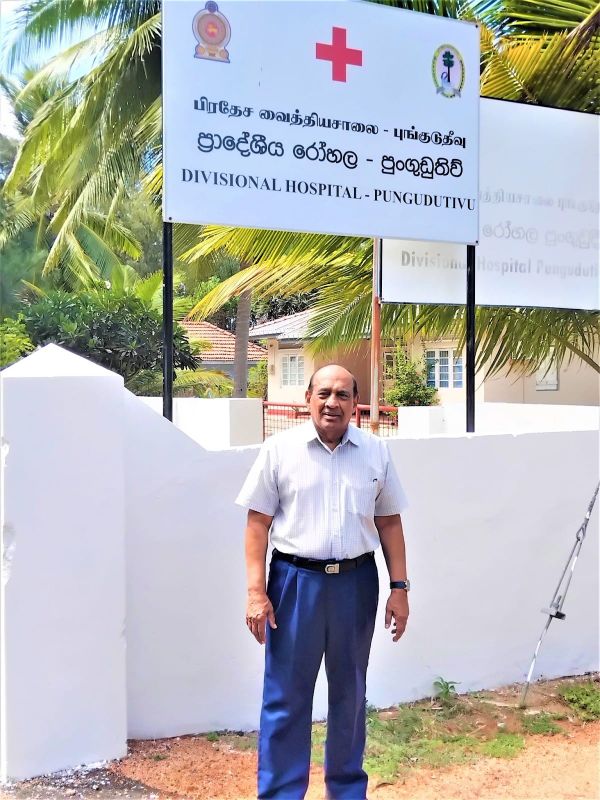
At the heart of the island stands the Divisional Hospital—a modest facility stretched to its limits. Staffed by just two doctors, the senior of whom also serves as the administrator and District Medical Officer, the hospital operates without trained nurses, laboratory services, or even basic diagnostic equipment. Attendants, drawn from non-clinical categories, provide whatever assistance they can.
Yet it is here that elderly patients with diabetes and chronic illnesses wait patiently, and where a wheezing patient is treated with nothing more than a single oxygen cylinder and sheer dedication. Clinics are held weekly, and a lone midwife advises expectant mothers to seek care in Jaffna—though few do, often arriving instead in labor at this humble facility. The Navy delivers freshwater by bowser; the community contributes patience and hope.
From the hospital, I continued on to Kurikadduwan (KKD) jetty, gateway to Nainativu. The 20-minute boat ride was rustic—diesel-powered wooden crafts with wooden benches, a Leyland engine under a tarp, and lifejackets loosely tied around waists. Yet, this waterway is a lifeline, ferrying not just pilgrims to sacred Buddhist and Hindu shrines, but also critically ill patients from far-flung islands like Delft.
Nainativu, shimmering in the sun, was alive with devotion—Nagadeepa Viharaya for Buddhists and Nagapooshani Amman Kovil for Hindus. During religious festivals, these islands become a blur of color, chants, and barefoot pilgrims. But outside these fleeting moments of celebration, life here remains isolated and slow-moving.
Pungudutivu may not appear in glossy brochures, yet its quiet nature speaks volumes. Its crumbling homes, overstretched doctors, and aging residents paint a sobering picture of neglect. Many of the youth—both educated and not—are leaving in search of better opportunities. I can’t blame them. If I were in their place, I might have done the same.
But this is not a tale of despair—it is a wake-up call. The island is rich in natural resources—sunlight, sea, breeze, and unspoiled beaches—and is uniquely positioned near Jaffna city, the Palaly airport, the KKS harbor, and other popular islands like Delft and Nainativu. With vision and commitment, it can be transformed into a hub of sustainable development, tourism, and livelihood.
This cannot be done by the government alone. It requires public-private partnerships, innovative ideas, and long-term investment.
Pungudutivu, unlike Nainativu, may not be in the headlines, but it is rich with the quiet dignity of a community enduring in the face of hardship. Its people, its doctors, its weather-beaten boats all tell a story—of survival, simplicity, and the need for a helping hand from those who hold the power to rebuild what time and conflict have worn down.
As I left, I carried with me not just the island breeze, but a deep respect for a community that continues to stand, even when the world seems to have moved on. If other nations can develop barren islands into thriving destinations, why can’t we?
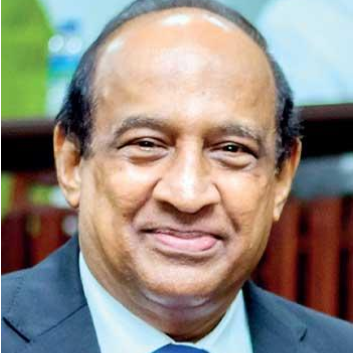
Note: The author, Dr. Gamini Goonetilleke, is one of Sri Lanka’s eminent surgeons.