
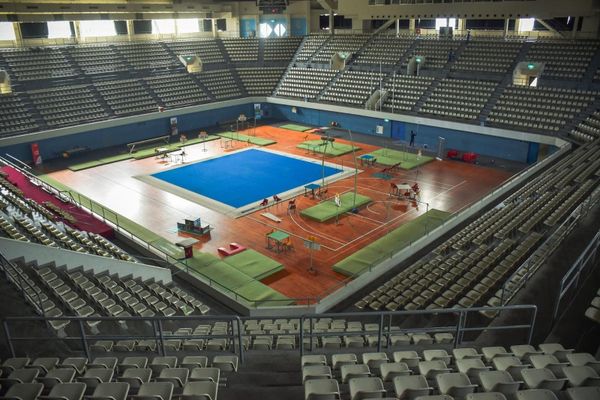
In a classic case of Tamils undermining Tamil upliftment, nearly Rs. 169 million allocated by the Ministry for the construction of a world-class indoor sports stadium in the Jaffna District is set to be returned and transferred to the Buildings Department, as the funds remain unutilised due to ongoing legal obstacles.
Jaffna Government Agent Maruthalingam Piratheepan disclosed this while responding to a query on the proposed indoor stadium at a recent District Development Committee meeting held at the Jaffna District Secretariat.
He stated that a court case related to the indoor stadium project is currently pending before the Jaffna courts—a fact well known to the public. Due to the ongoing legal proceedings, construction work cannot commence until the case is concluded.
“As construction cannot proceed while the matter is before court, steps have been taken to transfer the allocated funds to the Buildings Department,” he explained.
Piratheepan further noted that if a court order permitting construction is issued, work on the stadium will begin without delay. If not, the authorities will explore the possibility of selecting an alternative site and proceeding with the project elsewhere.
The indoor stadium was proposed to be built on approximately 120 perches of land within Jaffna’s Old Park. In this regard, the project was ceremonially initiated with the participation of Minister of Sports Sunil Kumara Gamage, Minister of Civil Aviation Bimal Rathnayake, Northern Province Governor Nagalingam Vethanayagam, and other officials.
However, objections soon emerged, as the Old Park is home to century-old heritage trees, with many insisting that they should not be destroyed to make way for an indoor sports complex. A stay order was subsequently obtained by ITAK acting secretary and lawyer M.A. Sumanthiran, following a case filed by a woman ITAK candidate from the last parliamentary election.
That said, individuals familiar with the project contend that the specific land allocated for the indoor stadium does not contain many trees and had long remained abandoned and unused.
Meanwhile, sports enthusiasts and sports-loving students whom Jaffna Monitor spoke to expressed deep disappointment over the turn of events. They pointed out that central governments rarely allocate substantial funds to Jaffna for sports infrastructure, and questioned the logic of Tamils themselves obstructing such projects when allocations are finally made.
“Asking the Sinhala-dominated state to invest in Jaffna is already difficult,” one student remarked. “If we stop these projects ourselves, what is the point of demanding development at all?”
The irony, as many in Jaffna wryly observe, is striking: the very individual who approached the courts to prevent the felling of trees is also the owner of a construction company—one that, by common understanding, would have overseen the cutting of thousands of trees in the course of development projects.
In Jaffna’s political theatre, it appears that environmentalism begins in courtrooms—but quietly ends at construction sites.