Lalith–Kugan Case Reaches Critical Stage as Court Presses Gotabaya Rajapaksa

Lalith–Kugan Case Reaches Critical Stage as Court Presses Gotabaya Rajapaksa


Share this post

The Jaffna Magistrate's Court has ordered former President Gotabaya Rajapaksa to submit a sworn affidavit by February 6, 2026, detailing the death threats he claims are preventing his appearance in court for a case involving the enforced disappearance of two political activists 14 years ago.

The directive came after Rajapaksa's legal team informed the court that the former president was unable to travel to Jaffna due to security concerns, specifically citing death threats against him.

The court's order requires Rajapaksa to provide specific, documented evidence of these alleged threats in the form of a legally binding affidavit, rather than relying on verbal representations made through his attorneys.

The 2011 disappearance case
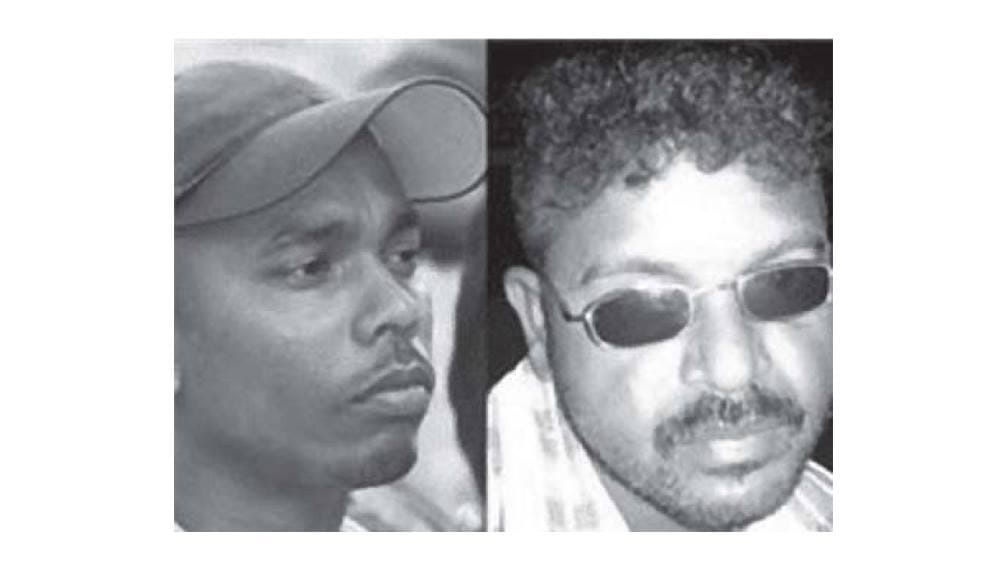
Lalith Kumar Weeraraj and Kugan Muruganandan, the two Front Line Socialist Party activists who disappeared in Jaffna in December 2011.

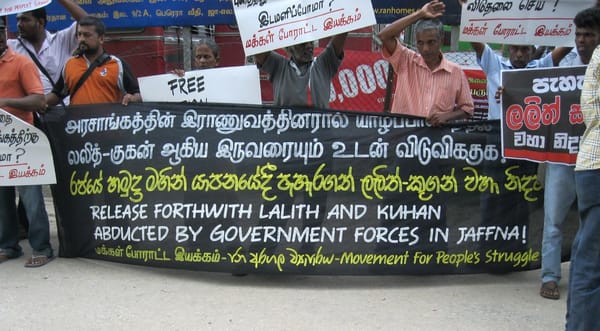
Gotabaya Rajapaksa has been summoned to appear before the Jaffna Magistrate's Court in connection with the abduction of Front Line Socialist Party (FSP) activists Lalith Kumar Weeraraj and Kugan Muruganandan, who were forcibly taken on December 10, 2011.

The two young activists, both in their twenties, were travelling on a motorcycle when they were abducted by unidentified individuals in Jaffna. Despite extensive investigations and numerous witness testimonies, their whereabouts remain unknown.

The abduction occurred during Rajapaksa's tenure as Defence Secretary under the Mahinda Rajapaksa administration, when he exercised broad control over security forces in the immediate post-war period.

Pattern of non-appearance

This is not the first time Gotabaya Rajapaksa has avoided appearing before the Jaffna court in this matter. The former president has been summoned multiple times over the years but has consistently cited security concerns as grounds for non-attendance.

Legal sources say the court's latest order represents a firmer stance, requiring Rajapaksa to formally substantiate his security claims through a sworn statement that carries legal consequences if found to be false or exaggerated.

"An affidavit is not merely a courtesy to the court—it's a legal document that can be challenged and carries penalties for perjury," explained a legal analyst familiar with the case. "The court is essentially saying: prove it."

If Rajapaksa fails to submit the required affidavit by the February 6 deadline, the court could potentially issue an arrest warrant, proceed with the case in absentia, or initiate contempt of court proceedings.

Disappearance Amid Systemic Impunity

The Lalith–Kugan case is among hundreds of unresolved enforced disappearance cases dating back to Sri Lanka’s civil war and its immediate aftermath.

Human rights organisations have documented numerous instances of abductions, extrajudicial killings, and enforced disappearances in the Northern and Eastern Provinces between 2008 and 2012, a period during which Gotabaya Rajapaksa served as Defence Secretary and oversaw security operations.

The two FSP activists had been vocal critics of alleged military abuses in the North, making their case particularly prominent among families seeking justice and answers about their missing relatives.


Share this post

Be the first to know

Join our community and get notified about upcoming stories

Subscribing...
You've been subscribed!
Something went wrong
Coming of Age
Image generated using Bing Image Creator https://www.bing.com/images/create

Coming of Age

Translated from the original Tamil short story pakkuvam (பக்குவம்) from the 1964 collection of short stories titled akkā (அக்கா) by A. Muttulingam. The original collection is available at noolaham.org. Translated with the author’s permission. “Kantharmadam Sellammā” “Five” “Kottadi Āchippiḷḷai” “Five” “Kokuvil Velāyuthapiḷḷai” “Ten” “Chitfund Nallāmpi side” “Twenty” “Co-operative store Rathinam’s wife” The traditional puberty ceremony was well under way. As people came up and put money


Eḻuttukkiṉiyavaṉ

Eḻuttukkiṉiyavaṉ

Courage to Belong: Minority Voices in National Renewal
A: Hambantota harbour- Developed in partnership with Chinese agencies

Courage to Belong: Minority Voices in National Renewal

Professor Mahesh Nirmalan MD, FRCA, PhD, FFICM University of Manchester Ethnocentric politics, appealing to the sentiments of one’s own ethnic group has resulted in several post-colonial countries being trapped in perpetual cycles of conflict. The situation is further complicated when larger nations intervene on behalf of a side with ‘real or perceived’ injustices, or more diabolically, exacerbate these differences to promote their own global ambitions. As a consequence, affected countries are


Prof. Mahesh Nirmalan

Prof. Mahesh Nirmalan

Wigneswaran Accuses NPP Government of "Racial Bias" on Tamil Self-Governance

Wigneswaran Accuses NPP Government of "Racial Bias" on Tamil Self-Governance

Former Northern Province Chief Minister and Tamil People's Council Secretary-General Justice C.V. Wigneswaran has sharply criticized the National People's Power (NPP) government, accusing it of acting with "more racial bias and less intellectual understanding than any other party that ruled Sri Lanka" when it comes to restoring self-governing rights to Tamils. Wigneswaran made the remarks recently while inaugurating the Tamil People's Council headquarters on Sir Ponnambalam Ramanathan Road in J


Our Reporter

Our Reporter

Sweet Deal Turns Sour: Mahinda Gets Bitter Court Summons in Sugar Scam

Sweet Deal Turns Sour: Mahinda Gets Bitter Court Summons in Sugar Scam

Sri Lanka’s Supreme Court has ordered that a summons be issued to former President Mahinda Rajapaksa in connection with a 2020 sugar import tax concession that allegedly caused the government losses exceeding Rs. 15.8 billion (approximately USD 53 million). Legal sources noted that Rajapaksa — a dominant figure in post-war Sri Lankan politics — has previously avoided direct legal accountability in several corruption inquiries despite substantial evidence of irregularities. However, they suggest


Our Reporter

Our Reporter