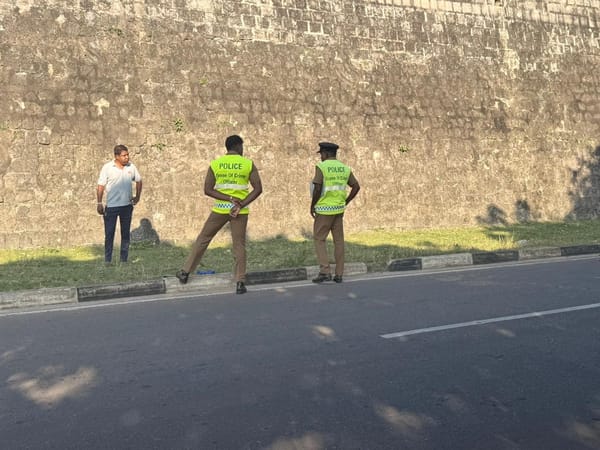
JAFFNA, Sri Lanka — A young man was left fighting for his life after a brutal machete attack in the Pannai area of Jaffna on Thursday evening.
According to police, the victim, Soundirarajah Majith, in his early twenties, was riding a motorcycle when he was chased down by a group of assailants on two other bikes. The attackers overtook him, hacked him with machetes and other sharp weapons, and fled. During the assault, Majith lost control of his motorcycle and plunged into the nearby sea.
Officers from the Jaffna District Crime Division quickly rescued him from the water and rushed him to Jaffna Teaching Hospital, where he remains in critical condition in the intensive care unit.
Police highlighted their swift response, but residents questioned what steps, if any, had been taken to curb the growing drug menace, particularly in cases where evidence has been available. The attack has once again drawn attention to the rise of drug-related violence in the Northern Peninsula.
Residents and local security sources say such targeted assaults are increasingly linked to narcotics networks and gang rivalries that have taken root in Jaffna in recent years.
Once relatively insulated from the drug-related crime seen elsewhere in the country, the Jaffna peninsula has witnessed a noticeable rise in narcotics circulation and the violence that follows it. Local residents say the easy money from the drug trade has fueled disputes and retaliatory assaults.
The deteriorating security climate has, in some quarters, prompted an uncomfortable form of nostalgia. Analysts who study post-conflict governance in the North caution that such sentiments are primarily a reflection of frustration with the state’s failure to contain the drug trade, rather than any genuine endorsement of authoritarian methods. Still, the sentiment surfaces in conversations across the peninsula.
“In those days, if you were a user or a dealer, you were simply gone. There was no mercy,” one longtime Pannai resident recalled, referring to the period of Liberation Tigers of Tamil Eelam control over Jaffna. Another resident said that whatever the failures of that era, drug-related crime had not been visible in LTTE-administered territory. “The group was known for its strict intolerance toward narcotics,” the resident said.
Authorities have not yet confirmed a motive in Thursday’s attack, but investigators from the District Crime Division are working with forensic teams to identify the suspects. They are reviewing surveillance camera footage from the Pannai area in an effort to identify the assailants.
This latest incident adds to a string of violent episodes that have unsettled many in Jaffna, prompting calls for stronger preventive action and more effective enforcement against the drug trade, and raising urgent questions about whether authorities can contain a drug-fueled cycle of violence that many fear is already taking root in the peninsula.