Sri Lanka’s proposed counterterrorism legislation would significantly erode democratic safeguards, expose journalists and civic activists to prosecution under broadly framed provisions, and potentially endanger the country’s preferential trade access to European markets, former Foreign Minister and constitutional law scholar Prof. G. L. Peiris said this week in his most detailed critique of the draft to date.
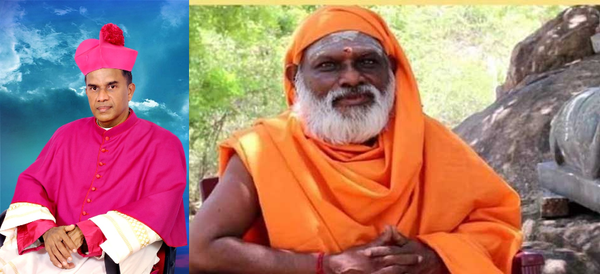
The Protection of the State from Terrorism Act (PSTA), published on the Ministry of Justice website in late December 2025 as a replacement for the widely condemned Prevention of Terrorism Act (PTA) of 1979, has drawn broad domestic and international criticism. Human Rights Watch has called it a law that "risks more abuses." The Church of Ceylon has urged the government to withdraw the draft and repeal the PTA outright. The good governance collective Justice for All, which includes senior legal scholars and former parliamentarians, has formally opposed the PSTA. Earlier in 2025, before the draft was published, both the National Shoora Council and the Jaffna Bar Association had urged the government not to replace the PTA with new anti-terrorism legislation, arguing that existing criminal law is sufficient. In Parliament, ITAK MP Shanakiyan Rasamanickam tabled a private member's bill on 5 February 2026 seeking outright repeal of the PTA without replacement.
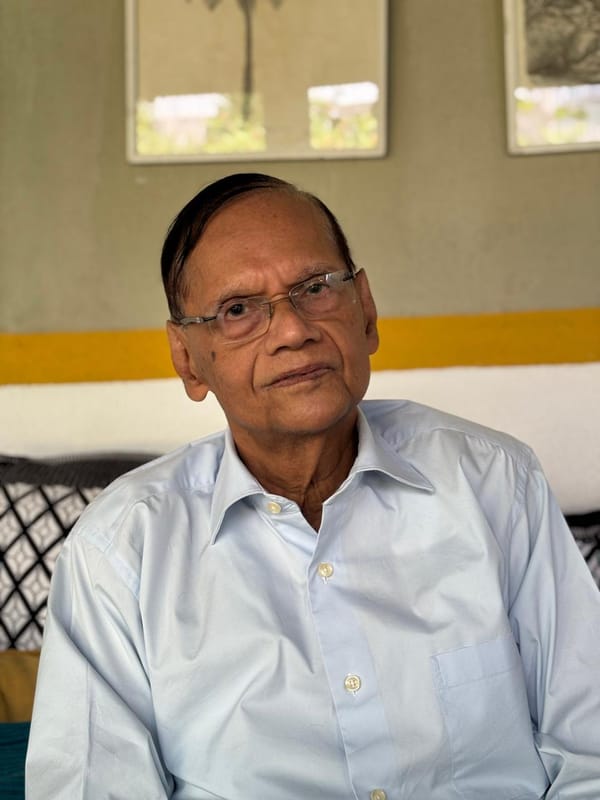
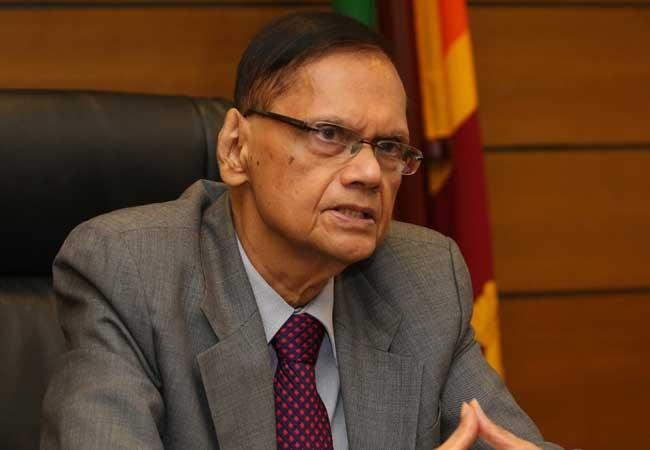
Speaking at a press conference in Colombo organised by the opposition alliance Maha Jana Handa (Voice of the People), and in separate comments to Jaffna Monitor, Prof. Peiris described the draft as “one of the most dangerous pieces of legislation introduced in this country” and “a colossal onslaught on democracy.”
A Broken Promise?
The PSTA's publication represents a striking reversal of a central campaign commitment made by President Anura Kumara Dissanayake and the National People's Power (NPP) during the 2024 elections. Page 129 of the NPP's English-language manifesto, A Thriving Nation, A Beautiful Life, explicitly pledged the "abolition of all oppressive acts, including the Prevention of Terrorism Act (PTA) and ensuring civil rights of people in all parts of the country." Notably, legal analysts have pointed out that this specific commitment does not appear in the Sinhala-language version of the manifesto — a discrepancy the NPP has not publicly explained.
Instead of abolition, the government appointed a committee led by Rienzie Arsekularatne, Senior President's Counsel, to draft replacement legislation. The resulting bill, critics say, retains the core architecture of the very law it was supposed to eliminate — and in several respects goes further.
Justice Minister Harshana Nanayakkara has described the PSTA as a draft open to public consultation, stating it will be revised before presentation to Parliament. He has also argued that Sri Lanka cannot function without anti-terrorism legislation. But the two-month consultation window has done little to quell the criticism.
The Definition Problem
At the heart of the opposition’s case is the absence of what Prof. Peiris called a “clear and unambiguous” definition of terrorism in the draft.
The PSTA lists 13 categories of acts that may be classified as terrorism, encompassing offences ranging from hostage-taking and the use of explosives to property damage, robbery, extortion, theft, and interference with electronic systems. Critics argue that many of these are ordinary criminal offences already covered under existing penal law, and that folding them into counter-terrorism legislation expands state power well beyond any reasonable counter-terrorism rationale.
“As this law now stands, there are 13 major categories of terrorist acts. But the term ‘terrorism’ itself is not clearly defined. It is vague and open-ended,” Prof. Peiris said.
The bill requires only a single intention — such as “intimidating the public or any section of the public” or “compelling the Government of Sri Lanka… to do or to abstain from doing any act” — to trigger the terrorism label. International standards, including the framework set out by the UN Special Rapporteur on counterterrorism and human rights, require a narrower dual-intention test: that an act be committed with both the intention to cause serious harm and the purpose of provoking terror or compelling government action.
The draft includes carve-out provisions that exclude protests, strikes, and dissent. But these exclusions apply only when such activity occurs “by itself” — a qualifier that rights groups warn leaves ample room for the state to characterise protest as ancillary to terrorism once any other condition is met.
Press Freedom at Risk
Prof. Peiris reserved his most pointed criticism for provisions he said would have a “particularly chilling effect” on journalists and media.
The draft criminalises the “dissemination of terrorist publications” and imposes liability on anyone who provides a service enabling others to access such material. Given the breadth of the definitions, Prof. Peiris warned, “the whole range of mainstream and social media is indisputably in jeopardy.”
He took particular exception to the draft’s use of “recklessness” as a standard of criminal liability in relation to the publication of statements and dissemination of material, arguing that this state of mind — traditionally limited in criminal jurisprudence — becomes, under the PSTA, “yet another lever for the expansion of liability well beyond the properly designated category of terrorist offences.”
Separately, the bill empowers the Defence Secretary to designate any location a “prohibited place.” Entry, photography, videography, sketching, or note-taking at such locations would constitute an offence punishable by up to three years’ imprisonment or a fine of Rs. 3 million. This power, Prof. Peiris noted, was not contained in the PTA but had previously been exercised, if at all, under separate legislation, such as the Official Secrets Act of 1955.
In a country where at least 41 media workers are known to have been killed by state forces or allied paramilitaries during and after the armed conflict, such provisions carry particular weight.
Detention, Custody Transfers, and Judicial Oversight
Prof. Peiris described as “extremely dangerous” provisions allowing the Secretary to the Ministry of Defence to issue detention orders for up to one year, and empowering the transfer of suspects from judicial custody to police custody — a reversal of the standard procedural direction.
“The desirable direction of movement is from police to judicial custody. Here, the movement is in the opposite direction,” he said, warning that although High Court oversight is nominally provided for, “the pressures of an asserted security situation could render judicial oversight ineffective in practice.”
Sri Lanka has a documented record of torture and extrajudicial killings in custodial settings. The UN Human Rights Commissioner’s office has found that the police Terrorism Investigation Division repeatedly summoned human rights defenders and questioned them about participation in events and demonstrations during 2025 alone.
Under the draft, “restriction orders” imposed by a Deputy Inspector General of Police could limit a suspect’s communication, employment, and travel. “Proscription orders” would allow the President, by Gazette notification, to declare any organisation illegal — barring it from recruiting members, holding meetings, operating bank accounts, or publishing material — with no initial time limit and no requirement for judicial approval.
The Attorney General’s Power to Defer Prosecution
Another contentious provision authorises the Attorney General to defer prosecution for up to 20 years, on conditions that may include participation in a “specified programme of rehabilitation.”
Prof. Peiris warned that this “involves the risk of deprivation of freedom without the benefit of a fair trial before a court of law.” Human Rights Watch has likewise raised concerns about the absence of adequate safeguards against coercive use of such deferrals.
“Particular Reference to the North, East, and Plantations”
In exclusive comments to Jaffna Monitor, Prof. Peiris said the draft contains provisions that “could potentially have particular reference to the North, East and plantation regions” — areas home to Sri Lanka’s Tamil and Malayaga Tamil populations, which have historically borne the brunt of emergency legislation.
He identified the following as areas of specific concern for these regions:
The absence of a clear definition of terrorism confers open-ended powers on the armed forces and police to enter homes, interrogate citizens, seize confidential documents, and carry out stop-and-search operations on public highways. Provisions relating to detention orders and “approved places of detention” pose particular risks, given that many extrajudicial executions and acts of torture are alleged to have occurred at such facilities in the past. The power to transfer detainees from judicial to police custody is “fraught with risk.” Restriction orders carry significant implications for communication, employment, and travel. Proscription orders can effectively dismantle civil society organisations through executive fiat. The prohibition on access to “prohibited places” denies both the public and the media the ability to document conditions in sensitive locations. And the Attorney General’s power to defer prosecution for up to 20 years, conditional on rehabilitation, risks prolonged deprivation of liberty without trial.
“Cumulatively, these provisions endanger the enjoyment of individual and collective rights and freedoms which we have taken for granted in a democratic society,” Prof. Peiris told Jaffna Monitor.
The concern is not hypothetical. Under the existing PTA, 49 arrests were made in the first five months of 2025, compared with 38 in all of 2024, according to data the Sri Lankan government provided to the United Nations. In many of those cases, the law was used not to combat terrorism but to prosecute ordinary criminal offences. Two young Muslim men were detained for months under the PTA for criticism of Israel before being released without charge.
GSP+ and International Consequences
Prof. Peiris also warned that enacting the PSTA in its present form could jeopardise Sri Lanka’s access to the European Union’s Generalised Scheme of Preferences Plus (GSP+), which grants duty-free access to the EU market for approximately 85 per cent of Sri Lanka’s eligible exports — a benefit worth an estimated $500 million annually.
“GSP+ is neither a gift nor an entitlement. It is granted temporarily, subject to the fulfilment of specific conditions,” he said.
Sri Lanka’s continued access to GSP+ is contingent on the effective implementation of 27 international conventions spanning human rights, labour rights, environmental protection, and governance. The EU has repeatedly raised concerns about the PTA in its monitoring cycles. In 2017, Sri Lanka committed to replacing the PTA with human rights-compliant legislation as a condition for the reinstatement of GSP+ preferences — a commitment that remains unfulfilled.
Government Position
The government has maintained that the PSTA is a draft intended for revision through public input, and that Sri Lanka requires counter-terrorism legislation to address genuine security threats. Justice Minister Nanayakkara has pointed to anti-terrorism laws in other democracies as precedent. The committee that drafted the bill was led by a senior President’s Counsel.
But the breadth of opposition — spanning human rights organisations, bar associations, religious bodies, opposition parties, and independent legal scholars — suggests the government faces a significant political and legal challenge in advancing the bill in its current form.
Former Ministers Nimal Siripala de Silva and Anura Priyadarshana Yapa, who appeared alongside Prof. Peiris at the Maha Jana Handa press conference, echoed the call for fundamental revision. De Silva, noting that the PTA had been introduced during a period of active armed conflict, argued that Sri Lanka now “needs a people-friendly law.” Yapa said the proposed Act appeared designed to curtail citizens’ freedoms rather than focus on combating terrorism.
What Comes Next
The PSTA remains in draft form and has not yet been introduced in Parliament, where the NPP holds a two-thirds majority following its November 2024 landslide. The public consultation period provides a window for amendment. But the gap between the government’s 2024 election pledge — outright abolition of oppressive legislation — and the substance of the proposed replacement has already become one of the defining tests of the Dissanayake administration’s democratic credentials.
For the communities that have lived under the shadow of emergency legislation for decades — in the North, the East, and the plantations — the stakes are existential. As Prof. Peiris told Jaffna Monitor, the provisions of the draft, taken together, threaten “the enjoyment of individual and collective rights and freedoms which we have taken for granted in a democratic society.”
Whether the government heeds these warnings, or presses ahead with legislation that its critics say replicates the very abuses it promised to end, will be closely watched — in Colombo, in the provinces, and in Brussels.
Jaffna Monitor contacted the Ministry of Justice and National Integration for comment on Prof. Peiris’s criticisms and the specific concerns raised regarding the impact of the PSTA on the North, East, and plantation regions. No response had been received at the time of publication.
The full text of the draft Protection of the State from Terrorism Act is available on the Ministry of Justice website. Public submissions are being accepted during the consultation period.