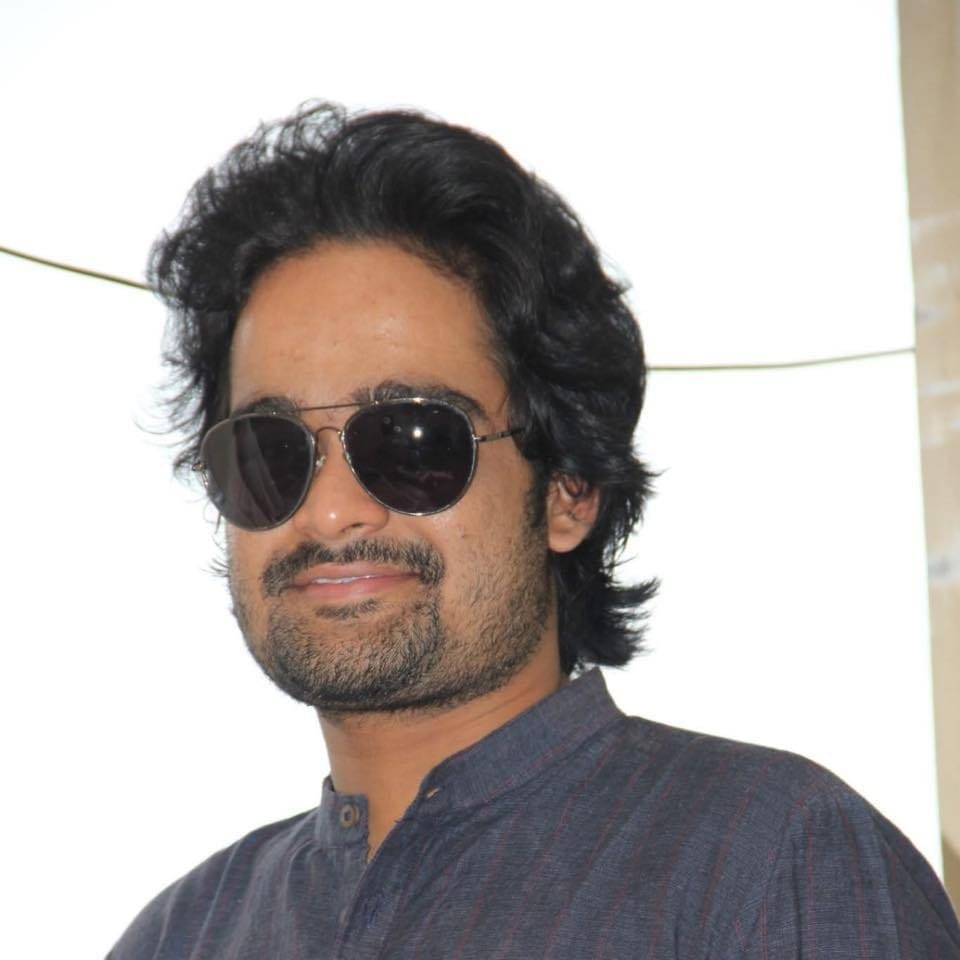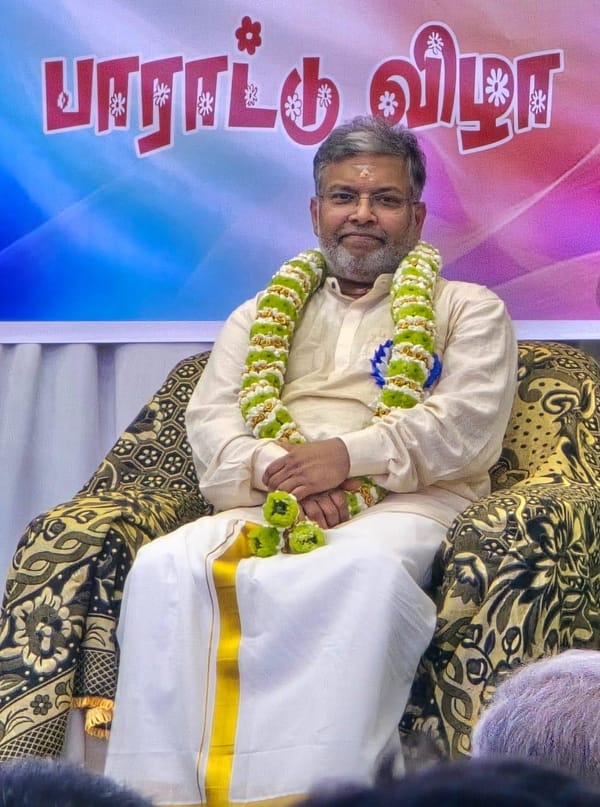
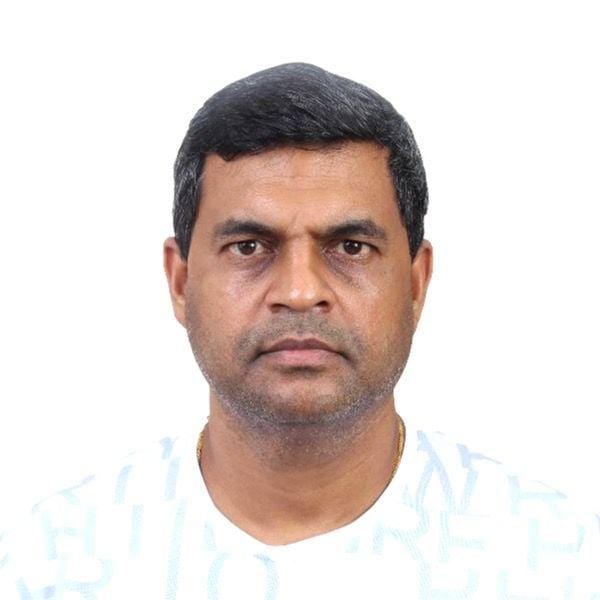
Saththiri, born in Sandilipai, Jaffna, is a Sri Lankan Tamil writer. In the aftermath of the 1983 anti-Tamil pogrom, like many youths of that era who turned to militancy, he joined the Liberation Tigers of Tamil Eelam (LTTE), operating under the nom de guerre Siyam. Due to his role in the organization’s explosives division, which was then headed by senior LTTE member Appaia, he became known among the cadres as Sakkai (Explosive) Siyam.
He later worked for several years within the LTTE’s international network under the leadership of K. Pathmanathan (KP) before eventually parting ways with the movement. After settling in France, he re-emerged as a writer and commentator under the pen name Saththiri, gaining recognition for his reflective and unsentimental narratives drawn from his lived experiences.
His notable works include the novels Aayutha Eluthu (The Letter of Weapons), Parts I & II; the short story collections Avalangal (Afflictions) and Meethelal (Aftermath); and the essay anthology Anru Sinthiya Raththam (The Blood Spilt That Day).
With the release of Aayutha Eluthu – II, Saththiri speaks exclusively to Jaffna Monitor.
In your novel Aayudha Ezhuthu-2, you’ve levelled strong criticism against Pottu Amman, the LTTE’s intelligence chief. In what ways do you believe he was responsible for the downfall of the LTTE?
Pottu Amman was, in every sense, responsible for the LTTE’s eventual defeat — and that warrants closer examination.
At the outset, the LTTE’s intelligence wing was known as “Verkal” (Roots). It functioned under a rotational system, with different individuals taking charge at different times. However, the unit lacked professional training and institutional discipline.
In the mid-1980s, Prabhakaran placed immense trust in Mahattaya — then the LTTE’s Deputy Leader and Vanni District Commander — and appointed him as the permanent head of the intelligence wing.
During this period, a shadow conflict brewed between Mahattaya, who struggled to bring the Vanni region under full LTTE control, and Kittu, the Jaffna District Commander, who had successfully consolidated the North. Kittu complained to Prabhakaran that Mahattaya was ineffective and unfit to lead intelligence, but the leader dismissed his concerns.
Soon after, Kittu narrowly survived an assassination attempt by the Theepori (Spark) Group of the PLOTE, losing a leg in the attack. The intelligence wing failed to identify the perpetrators, and rumours spread that Mahattaya himself had engineered the attempt. Kittu was gradually sidelined, further eroding trust within the ranks.
During the IPKF conflict, many of the LTTE’s early intelligence operatives were killed, leaving the division nearly paralyzed. Around that time, Ragunathan — an early LTTE member from Alaveddy known as Mathavan Master — took the initiative to rebuild the network, creating a structured, professionally trained intelligence system.
By late 1988, he had organised the LTTE’s first formal intelligence training camp at Palamottai in the Vanni. It was Mathavan Master who could truly be called the architect of the LTTE’s modern intelligence division.
The real success of the LTTE’s intelligence operations lay in the hands of those trained by him — Kapil Amman, Saleem, Mathagal Rajan, Newton, Charles, and Akila — who executed numerous successful missions and strengthened the division. In contrast, Pottu Amman’s tenure was marked by fatal miscalculations that ultimately crippled the organisation.
First, driven by ambition and a desire to become Prabhakaran’s sole confidant, Pottu Amman falsely accused Mahattaya of leaking information to Indian intelligence. Mahattaya was arrested and executed, along with several senior LTTE leaders and cadres loyal to him. The wave of paranoia and witch-hunts that followed tore through the organisation, driving many others to abandon the movement altogether.
Secondly, by choosing Tamil Nadu — once the LTTE’s crucial refuge, where cadres sought shelter, medical aid, and political sympathy — as the operational base for Rajiv Gandhi’s assassination, Pottu Amman destroyed the organisation’s safe haven and sowed the seeds of its eventual downfall. Both these strategic blunders are examined in detail in the second volume of my recently released Aayudha Ezhuthu.
Third, he deepened internal fissures by levelling false accusations against Karuna Amman, one of Prabhakaran’s most capable commanders — a move that led to the LTTE’s catastrophic split and hastened its defeat.
That said, the blame did not rest solely on Pottu. The deeper fault lay in Prabhakaran’s poor judgment in assigning critical roles to unsuitable individuals. This extended beyond Pottu — Castro, who led the international secretariat; Tamilselvan, who headed the political wing; and Soosai, who commanded the Sea Tigers — none, in my view, were truly qualified for the positions they held.
In Aayudha Ezhuthu – II, you write about the tragic fate of Rifaya, a Muslim woman who joined the LTTE. There was a time when Tamil–Muslim relations were so close that a Muslim woman could fight alongside the Tigers. How did that deep sense of unity between the two communities collapse ?
Before the 1990s, there were hundreds of Muslim fighters within the LTTE, and many of them are remembered among the organisation’s Maaveerar (martyrs). The bond between Tamils and Muslims was not broken by a single party — it was eroded collectively by the actions of the LTTE, other Tamil militant movements, certain Muslim politicians, the Muslim Home Guards, and, above all, by the racist regimes that ruled the country at the time.
Rather than perpetuating the cycle of blame, it is far more meaningful for all communities to rise above the bitterness of the past and move forward together. I believe the current political climate presents a genuine opportunity to rebuild that long-lost trust and foster reconciliation.
In Aayudha Ezhuthu-2, you have written about the inhuman atrocities committed by members of the EPRLF. From your observation and understanding, what kinds of atrocities did they inflict on innocent civilians?
They committed every form of atrocity imaginable. In fact, the EPRLF were the pioneers of a practice that later became infamous during the final stages of the war — forcibly recruiting children and pushing weapons into their hands. But they were not the only ones; every armed group of that era was guilty of similar acts.
As I mentioned in Aayudha Ezhuthu, it is meaningless now to argue over who committed the greater atrocities. The reality is that every group’s hands are equally stained with blood.
Who do you think should be held accountable for the brutal killings and human rights violations committed by the EPRLF?
Without doubt, the leader of that organisation must bear responsibility. However, after its leader, Padmanabha, was killed, the EPRLF splintered into several factions — most notably the Varathar and Suresh factions.
Of these, the faction led by Suresh Premachandran laid down arms, transformed into a political party, and eventually joined the Tamil National Alliance (TNA).
But in the absence of Padmanabha, the one person who should have accepted responsibility and offered a public apology for those incidents is Varatharajaperumal. During the Indian Army’s operations, the Indian government sidelined Padmanabha and elevated Varatharajaperumal, appointing him as Chief Minister of the merged North-Eastern Provincial Council — one of the most powerful positions at the time.
Therefore, the moral and political responsibility for those atrocities rests squarely on Varatharajaperumal, who, to this day, carries blood on his hands. He is a war criminal and must be investigated accordingly.
You have written that several foreign intelligence agencies were involved in the assassination of Rajiv Gandhi. Could you explain this further?
This is no secret. The officials who investigated the Rajiv Gandhi assassination case, as well as the Jain Commission that later examined it, both indicated — directly and indirectly — that the United States may have had links to the incident.
At the time, India maintained a close strategic relationship with the Soviet Union. The United States recognised that as long as the Nehru family’s political legacy dominated Indian politics, drawing India into its strategic orbit would remain impossible. Consequently, Washington explored ways to weaken that legacy — and ultimately exploited the LTTE, who were already enraged by the Indian Army’s actions, to execute the plan.
You have written that the LTTE initially planned to assassinate Rajiv Gandhi in Visakhapatnam, Andhra Pradesh, using a landmine. Could you elaborate on that?
The LTTE always prepared more than one plan for any major attack. Similarly, in the case of Rajiv Gandhi’s assassination, it is known that three separate plans were drawn up.
The first plan was to be carried out in Delhi, with assistance promised by the Khalistan organisation. However, at the last moment, the Khalistan group withdrew, forcing the LTTE to abandon that plan.
The second plan was in Andhra Pradesh, specifically Visakhapatnam. All the preparatory work for that operation had been completed, but at the final stage, the plan was cancelled following the intervention of Pottu Amman.
The third plan was then executed in Tamil Nadu — and the rest, as we all know, is history.
You wrote that it was the United States that showed Kittu’s ship to India. Can you explain this further?
What I understood from my LTTE friends and sources was that the United States had taken Kittu to Mexico and presented him with a draft political plan intended to propose a negotiated political solution for the Eelam Tamils. They reportedly asked him to take the plan to Prabhakaran, discuss it, and return with a response favourable to U.S. interests. In essence, Washington sought to determine whether the LTTE was prepared for a political settlement.
Kittu then set sail for Sri Lanka carrying that plan — but he was also transporting weapons, including anti-aircraft systems such as Stella-2 type missile launchers. There is little doubt that U.S. intelligence would have been aware of such shipments. No state wants a non-state actor to possess surface-to-air missiles or similar advanced systems. Moreover, if the U.S. had indeed provided a peace plan draft and Kittu simultaneously sailed home with heavy weaponry, that would almost certainly have irritated Washington.
At the time, the U.S. already had the technical capability to monitor maritime movements, so it is highly likely that Kittu’s vessel was being tracked. Following Rajiv Gandhi’s assassination, the political realignment in India — a gradual drift from Soviet influence toward the American strategic orbit — unfolded exactly as it suited U.S. interests.
In short, it appears that by exposing the LTTE’s weapons shipment to Indian authorities, the Americans earned political credit and strengthened ties with New Delhi — a move entirely consistent with traditional U.S. foreign-policy behaviour.
What do you think about the claim that Mahattaya betrayed Kittu and passed information to RAW?
In my opinion, that claim is absolutely false. From what I understood through my LTTE friends and other reliable sources, the circumstances simply don’t support it.
When Kittu was sailing towards Sri Lanka, another ship was traveling alongside his, carrying first aid and medical supplies. Apart from the general knowledge that Kittu was returning, no one — not even Prabhakaran himself — knew which ship he was on, what route he was taking, or under what flag the vessel was sailing. And there was no operational reason for Prabhakaran to know those details either.
If even Prabhakaran didn’t know, it’s impossible that Mahattaya could have known. Moreover, Mahattaya had no technical knowledge of sea routes — such information was restricted to the ship’s captains and navigators. Yet, out of the two vessels, the Indian Navy encircled only the one carrying Kittu. That level of precision could not have come from any internal leak.
To me, this strongly suggests that U.S. intelligence provided the information. At that time, Washington already had the technological capability to track ship movements. The accuracy with which the Indian Navy intercepted Kittu’s vessel could only have resulted from such advanced intelligence sharing — not from Mahattaya.
In 2002, the LTTE’s international network, headed by KP, was dissolved and handed over to Castro. All members working under KP were ordered to return home. What led to this decision, and how did it influence the LTTE’s downfall?
Following the LTTE’s major victories, a series of administrative changes were made in 2001. During this restructuring, the responsibility for the international secretariat was taken away from KP and handed over to Castro. KP’s administration was completely dissolved, and the leadership instructed him and those who had worked under him to step down and return to their private lives.
The official reason for this drastic change was that KP’s team had failed to properly account for the funds collected from the Tamil diaspora abroad, as well as the money generated through trade and arms deals. They were accused of halting operations after purchasing weapons instead of maintaining continuous supply lines. The leadership also blamed them for their inability to secure Grouse surface-to-air missiles — weapons capable of downing Israel-made IAI Kfir bombers used by the Sri Lankan Air Force — despite years of negotiation.
Another major issue was that most of the seamen and crew working under KP’s company were not LTTE members but ordinary salaried employees. They could not be controlled under the organisation’s military discipline.
If the assassination of Rajiv Gandhi was the LTTE’s first self-inflicted blow, then removing KP and dismantling his company was undoubtedly its second.
The new appointee, Castro, had lost both legs above the knees in an explosion. His only foreign trip had been to Tamil Nadu for medical treatment. Apart from that, he knew the outside world only through maps and lived mostly bedridden. To this day, no one has been able to explain why Prabhakaran chose to entrust such a physically demanding and strategically critical position to someone so unfit for it — a decision that raised a million unanswered questions.
After assuming charge, Castro declared that he would inject “new blood” into the international wing. He appointed several young people who had been sent abroad by the LTTE for higher studies. Among them were Nediyavan (assigned to Norway to coordinate international activities), Vakeesan (sent to Germany to handle finances), and Stephen (entrusted with arms procurement and the management of the LTTE’s merchant ships).
Of these, Stephen began recruiting new contacts across global black markets for arms deals. He travelled to Indonesia via Singapore. At the Indonesian airport, an officer, suspicious of him, began questioning him. Stephen’s evasive answers deepened the officer’s doubts, prompting a search of his two laptops — and that’s when the real shock began.
For years, Indonesian authorities had known that some of their islands were being used as transit points for LTTE arms smuggling, and that vessels registered under Indonesia were part of these operations. Hence, suspecting Stephen to be involved in the LTTE network, they detained him and sought assistance from international police.
When the CIA — which had long been monitoring the LTTE’s global smuggling activities — learned of his arrest, American officers immediately flew to Indonesia. They took Stephen into their custody and examined the laptops. To their astonishment, the devices contained a goldmine of information: lists of arms purchases, supplier contacts, financial transactions, and ship movements — everything they had been searching for over the years.
The intelligence agencies now possessed comprehensive details of everyone involved in the LTTE’s global arms procurement network and the types of weapons being purchased. Yet, they decided not to make any immediate arrests. Their strategy was to allow the network to continue functioning — so that once dismantled, it could never be rebuilt.
Since most of those involved were based in the United States and Canada, the FBI and CSIS (Canadian Security Intelligence Service) jointly formulated a plan to destroy the LTTE’s arms smuggling network, with assistance from European law enforcement agencies.
Meanwhile, the LTTE leadership in Vanni remained completely unaware of Stephen’s arrest. The CIA ensured that he continued to operate under their supervision, maintaining communication with his network.
Gradually, seven key figures —
Satajan Sarachandran
Sakilal Sabaratnam
Thiruthanigan Thanikasalam
Nadarajah Yogarajah
Murugesu Vinayagamoorthy
Vijayachandar Padmanathan
Nachimuthu Socrates — were brought under surveillance by the CBI.
When the arms shipments procured by them left international waters and entered the seas off Mullaitivu, the Sri Lankan government received precise intelligence. The Navy and Air Force coordinated their attacks and destroyed the LTTE’s weapons ships one after another.
Even as this destruction unfolded, the LTTE leadership remained oblivious to Stephen’s arrest — thanks to the careful deception orchestrated by the FBI-led operation. At that time, the LTTE was in the midst of negotiations to purchase Cruise Missiles.
By then, nine arms ships and two cargo vessels — a total of eleven — had already been sunk. The intelligence agencies decided it was time to end the operation entirely before the LTTE could reorganise or change its tactics.
Presenting themselves as arms dealers, undercover FBI agents approached Murugesu Vinayagamoorthy in London, whom Castro had appointed to finalise the missile deal. Since Vinayagamoorthy was already under FBI surveillance, arranging the meeting posed no difficulty. A medical doctor by profession, he knew diseases well but nothing about missiles. He naively believed purchasing missiles was as simple as buying vegetables at a market.
He provided the undercover agents — posing as arms traders — with a list of missiles and anti-aircraft guns he wished to buy and asked about delivery and payment methods. The agents promised to show him real missile models during their next meeting and gave him dummy bank accounts to deposit advance payments.
When the next meeting was arranged in Texas, USA, Vinayagamoorthy flew there. At a farmhouse, the agents displayed a disassembled missile model, assembled it before him, and demonstrated its features.
They then instructed him to transfer half the payment into the fake accounts, promising to deliver the missiles to the LTTE ships, with the balance payable after delivery.
Excited, Vinayagamoorthy also requested that one of their “technical experts” travel to Vanni to train LTTE cadres in operating the Cruise Missiles. The agents pretended to agree. Upon returning to his hotel, a knock came on the door. He hung up the call, opened the door, and was confronted by officers flashing CBI identification cards. They handcuffed him and dragged him out. The man standing before him was none other than the same “arms dealer” he had met earlier. Only then did Vinayagamoorthy realise the full extent of the deception.
Following his arrest, over thirty people under surveillance in the U.S., Canada, and Europe were taken into custody. Many ships moored in foreign ports were also seized.
Thus, after nearly twenty-five years of evading global law enforcement and intelligence agencies, the LTTE’s vast international arm smuggling network was completely dismantled in 2006 under U.S. leadership. From that moment onward, the Tigers were unable to procure even a single bullet from outside Sri Lanka — marking the beginning of the end for the LTTE.
You wrote that during the final phase of the war, the disabled women cadres from Mayuri Illam were kept in one place and blown up with a bomb. Is that true?
Yes, it is true. And it wasn’t only the Mayuri Illam cadres. During the final stages of the war, several injured and disabled women cadres were also gathered and placed inside two buses near the Iraddai Vaikkal area, which were then blown up with explosives. The order came directly from Pottu Amman.
How do you view the grave human rights violations committed by the LTTE against civilians during the final phase of the war?
You have already described them correctly as grave human rights violations. Beyond that, what the LTTE did to the civilians who followed them from Mannar to Mullivaikkal, trusting their assurances, and to the cadres who believed until the very end that the leadership had a plan, amounts to a profound betrayal of trust. The LTTE leadership must be held accountable for this massive betrayal.