
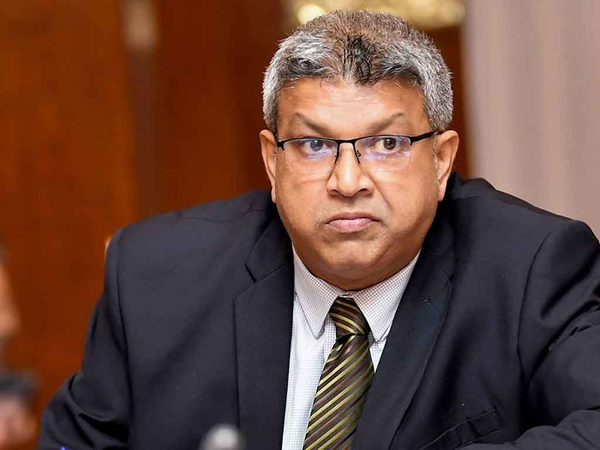
COLOMBO — Sri Lanka's government will fast-track legislation to allow courts to place some suspects under house arrest with electronic monitoring instead of remanding them in overcrowded prisons, Justice Minister Harshana Nanayakkara said on Tuesday, presenting the proposal as part of a broader effort to address chronic congestion in the country's prison system following the deadly violence at Negombo Prison.
Speaking in Parliament, Mr. Nanayakkara said Sri Lanka's prisons were operating far beyond their intended capacity, with facilities built for about 10,000 inmates now holding roughly 27,000. About three-quarters of those in custody are remand prisoners awaiting trial rather than convicted offenders, he said.
The proposed reforms would introduce house arrest and electronic tagging for eligible suspects, reducing the number of people held in pretrial detention while allowing authorities to monitor their movements.
Electronic monitoring, typically through GPS-enabled ankle bracelets or radio-frequency devices, is widely used in several countries as an alternative to imprisonment for selected offenders. The United States, the United Kingdom, Canada, Australia, New Zealand, and several European countries, including Sweden, Norway, Belgium, and the Netherlands, use various forms of electronic monitoring for defendants awaiting trial, offenders serving community-based sentences, and prisoners nearing the end of their custodial terms.
Research on the effectiveness of such programmes has produced mixed results. Criminal justice experts generally agree that electronic monitoring can reduce prison overcrowding, lower incarceration costs, and allow low-risk offenders to maintain employment and family responsibilities while awaiting trial or serving sentences. However, they caution that electronic monitoring alone does not prevent reoffending and is most effective when combined with judicial supervision, probation services, and clear eligibility criteria.
The announcement came days after violence at Negombo Prison left seven prison officers and 19 inmates dead in one of the country's deadliest prison disturbances in recent years.
Addressing Parliament, Mr. Nanayakkara said preliminary information suggested the violence may have begun with a clash between rival groups linked to the illegal drug trade, though he stressed that investigations remained ongoing and no final conclusions had been reached.
According to the minister, an initial confrontation between inmates on July 5 left two prisoners dead and 35 injured before order was restored. Violence flared again the following morning, when inmates were being prepared for court appearances.
He said investigators suspected the dispute may have involved inmates who had provided information to prison authorities about attempts to smuggle narcotics and other contraband into the prison, making them targets for organised criminal groups.
Mr. Nanayakkara also alleged that a small organised group deliberately destroyed CCTV cameras and a body scanner during the unrest, apparently to disable security systems designed to detect contraband. He said several unarmed prison officers were killed while attempting to protect colleagues who had come under attack.
Authorities are also investigating how inmates obtained firearms during the disturbance, he said.
The minister acknowledged longstanding structural problems within Sri Lanka's prison system, including severe overcrowding, staff shortages, and lengthy delays in criminal proceedings. He said delays in receiving forensic reports from the Government Analyst's Department often keep suspects in remand custody for months, while the department itself has suffered from staffing shortages.
He said the government had filled 78 vacancies in the department since taking office, but warned that deeper institutional reforms would be required to significantly reduce delays in the criminal justice system.
A committee headed by retired judge Priyantha Fernando has been appointed to investigate the Negombo Prison violence, while the Criminal Investigation Department is conducting a parallel inquiry.