Sumanthiran Invites Former LTTE Combatants, Citing ‘Highest Qualification’

Sumanthiran Invites Former LTTE Combatants, Citing ‘Highest Qualification’


Share this post

KILINOCHCHI, Sri Lanka — March 30, 2026 —

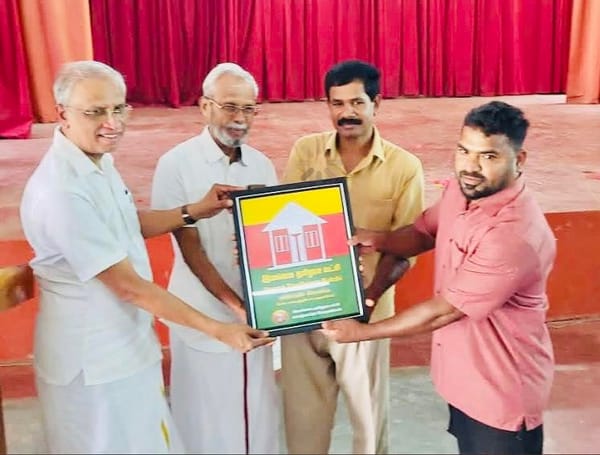
M. A. Sumanthiran, general secretary of the Ilankai Tamil Arasu Kachchi (ITAK), said on Sunday that former combatants who had sacrificed their lives, education, and families for a political cause were the most qualified to join the party.

Speaking at a meeting with former LTTE combatants in Kilinochchi, Mr. Sumanthiran said those who had “considered their lives insignificant” and were prepared to give their “life, body and soul” for a goal possessed the highest qualification for membership.

“No one else can have a greater qualification than them,” he said.

The event was attended by senior party figures, including ITAK leader C. V. K. Sivagnanam and Sayanthan.

Framing his remarks within the party’s historical ideology, Mr. Sumanthiran said ITAK, founded in 1949, was built on the premise that Tamil-speaking people in Sri Lanka constitute a distinct nation entitled to self-determination under international law.

He drew parallels with independence movements elsewhere, noting that leaders such as Muhammad Ali Jinnah of Pakistan and Sheikh Mujibur Rahman are remembered as “Fathers of the Nation” for articulating a shared national identity.

He then extended that comparison to S. J. V. Chelvanayakam, explaining that he came to be known as “Thanthai” (Father) for advancing the idea that Tamil-speaking people in Sri Lanka are a distinct nation with a right to self-determination.

Mr. Sumanthiran also referred to recent discussions in New Delhi, where he and colleagues attended meetings at the invitation of the Bar Association of India. He cited concerns about Sri Lankan Tamil refugees who have lived in India for decades.

While reiterating that his party preferred the return of displaced Tamils to Sri Lanka, he said those unwilling to return — due to age, family circumstances, or long-term settlement — should be granted Indian citizenship to avoid statelessness.

“International law does not permit people to remain stateless,” he said.

He also recalled that the ITAK emerged in opposition to the 1949 citizenship legislation that rendered large numbers of Malayaga Tamils stateless, and said it was the first political movement to assert that Tamils constitute a nation with the right to self-determination.

Referring to the Vaddukoddai Resolution, he said the party had formally articulated its demand for self-rule decades ago.

“Forms of struggle may change, but the goal remains the same,” he said, adding that former combatants had every right to join the party in pursuit of that goal.

Still, sources within ITAK offered a more grounded view. “Yes, the invitation is there,” one told the Jaffna Monitor. “But if you’re not a ‘yes man’ to Sumanthiran, how exactly do you get a ticket?”


Share this post

Be the first to know

Join our community and get notified about upcoming stories

Subscribing...
You've been subscribed!
Something went wrong
Trincomalee Oil Farm and Energy Hub: Sri Lanka’s Missed Opportunity Returns

Trincomalee Oil Farm and Energy Hub: Sri Lanka’s Missed Opportunity Returns

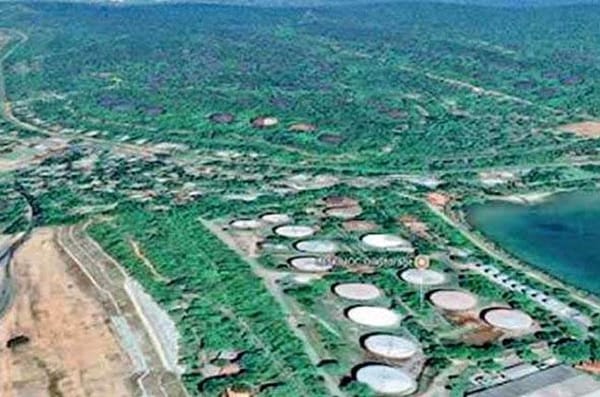
By: Dr. Gamini Goonetilleke The Trincomalee Oil Tank Farm stands today as one of the most strategically significant yet historically underutilized energy assets in South Asia. Located in the deep natural harbour of Trincomalee, the facility embodies a convergence of history, geopolitics, and economic potential. In the current global context—marked by energy insecurity, shifting geopolitical alliances, and regional competition—the Trincomalee oil farm offers Sri Lanka a renewed opportunity


Dr. Gamini Goonetilleke

Dr. Gamini Goonetilleke

“The Diaspora Must Move Beyond Remittances to Structured Investment,” Says Ana Pararajasingham
Ana Pararajasingham

“The Diaspora Must Move Beyond Remittances to Structured Investment,” Says Ana Pararajasingham

Ana Pararajasingham, the author of Uprooted — a work that documents the journeys and successes of the Sri Lankan Tamil diaspora across the world — is an independent researcher and writer based in Australia. His work has long engaged with questions of justice, displacement and identity. His earlier publication, Sri Lanka: A Victor’s Peace (2019), brought together a series of essays originally published in international journals and newspapers, offering a critical perspective on post-war Sri Lank


Aruliniyan Mahalingam

Aruliniyan Mahalingam

“Sri Lanka Now Has No Foreign Policy,” Former Foreign Minister G.L. Peiris Says

“Sri Lanka Now Has No Foreign Policy,” Former Foreign Minister G.L. Peiris Says

COLOMBO, Sri Lanka- Former Foreign Minister G. L. Peiris delivered a blistering indictment of the Sri Lankan government Wednesday, accusing it of abandoning the nation's economic interests and diplomatic standing in the wake of the torpedoing of the Iranian warship IRIS Dena, declaring that the country now "has no foreign policy whatsoever." Speaking at a joint opposition media briefing on Wednesday, Mr. Peiris described the sinking of the IRIS Dena as an unprecedented event since World War II,


Our Reporter

Our Reporter

Israel–Iran War Sparks Petrol Panic in Jaffna

Israel–Iran War Sparks Petrol Panic in Jaffna

JAFFNA, Sri Lanka — Hours after reports emerged that the United States and Israel had launched coordinated strikes on Iran, motorists across Sri Lanka’s Northern and Eastern Provinces began lining up at fuel stations, fearing that the distant conflict could disrupt fuel supplies to the island nation, which remains heavily dependent on imported petroleum. Long queues formed outside petrol sheds in Jaffna town by Saturday afternoon, with motorcycles, three-wheelers, and cars stretching for hundre


Our Reporter

Our Reporter