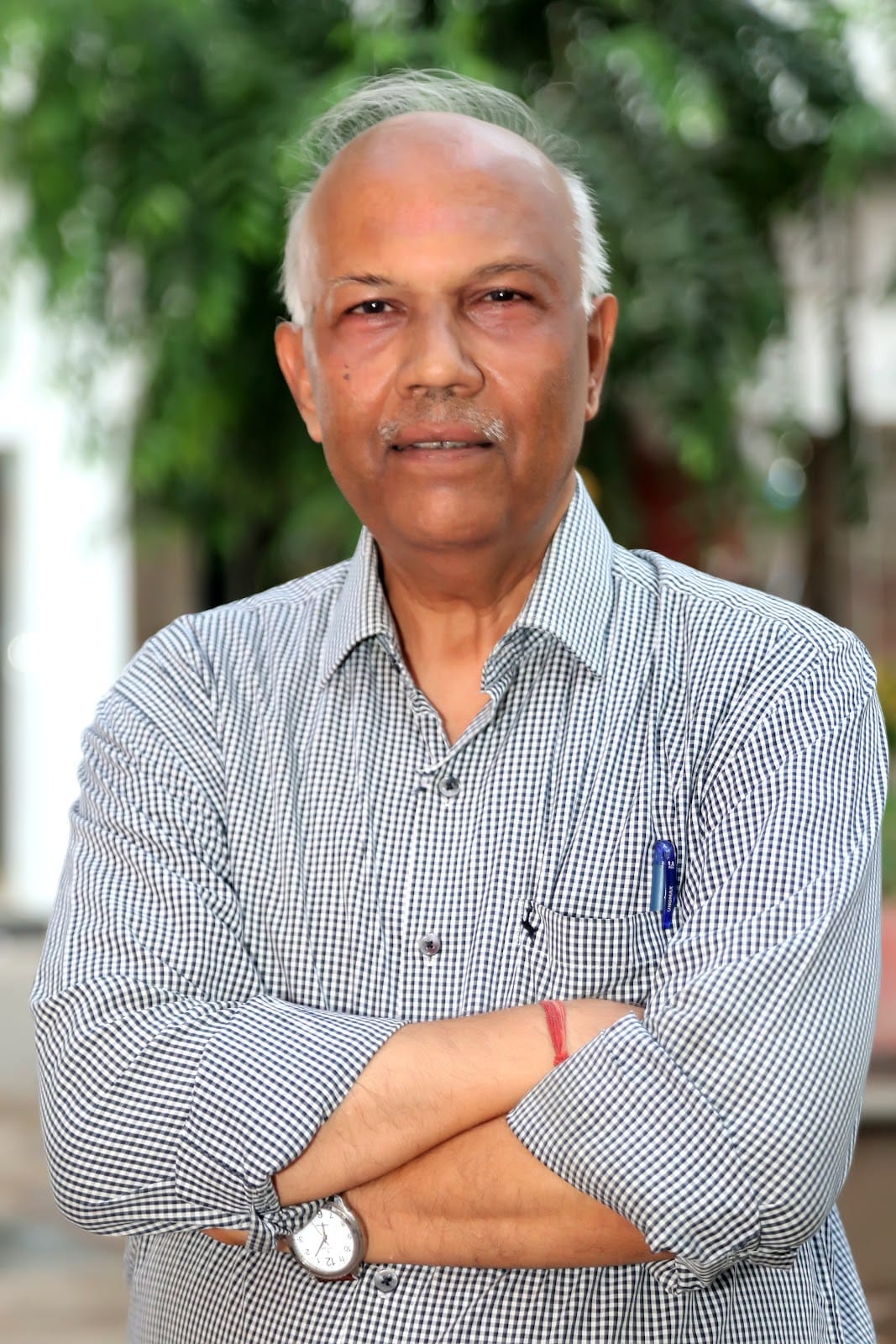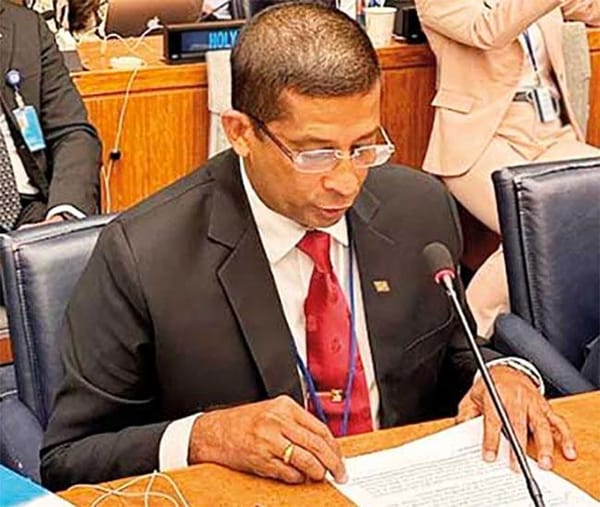
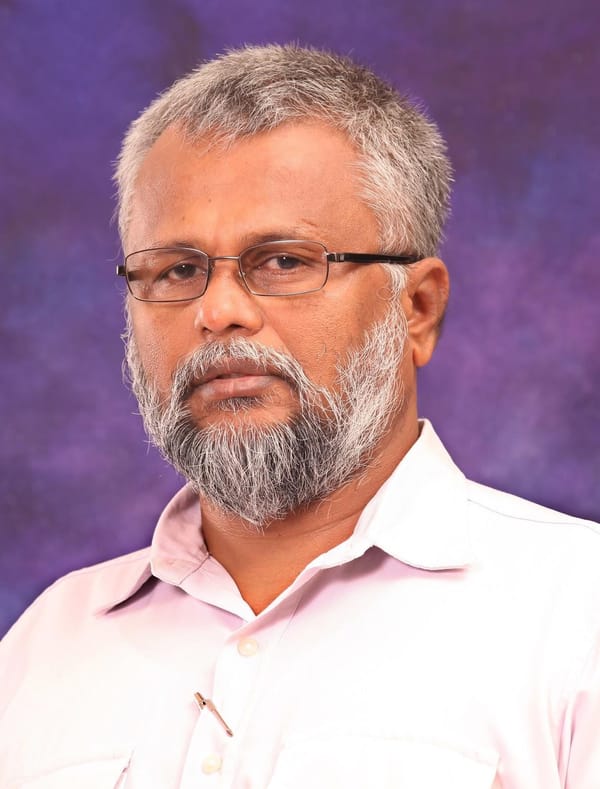
Most Sri Lankans may not know that veteran former minister and MP Douglas Devananda, now jailed over a pistol allegedly found with a criminal after being given to his party, employed many former Tamil Tigers in his office even as he passionately opposed the Liberation Tigers of Tamil Eelam (LTTE).
When Douglas, as he is widely known, was a minister in Colombo, his personal secretary responsible for fixing his appointments was one Gowri, who was earlier a high-ranking operative in the rebels’ banking division.
Indeed, some 15 to 16 former LTTE cadres were on Douglas’ staff over different periods. One was Pathman, who was an important figure in the LTTE radio Puligalin Kural or Voice of Tigers. After the LTTE was crushed in 2009, Douglas played a quiet but key role in facilitating the release and rehabilitation of some former LTTE members whom he felt had been punished enough for their deeds. He told confidants that he drew a line between the LTTE leadership and lower-level cadres.
Employing ex-LTTE cadres was a huge risk, but Douglas was ready for the game. This too was part of his colourful yet controversial personality. He did not change his outlook even after a section of LTTE cadres carried out a murderous attack on him at the Kalutara prison in Sri Lanka in 1998. He sought the release of a woman who had brought a woman LTTE suicide bomber to his office in 2008, triggering angry reactions from his colleagues. He never made a song or drama about any of this.
The Tigers, however, refused to forgive him and tried to assassinate Douglas repeatedly. Among all Sri Lankans (Sinhalese, Tamils or Muslims), he survived the maximum number of attempts on his life, becoming something of a mini legend. On one occasion, he sprang out of a first-floor window of his residence-cum-office in Colombo when LTTE cadres barged in with weapons blazing. He later said: (LTTE chief Velupillai) Prabhakaran cannot kill me.” Destiny proved him right.
Now, after standing by the Sri Lankan state for decades when many other politically active Tamils preferred to surrender to the Tigers to survive, a government in Colombo led by President Anura Dissanayake has jailed him over the 2019 discovery of a 9 mm automatic pistol from a Sinhalese member of the underworld. The weapon was reportedly given to Douglas’ Eelam People’s Democratic Party (EPDP) to meet LTTE threats. He was arrested on December 26 after being called to Colombo from Jaffna for interrogation. His case will come up for hearing on January 9.
Most Tamils, including those who have been politically opposed to him, find it difficult to believe that there could have been a nexus between Douglas and the underworld—particularly with someone from the Sinhalese community. This is not because Douglas is seen as an angel. Indeed, Tamil militancy did not produce morally upright Gandhians. Every actor in the militant scene has had the blood of innocents on his hands. Topping this list, however, is the LTTE—although its supporters are now among those most jubilant over Douglas’ plight.
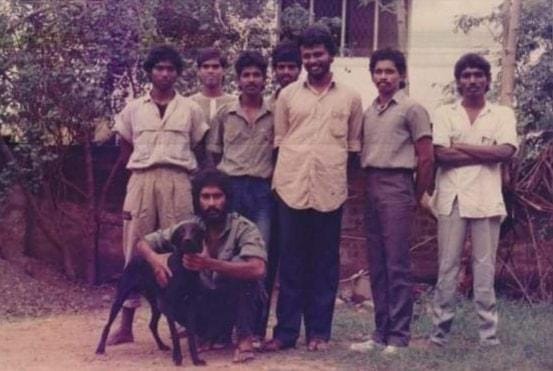
Now 68, the Jaffna-born Douglas (nee Kathiravelu Nythiananda Devananda) was among the earliest to enter Tamil militancy. In the 1970s, he travelled with a small band of young Tamils to the Middle East for military training from the PLO. He joined the Eelam People’s Revolutionary Liberation Front (EPRLF) as Tamils in Sri Lanka became restive. He narrowly escaped death when Sinhalese prisoners murdered many Tamil counterparts in a Colombo jail during the July 1983 anti-Tamil frenzy.
Shunted out to a prison in the eastern town of Batticaloa, Douglas escaped along with many others. He headed the ERPLF’s armed wing, but it was not a period he covered himself with great glory. In 1986, he was ousted from the EPRLF after one of his close aides opened fire at a crowd in Chennai, killing a man. This was when he was reduced to penury in India, although select young Tamils from Sri Lanka remained loyal to him.
Douglas returned to Sri Lanka during Ranasinghe Premadasa’s presidency. He threw his/EPDP’s lot with the government. As Eelam War II resumed in June 1990, the marriage of convenience became a marriage of necessity. The government got a former Tamil militant with a distinct vision on its side; Douglas, after being in the wilderness for a long time, got the backing of Colombo, which helped him take over the islets off Jaffna.
For militants from other armed Tamil groups who were relentlessly hunted and eliminated by the Tigers, Douglas emerged as a sanctuary and a source of protection. Many of them gravitated towards him, seeking safety and survival. Within months of his return, Douglas gathered more than 300 members. The number kept ballooning.
Douglas got elected to parliament in 1994, and remained a member for three decades until 2024, when a centre-Left coalition led by Anura Dissanayake catapulted to power. As one who dared to take on the LTTE, Douglas sided with successive governments. He served as a minister in charge of various portfolios for 18 years. He visited India often and interacted with its top leaders. Once, while not in the government, he and his colleagues changed their hotel in central Delhi hurriedly after seeing a man they suspected was an LTTE spotter.
Douglas’ EPDP became a feared outfit as it teamed up with the Sri Lankan security establishment to hunt down LTTE fighters and sympathisers. Many other Tamil groups and individuals also assisted the security forces, including the LTTE’s commander-turned-rebel Karuna, but the EPDP took much of the blame for most unsavoury happenings. Predictably, many of the riff raff in Tamil areas threw their lot with the EPDP, whose members were accused of abductions, crime, extra-judicial killings and more. Some Sri Lankans insist that Douglas was unaware of the crimes committed by some in his party. But the EPDP’s activities earned the lasting hostility of many in Tamil areas and not just the LTTE.
However, the killings were not one-way traffic. The LTTE murdered some 75 of his loyalists and supporters, including his own brother. (Douglas always carries his slain brother’s photograph in his wallet.) These murders profoundly affected him, making him, in many ways, a lonely person. There were times when Douglas felt that, although the LTTE had failed to kill him, he had no one genuinely close to him.
When the EPDP returned to Jaffna around 1996, the party felt the need for a secure hub. This is how the group took over the then-abandoned Sridhar theatre on Jaffna’s Stanley Road. But even after the war ended in 2009, the EPDP kept it, angering its owners and upsetting even Douglas’ friends. Ideally, the EPDP should have surrendered the theatre immediately after the Eelam conflict ended with the LTTE’s decimation.
Even within this realm of illegality, Douglas led a life of his own. He slept on a desk in one of the rooms in the theatre, avoiding a regular bed. Asked why he did not use even a pillow, Douglas’ answer got etched in a confidant’s mind: “I am one of those responsible for pushing the Tamil community into the morass it is in today. So, I should keep away from luxuries.”
All these do not exist in any government file. The JVP government is linking Douglas – who now suffers from a variety of ailments – with the disappearance of a pistol that it says was given to the EPDP but found its way to the Sri Lankan underworld. Then Defence Secretary Gotabaya Rajapaksa told a Colombo Tamil-language newspaper in 2017 that all the weapons given to the EPDP had been taken back by the administration.
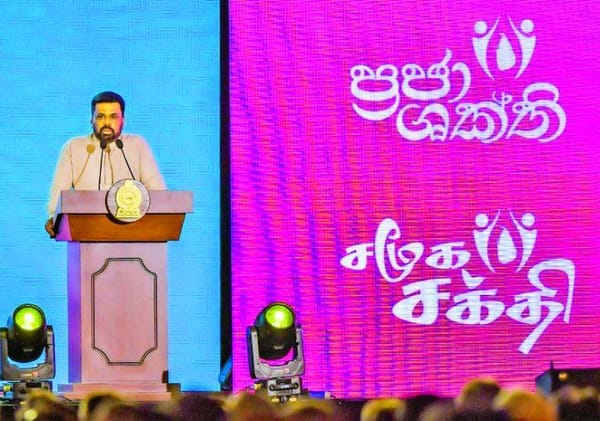
In a country awash with illegal weapons and where almost all political outfits, the JVP included, have plenty of blood on their hands, a man who veered towards a united Sri Lanka and took on the might of the Tamil Tigers now finds himself on the wrong side of President Dissanayake. Yet, there are those who argue that it is not Dissanayake but two JVP leaders in Jaffna who are responsible for Douglas’ jailing, as they view him as a political and electoral threat.
Editor’s Note: This article was first published on Rediff.com. It is reproduced in Jaffna Monitor with due permission.