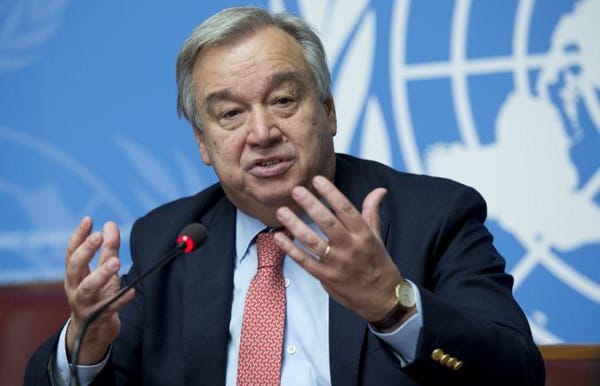
UNITED NATIONS — Marking International Women’s Day, the United Nations Secretary-General, António Guterres, issued a stark warning about the global state of women’s rights, describing gender inequality as “the greatest human rights challenge of our time” and urging governments to take concrete steps to close the gap between men and women.
In an opinion essay released ahead of the March 8 observance, Mr. Guterres outlined eight actions he said governments, businesses, and international institutions must pursue urgently, arguing that gender equality is inseparable from economic growth, stable societies, and lasting peace.
“Gender equality lifts societies,” Mr. Guterres wrote. “When power is shared, freedom expands.”
The article, circulated globally by the United Nations ahead of the annual commemoration, comes at a moment when progress toward gender equality has slowed — and in some places reversed — amid rising authoritarianism, armed conflicts, and economic instability.
A Structural Problem of Power
Mr. Guterres framed the persistence of gender inequality not simply as a social injustice but as a structural imbalance in political and economic power.
Male-dominated institutions continue to shape laws, policy, and economic systems across much of the world, he wrote, while political shifts in some countries have rolled back protections related to labor rights, reproductive rights, and civic participation.
The Secretary-General argued that closing the gap requires making gender parity a deliberate institutional goal. He pointed to the United Nations’ own push toward equal representation in senior leadership roles as evidence that change is possible when institutions widen the search for qualified candidates rather than lowering standards.
The Economic Stakes
A central theme of the essay is that gender equality is not only a moral imperative but also an economic one.
Mr. Guterres cited research indicating that every dollar invested in girls’ education generates nearly three dollars in economic returns, while investments in maternal health and family planning produce even greater benefits. Closing gender gaps in employment and opportunity, he wrote, could raise national income by as much as 20 percent in some countries.
Policies that support child care and elder care, he argued, are particularly powerful economic tools because they enable more women to participate fully in the workforce.
Women at the Peace Table
The Secretary-General also emphasized the role of women in conflict resolution, arguing that peace agreements are more durable when women are involved in negotiating and implementing them.
Yet women remain largely absent from many high-level peace negotiations. In conflicts that dominate the international agenda — including those in Gaza, Ukraine, and Sudan — women have often been excluded from formal talks even as they bear many of the social and economic consequences of war.
“Inclusion is not symbolic,” Mr. Guterres wrote. “It is a shortcut to stabilize our fractured world.”
Legal Barriers Remain
Despite decades of international commitments, legal inequality remains widespread. According to United Nations data cited by Mr. Guterres, women globally hold only about 64 percent of the legal rights enjoyed by men.
In many countries, restrictions still affect women’s ability to own property, work freely or seek a divorce. Even where laws exist to protect women’s rights, barriers to courts and legal assistance can limit their effectiveness.
The Secretary-General urged governments to dismantle discriminatory laws and ensure that legal protections are enforced in practice.
Violence and the Digital Divide
Gender-based violence, Mr. Guterres wrote, remains a global emergency rooted in inequality and sustained by silence. He called for zero tolerance and stronger accountability, including within international institutions, where cases of sexual exploitation and abuse have periodically undermined public trust.
He also warned that gender bias risks being embedded in emerging technologies. Women currently make up only about one in four workers in the global technology sector, raising concerns that artificial intelligence systems and digital platforms could replicate existing inequalities if the imbalance persists.
The rapid spread of online misogyny, he added, has made the creation of safer digital spaces an urgent priority.
Climate Change and Gender
Mr. Guterres argued that climate change has distinct gender consequences. Women and girls often face higher risks during environmental crises, including food insecurity, displacement, and child marriage when livelihoods collapse.
At the same time, he noted, women are playing a leading role in climate action — shaping legislation, organizing global movements, and leading community-level environmental responses.
A livable planet, he wrote, requires climate policies that include women fully in decision-making and provide equal access to green jobs and environmental leadership.
A Call for Concrete Action
Mr. Guterres concluded by urging governments to treat gender equality as a practical policy agenda rather than a symbolic commitment.
The eight actions he outlined — closing the power gap, prioritizing gender parity, investing in women and girls, including women in peace processes, ending discriminatory laws, confronting gender-based violence, addressing technological bias, and integrating gender into climate policy — were drawn, he said, from solutions he has observed in governments, civil society organizations, and communities around the world.
“If leaders get serious about gender equality and commit to these actions now,” he wrote, “we will change the world — for women and girls, and for us all.”