

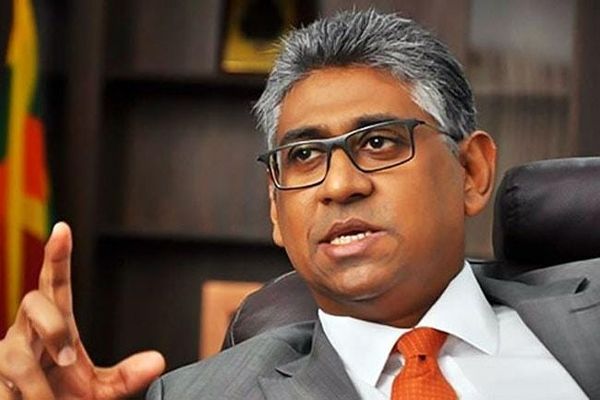
COLOMBO — Sri Lanka’s Parliament became the scene of a pointed constitutional challenge on Friday when Faiszer Musthapha, an opposition member of Parliament, pressed the government to justify maintaining emergency regulations three months after Cyclone Ditwah, warning that the legal framework now in place mirrors the decrees used to suppress protests during the 2022 Aragalaya uprising.
“Today, the government claims that while the Ditwah crisis is over, emergency regulations are still required to make the state machinery efficient,” Mr. Musthapha told the house. “I question the morality of bringing forth these specific regulations at this time.”
Emergency regulations under Sri Lankan law temporarily suspend ordinary legal protections and allow executive orders issued by the President to take precedence over existing statutes. While such powers are legally permitted during crises, their continued use after a natural disaster has passed has sparked political and legal debate in a country with a long history of emergency rule.
Fifteen Sectors, Sweeping Powers
At the centre of Mr. Musthapha’s criticism is a presidential Gazette notification declaring fifteen categories of public services as Essential Public Services, a legal designation that severely restricts workers’ ability to strike or refuse duty.
According to the notification read into the parliamentary record by Mr. Musthapha, the designated sectors include electricity supply, petroleum and fuel distribution including LP gas, hospital and medical services, public transport and road maintenance, water supply, district-level food distribution services, ambulance services, state banking and insurance services, irrigation, telecommunications and postal services, land reclamation and flood management, and agricultural and crop insurance services.
Taken together, the sectors cover much of Sri Lanka’s core public infrastructure.
“I believe that almost every service within the state machinery has now been declared an essential service,” Mr. Musthapha told the chamber.
The Legal Trap for Workers
Under the essential services framework, a worker who fails to report for duty can face imprisonment of two to five years. The state acquires the power to confiscate their property. Their professional registration — whether they are a doctor, a lawyer, or a member of any licensed profession — can be suspended, and their certifications nullified.
“It was the trade unions that brought you to power,” Faiszer Musthapha told the government benches. “By declaring these as essential services, you have created a system where, if they do not work, you can seize their assets, jail them, and destroy their professional standing.”
He was careful to acknowledge the government’s record to date. “You have stated that you have not engaged in repression, and I accept that,” he said. But he pressed the distinction between restraint in practice and statutory readiness for coercion. “There is a fundamental difference between not practicing repression and having the legal framework for repression fully prepared.”
A Challenge Without an Answer
Mr. Musthapha directed a series of direct questions at the government that went unanswered during his remarks. He asked whether there was any active threat or organised attempt to sabotage post-cyclone recovery operations. In the absence of such a threat, he argued, no justification existed for stripping 15 sectors of their right to collective action.
“Does the government truly need to make all 15 services essential to rebuild the damage caused by Ditwah?” he asked. “Can you state with responsibility that there is an active attempt by any group to sabotage this process?”
He urged the government to identify an alternative administrative route to ensuring efficiency without the extraordinary legal weight of essential service designations, warning that the cumulative effect of emergency regulations left ordinary citizens stripped of fundamental legal protections.
“By implementing these,” he said, “the government is effectively nullifying the standard legal protections of the common citizen.”
Emergency Declared After Cyclone
President Anura Kumara Dissanayake declared a nationwide state of emergency on November 28, 2025, invoking the Public Security Ordinance after Cyclone Ditwah struck Sri Lanka’s eastern coast.
The storm killed at least 638 people, left 175 missing, and affected approximately 2.3 million residents across all 25 districts, according to government figures.
Officials initially said emergency powers were necessary to coordinate disaster response, maintain essential services, and accelerate reconstruction.
However, civil society organizations — including the Centre for Policy Alternatives and the Human Rights Commission of Sri Lanka — warned at the time that existing disaster management laws already provided sufficient authority for relief operations and cautioned that some provisions of the emergency framework could undermine fundamental rights.
Three months after the cyclone, the emergency declaration remains in force as Parliament debates whether it should be extended further.