

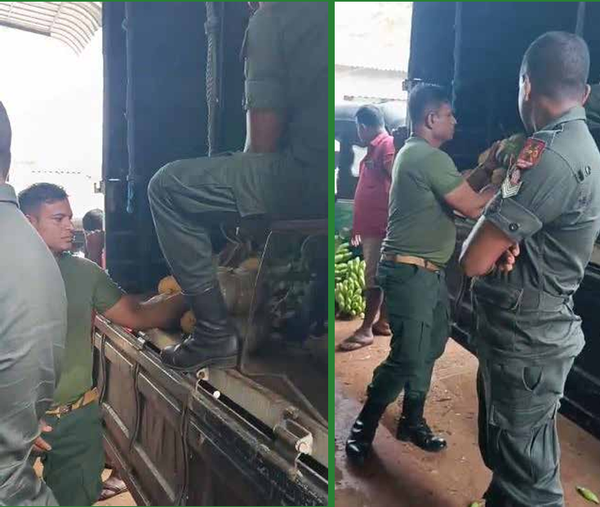
JAFFNA, Sri Lanka — A video appearing to show Sri Lankan soldiers delivering vegetables cultivated on military-controlled private land in Jaffna to a wholesale collection center supplying a supermarket has gone viral on social media, rekindling longstanding resentment among displaced residents of Valikamam North, where the military continues to occupy thousands of acres of privately owned land despite the end of Sri Lanka's civil war 17 years ago.
The footage, circulated widely over the past several days, shows what residents say are soldiers unloading large quantities of vegetables at a purchasing centre in Urumpirai along the Palaly Road. Residents allege the produce was cultivated on privately owned land that has remained under military control for decades.
The video surfaced days after Deputy Defence Minister Aruna Jayasekara told Parliament that the military requires 1,661 acres of land in Valikamam North for security purposes and that the government was taking steps to compensate landowners. He also said the military’s farming activities on those lands were intended for its own consumption.
Displaced residents rejected that explanation, saying the viral footage contradicts the government’s claim.
“They took our lands in the name of security. Now they cultivate those lands and sell the harvest back to the very people they displaced,” several residents told Jaffna Monitor. They said the practice not only deprives them of their property and livelihoods but also places local farmers at a commercial disadvantage by allowing the military to compete in agricultural markets.
V. Velayutham, 67, whose family home has remained inside the military-controlled area for 37 years, said the military had expanded far beyond its security role.
“The military is doing everything except the work it was created to do,” he told Jaffna Monitor. “They are farming, running businesses, and profiting from lands that belong to civilians while we remain displaced.”
Valikamam North was declared a High Security Zone during Sri Lanka’s civil war, forcing thousands of families from their homes. Although portions of the area have been released since the war ended in 2009, significant tracts of privately owned land remain under military occupation, making it one of the island’s longest-running land disputes.
Residents renewed their call for the government to return the lands rather than acquire them permanently through compensation, arguing that they want restoration of their property—not payment for land they never willingly surrendered.
The Defence Ministry has not publicly responded to the allegations surrounding the viral video.