By M.R. Narayan Swamy
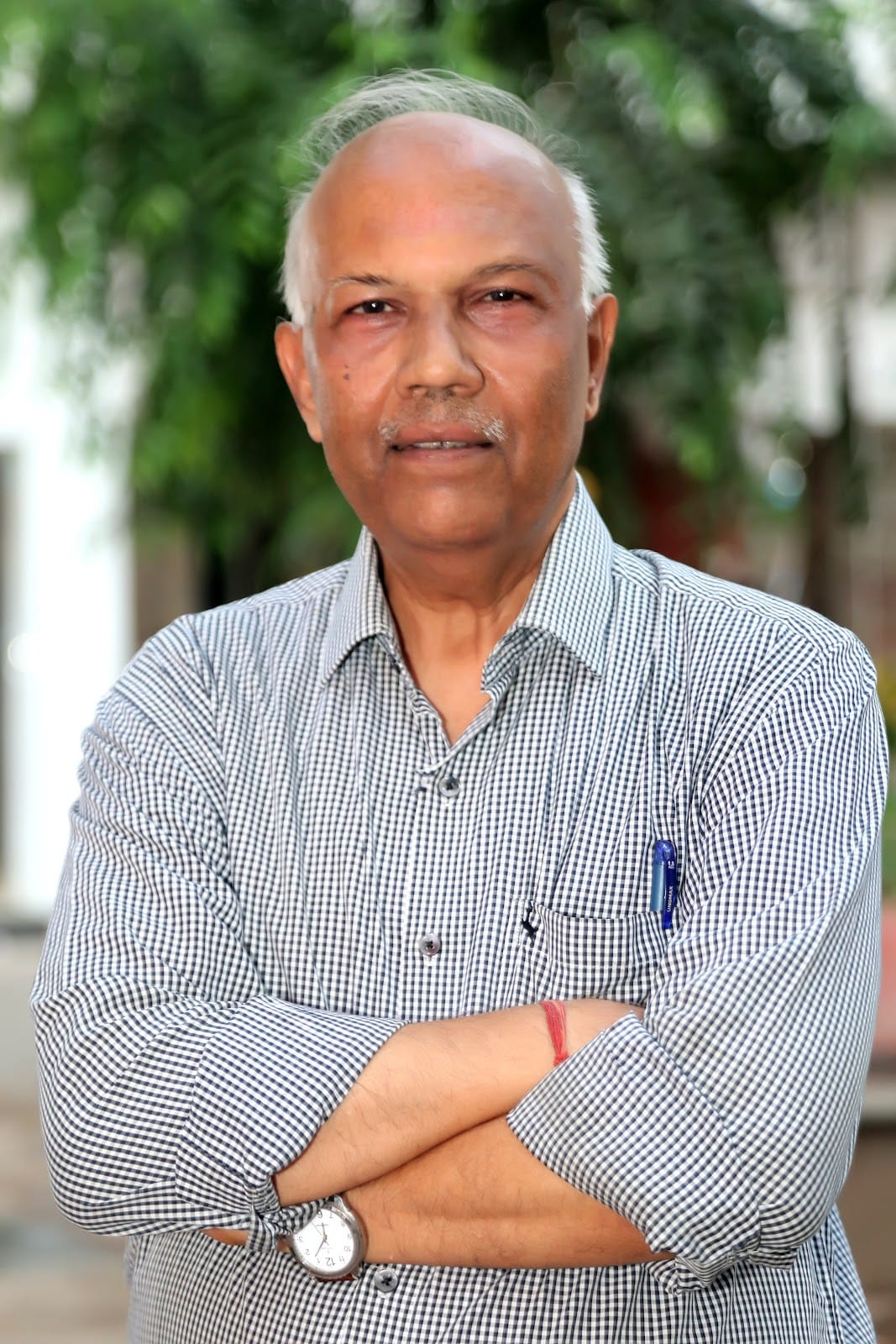
About a month before his assassination, Appapillai Amirthalingam was told by his elder son in London about a strong rumour in the UK that he had been killed. “This is what some people expect to happen,” the Tamil political stalwart responded. “If that happens, I wouldn’t mind.”
What was rumoured did indeed happen on the evening of Thursday, July 13, 1989. Tamil Tiger assassins shot dead an unsuspecting Amirthalingam, 61, and his colleague, V. Yogeswaran, 55, at their Colombo residence after consuming cold drinks served by Yogeswaran's wife. M. Sivasithambaram was shot and wounded.
All three men were veterans of the Tamil United Liberation Front (TULF), Sri Lanka’s leading Tamil party, which, despite being eclipsed over the years by Tamil militants, enjoyed wide support and respect among the mass of Tamils in the country.
A lawyer by training, Amirthalingam was an institution in his own right. Ever since he became the virtual right-hand man of S.J.V. Chelvanayakam, the Gandhian of Tamil politics, Amirthalingam was the livewire of Tamil activism and later the face of increasingly turbulent Tamil politics.
Even as Tamil militancy developed into full-scale insurgency after the anti-Tamil orgy of 1983 in Colombo, Amirthalingam remained the tallest among all elected Tamil leaders. This is why the Liberation Tigers of Tamil Eelam (LTTE) decided to kill him, says his younger son Baheerathan.
“They had to kill him to become the no. 1 (on the Tamil side),” Baheerathan, 66, said in a telephonic interview from London. “My father may not have been the no. 1, but he was a democratically elected leader. So he had to go.”
He added, “The LTTE also knew that my father could not be frightened. So, he had to be eliminated.”
Although Amirthalingam was a pale shadow of his former self by the time he passed away, his stature as a towering figure in Tamil politics earned him a respect the Tigers could not digest. Although he could no longer visit Tamil areas freely, diplomats and others regularly called on him.
On the D-Day itself, Amirthalingam had been invited to a dinner at the Taj Samudra hotel facing the Galle Face promenade hosted by the Indian envoy to Colombo in honour of B.G. Deshmukh, who was visiting Sri Lanka as a special envoy of Indian Prime Minister Rajiv Gandhi.
I was in Colombo when the double assassination took place. A journalist who rushed to the crime site mistakenly identified one of the three assassins, Visu, as Yogi, a high-ranking LTTE leader who was one of the Tigers then engaged in peace talks with the government.
It took a while for the confusion to melt and the real story to be known.
The LTTE killers had gained entry into the otherwise secure residence after Yogeswaran foolishly told the police guards not to frisk them. The Tigers had said they wanted to talk to Amirthalingam to bring about unity among Tamil parties and outfits. The TULF men, wise otherwise, fell for the trick.
Once the LTTE gunmen opened fire, the police guards shot dead all three assassins. If the killers had escaped, the Tigers would have denied any link with the murders and probably tried to blame some other Tamil group.
Amirthalingam was the first major mainstream leader ordered killed by LTTE supremo Velupillai Prabhakaran, whose appetite for gore never stopped until he himself became history much later.
In 1990, an LTTE hit squad wiped out almost the entire leadership of the Eelam People’s Revolutionary Liberation Front in Chennai. This was followed the next year by the assassinations of Sri Lankan Defence Minister Ranjan Wijeratne in Colombo and former Indian Prime Minister Rajiv Gandhi near Chennai.
It is only after Amirthalingam’s passing away that LTTE propagandists began describing Prabhakaran, a nobody when Amirthalingam was a popular Tamil patriarch, as thesiya thalaivar (national leader).
Those who killed Amirthalingam in the most cowardly fashion – we want to talk, they said; please do not let the cops frisk us, they pleaded; they sipped cool drinks and made small talk; and, then, whipped out a gun and shot him dead – did not realise that their victim was anything but a coward.
When former MPs M. Alalasundaram and V. Dharmalingam were shot dead in Jaffna in 1985 by suspected militants, Amirthalingam told a memorial meeting in Chennai that Tamil political stalwarts were ready to pay the ultimate price.
This was no rhetoric. He would often quote to both his sons, the elder Kandeepan (who died in 2022) and the younger Baheerathan, an iconic line from Shakespeare: “Cowards die many times before their deaths. The valiant never taste of death but once.”
As he flew from India to Colombo after the 1987 India-Sri Lanka Accord, which ran into serious problems among most Sinhalese, Amirthalingam told TULF colleague V. Aanandasangaree: “We know what lies in store for us in Sri Lanka. But we must face it if we are to help our people.”
Despite an affinity to Indian Prime Minister Indira Gandhi (until her assassination in October 1984), Amirthalingam was no Indian stooge. He had a mind of his own.
It was Amirthalingam, more than anyone else, who took the Tamil story after the 1983 frenzy to world capitals. But once Rajiv Gandhi took office, he realised that India would accept only a negotiated settlement.
Indira Gandhi may have had other ideas, but her son and successor Rajiv Gandhi was of a different mould.
Amirthalingam was all for the 13th Amendment that followed the 1987 pact, promising autonomy to Tamil areas and other provinces in Sri Lanka. Many who mocked him then are today clamouring for the same legislation.
When India urged the TULF to hold talks with the Sri Lankan government in Bhutan in 1985, Amirthalingam insisted that the dialogue would be pointless unless the Tamil militant groups were also invited. His elder son objected, but he did not budge.
Prabhakaran’s men too went to Bhutan. But he later turned openly critical of Amirthalingam, asking why he was talking to Colombo when the aim was to form a free Tamil Eelam. Amirthalingam preferred silence despite such indignities from those who knew nothing of diplomacy.
Like many Tamils, Amirthalingam was disgusted when the LTTE unleashed bloody violence against other Tamil groups. He was not one for bloodshed, notwithstanding his aggressive politics in an earlier era. For him, according to his son Baheerathan, the TULF and the Tamil militant groups had to mirror the relationship between the IRA and Sinn Féin.
The TULF leader remained calm even as friends complained that Sri Lanka’s main Tamil party was being sidelined by India post-Indira Gandhi.
Later, he did not want the war between the LTTE and the Indian military to continue. As the fighting raged, he refused to contest the Provincial Council elections in Sri Lankan northeast in 1988, angering the Indian establishment.
In 1989, India’s new envoy to Sri Lanka, Lakhan Lal Mehrotra, decided to honour Amirthalingam with a meeting with the Indian Prime Minister’s special envoy. But the LTTE killed him before he could make it to the Taj Samudra.
Baheerathan was in London when he heard the shattering news. “I was devastated. He was not just my father. He was also my best friend.”
In the end, the Sri Lankan government, which he fought for years, tried to keep him safe – and its personnel even killed his assassins.
Those who cut short his life were those who once saw Amirthalingam as their thalapathy (general) and who promised to lead the Tamil community to a free Tamil state.
It was a dream Amirthalingam realised was not feasible – even if it looked possible once. For this, he was dubbed a “traitor”. Those who called him so led the Tamil community to a horrific and wholesale ruin in 2009.