By: Dr. Gamini Goonetilleke
The contrasting stories of the oil tank farm in Trincomalee and the development of Jurong Island, located to the southwest of mainland Singapore, provide a powerful example of how vision, planning, and governance can shape the destiny of strategic assets. Both locations possess significant geographical advantages and lie along major maritime routes. Yet, while Jurong Island has grown into a global energy and petrochemical hub, the Trincomalee oil tanks have remained largely underdeveloped since their construction during the colonial era.
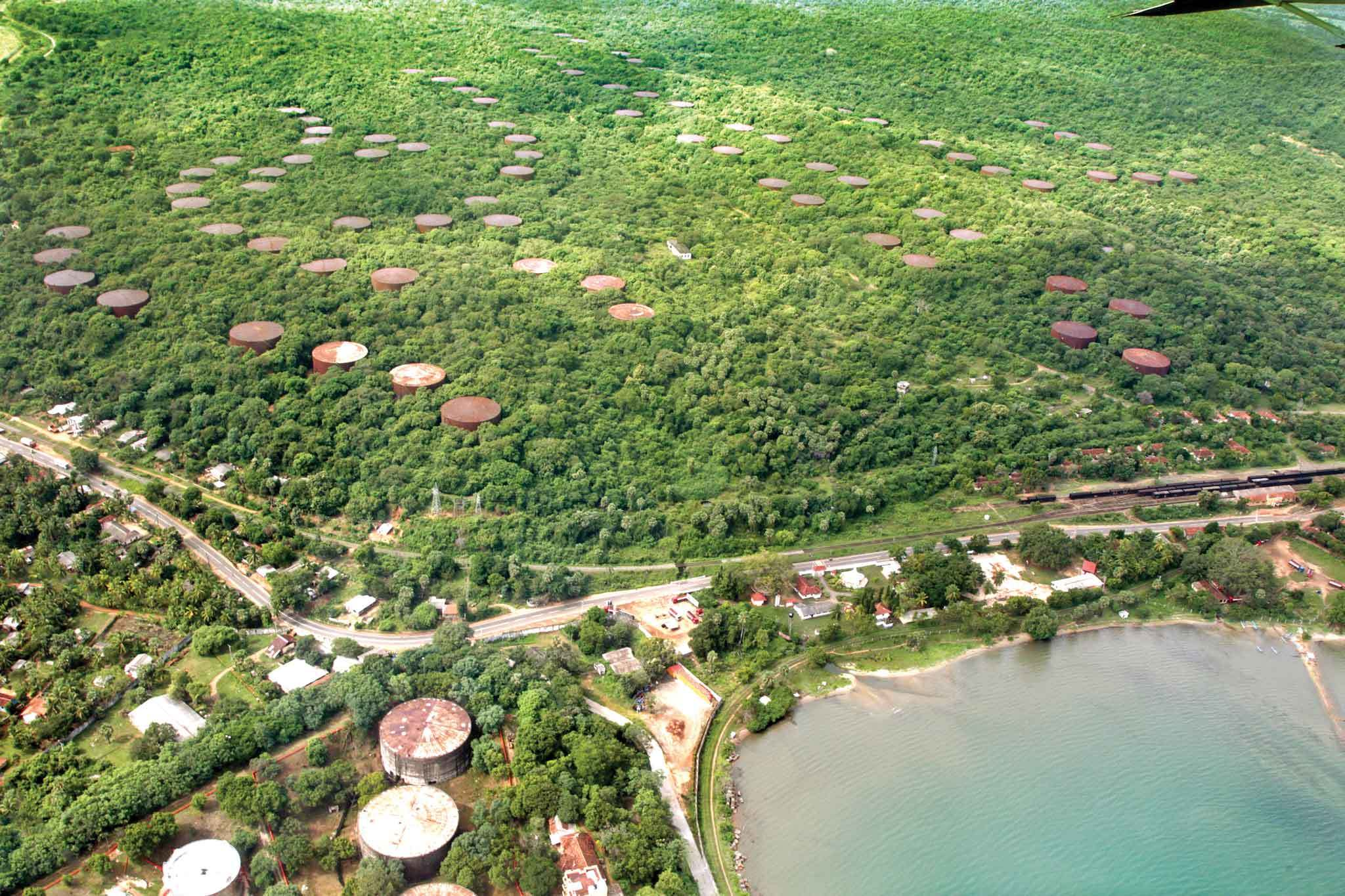
The oil tank farm in Trincomalee dates back to World War II, when the British recognized the strategic importance of Trincomalee’s deep natural harbor. Widely regarded as one of the finest natural harbors in the world, it provided an ideal base for naval operations in the Indian Ocean. To support these operations, nearly one hundred large oil storage tanks were constructed in the China Bay area. These tanks ensured a steady fuel supply for military vessels across the region. However, after Sri Lanka gained independence in 1948, this valuable infrastructure did not receive sustained investment or strategic attention. Over time, many tanks fell into disuse, and despite periodic attempts at revival through foreign partnerships and bilateral agreements, progress has remained slow and fragmented.
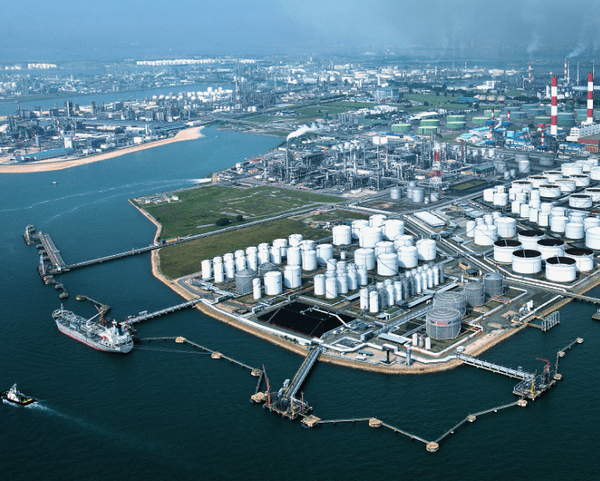
In contrast, Jurong Island represents a deliberate and forward-looking development strategy. Unlike Trincomalee, it did not begin with existing infrastructure. Instead, it was created in the late twentieth century by merging several small offshore islands—once fishing villages—through large-scale land reclamation. This ambitious transformation was guided by a clear national vision: to position Singapore as a leading global hub for oil refining, petrochemicals, and energy-related industries. From the beginning, the government implemented a comprehensive master plan, ensuring that infrastructure, investment policy, and industrial growth were closely coordinated.
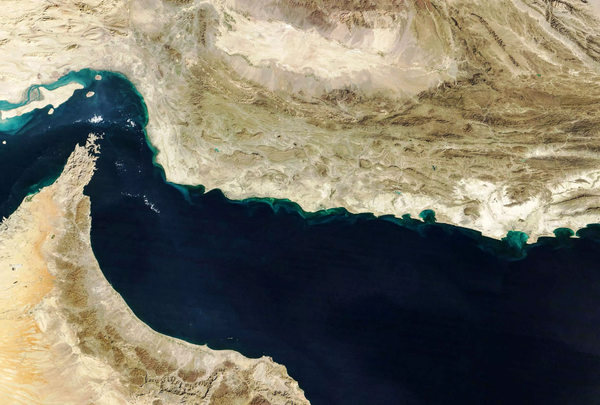
Geographically, both Trincomalee and Jurong Island are well positioned. Trincomalee lies along key shipping routes in the Indian Ocean, making it ideal for oil storage and distribution. Its natural harbor requires minimal modification to accommodate large vessels, offering a clear advantage. Jurong Island, although lacking such a natural harbor, benefits from its proximity to the Strait of Malacca—often called the “jugular vein of Asian trade.” This vital corridor carries over 20 million barrels of oil daily and serves as a major route connecting Asia, the Middle East, and Europe. Recognizing this advantage, Singapore invested heavily in deep-water berths, storage facilities, and extensive pipeline networks, effectively compensating for its natural limitations.
The most striking difference between the two lies in long-term vision and planning. Singapore’s approach to Jurong Island has been marked by consistency and strategic foresight. The government created a stable and investor-friendly environment that attracted leading multinational corporations in energy and petrochemicals. The island was developed as an integrated industrial ecosystem, where refineries, chemical plants, and storage facilities are interconnected. This integration allows by-products from one process to serve as inputs for another, reducing waste and increasing efficiency.
In Trincomalee, however, the absence of a sustained long-term strategy has been a major constraint. Although the strategic value of the oil tank farm is widely recognized, development efforts have often been hindered by changing political priorities, concerns over national sovereignty, and bureaucratic delays. Successive governments have proposed plans, but few have been implemented consistently. As a result, much of the infrastructure remains underutilized, and opportunities for economic growth have been lost.
Investment patterns further highlight this contrast. Jurong Island has benefited from massive and continuous financial investment from both the Singaporean government and global investors. Billions of dollars have been spent on land reclamation, advanced infrastructure, and technological innovation. What began as a group of small fishing islands has evolved into a 3,000-hectare integrated energy and chemical hub, hosting over 100 leading international companies. Despite having no domestic crude oil resources, Singapore processes more than 1.5 million barrels of oil per day and operates the world’s largest bunkering port.
Today, Jurong Island is the third-largest oil refining centre globally and a cornerstone of Singapore’s industrial economy, contributing about 3% to national GDP. Its activities extend beyond oil refining to include petrochemical production, energy trading, and extensive gas storage and distribution networks, including pipelines linked to regional suppliers.
Importantly, Jurong Island is not static—it is evolving to meet future energy needs. Around 300 hectares, nearly 10% of its land area, have been set aside for green transformation initiatives. These include solar energy projects, carbon capture technologies, hydrogen fuel development, and specialty chemicals aimed at supporting low-carbon innovation. This reflects Singapore’s long-term focus on sustainability, energy security, and decarbonization.
The island is supported by world-class infrastructure, including integrated utilities, desalination systems for reliable water supply, and efficient logistics networks. It also promotes innovation through research and development collaborations, ensuring that it remains at the forefront of global energy advancements.
The economic impact of these differing approaches is clear. Jurong Island provides employment for around 27,000 people and generates substantial national revenue. It has strengthened Singapore’s position as a global energy hub and contributed significantly to its economic resilience. In contrast, the Trincomalee oil tanks have yet to make a comparable contribution to Sri Lanka’s economy. If fully developed, they could generate significant revenue, stimulate regional growth, and create employment opportunities.
Ironically, Trincomalee required far less initial investment, as the oil tanks were already in place. However, the lack of sustained funding for maintenance, modernization, and expansion has led to gradual deterioration. Although some tanks have been refurbished through joint ventures, many remain unused. Furthermore, the absence of supporting infrastructure—such as refineries, pipelines, and industrial networks—has prevented the development of an integrated energy hub.
Governance and policy frameworks have also played a decisive role. Singapore is known for efficient governance, transparency, and strong policy implementation. This has created high investor confidence and encouraged long-term commitments. In Sri Lanka, governance has been more complex, with policy shifts and administrative challenges affecting continuity. Concerns over foreign involvement in strategic assets like Trincomalee have further complicated decision-making, leading to delays.
Despite these challenges, Trincomalee retains significant potential. Its natural harbor, strategic location, and existing infrastructure provide a strong foundation for future development. With growing global demand for energy storage and distribution, particularly in the Indian Ocean region, Trincomalee could still become an important player in regional energy security. However, this will require a clear national vision, consistent policies, and sustained investment.
The comparison between Trincomalee and Jurong Island offers important lessons. It highlights the value of long-term planning, policy consistency, and effective governance. It also demonstrates the importance of infrastructure investment and integrated industrial development. While Sri Lanka’s context differs from Singapore’s, these principles can still be adapted to local conditions.
In conclusion, the story of the Trincomalee oil tanks and Jurong Island is not simply a comparison of two locations, but a reflection of two different approaches to development. Jurong Island stands as a testament to what can be achieved through vision, planning, and commitment. Trincomalee, by contrast, represents untapped potential—a reminder of missed opportunities, but also of possibilities for the future. With the right direction and determination, it is still possible for Trincomalee to evolve into a dynamic energy hub, contributing meaningfully to Sri Lanka’s economic progress.