After Delays, Sri Lankan Government Releases Funds for Chemmani Mass Grave Investigation

After Delays, Sri Lankan Government Releases Funds for Chemmani Mass Grave Investigation


Share this post

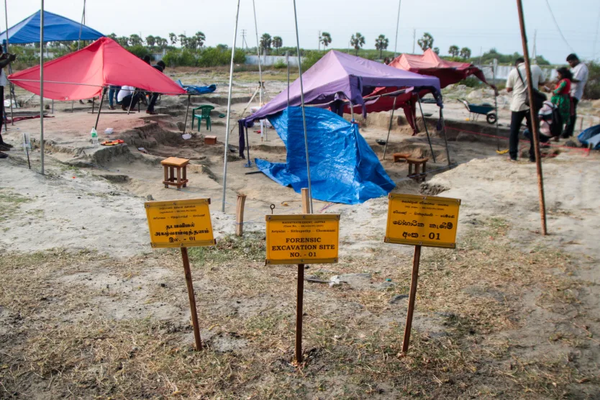
JAFFNA, Sri Lanka — The Sri Lankan government has allocated 21 million rupees for the third phase of excavations at the Chemmani mass grave site, officials said.

The release of funds follows repeated postponements caused by a lack of financial approval and adverse weather conditions that left the site waterlogged. The case is scheduled to be taken up again at the Jaffna Magistrate’s Court on April 21, when authorities are expected to indicate when excavation work will resume.

Chemmani, a village on the outskirts of Jaffna, has long been associated with allegations of enforced disappearances and extrajudicial killings during the final years of the civil war in the north.

The site first drew widespread attention in 1998, when a Sri Lankan Army soldier, testifying in a murder case, told a court that hundreds of bodies of detainees who had disappeared in the mid-1990s had been buried in the area. His account aligned with longstanding claims by families and human rights groups that large numbers of civilians went missing during military operations to retake the Jaffna peninsula in 1995 and 1996.

Court-ordered excavations in 1999 uncovered human remains, but the investigation did not lead to comprehensive identification of victims or prosecutions of senior officials, leaving many questions unresolved.

Interest in the site resurfaced in February 2025, when construction work at a nearby Hindu cremation ground uncovered skeletal remains, prompting a renewed, court-supervised excavation. Since then, investigators have identified around 240 sets of remains, including those believed to be of children and infants, making Chemmani one of the largest officially documented mass grave sites in Sri Lanka .

Despite the renewed effort, progress has been uneven. Excavations have been halted multiple times, including in recent months amid delays in the release of funds, drawing criticism from lawyers representing victims’ families and from rights groups, who say such interruptions risk compromising both evidence and public confidence.

The site is currently secured as a crime scene, with forensic work continuing under judicial oversight. The Human Rights Commission of Sri Lanka has previously noted broader administrative delays in the disbursement of funds for such investigations, while international organizations have called for greater transparency and independent monitoring.


Share this post

Be the first to know

Join our community and get notified about upcoming stories

Subscribing...
You've been subscribed!
Something went wrong
From Remittances to Investment: Rethinking the Tamil Diaspora’s Role

From Remittances to Investment: Rethinking the Tamil Diaspora’s Role

The Tamil diaspora has long been an integral part of Jaffna’s social, economic, and cultural landscape. Spread across countries such as Canada, the United Kingdom, Australia, and parts of Europe, this global community has maintained strong and enduring ties with Northern Sri Lanka. These connections have been expressed through family relationships, financial support, cultural exchange, and political engagement. During periods of conflict and immediate post-war recovery, diaspora contributions p


Colonel Nalin Herath

Colonel Nalin Herath

Exclusive: Iran’s Ambassador Sets Out Tehran’s Position on the Strait of Hormuz

Exclusive: Iran’s Ambassador Sets Out Tehran’s Position on the Strait of Hormuz

By: Dr. Alireza Delkhosh, Ambassador of the Islamic Republic of Iran to Sri Lanka On 28 February 2026, the United States and the Zionist regime, through an unlawful act of aggression contrary to the fundamental principles of international law, acted against the territorial integrity and national sovereignty of the Islamic Republic of Iran. In response, and within the framework of the inherent right of self-defense pursuant to Article 51 of the Charter of the United Nations, the Government of th


Dr. Alireza Delkhosh

Dr. Alireza Delkhosh

The Business of Hope: How IMHO Helped Rebuild Lives in Sri Lanka

The Business of Hope: How IMHO Helped Rebuild Lives in Sri Lanka

Two decades ago, a small group of Tamil professionals in the United States asked a simple question: instead of meeting and eating, why not do something for our people? What grew from that conversation has transformed hospitals, restored sight, saved hearts, and quietly rewritten the story of a community that war nearly erased.  By: Aruliniyan Mahalingam I have no formal connection to the medical profession. Yet, in a way that feels almost inevitable, I have always found myself surrounded by do


Aruliniyan Mahalingam

Aruliniyan Mahalingam

Appointed, Then Abandoned: The Betrayal of Northern Health Volunteers

Appointed, Then Abandoned: The Betrayal of Northern Health Volunteers

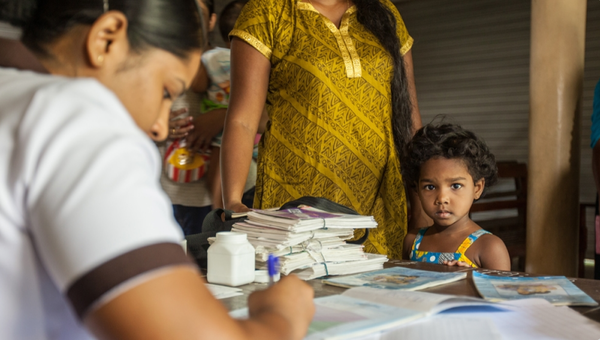
By: Jeevan Thiagarajah A Travesty of Justice in the Northern Province In the annals of public service recruitment, few stories are as harrowing or as indicative of systemic failure as the plight of the Health Services Volunteers in the Northern Province. This is a saga marked by a cruel travesty of justice, where the hopes of the most vulnerable were raised and dashed by the very system designed to protect them. The most damning aspect of this tragedy is that letters of appointment to gove


Jeevan Thiyagaraja

Jeevan Thiyagaraja