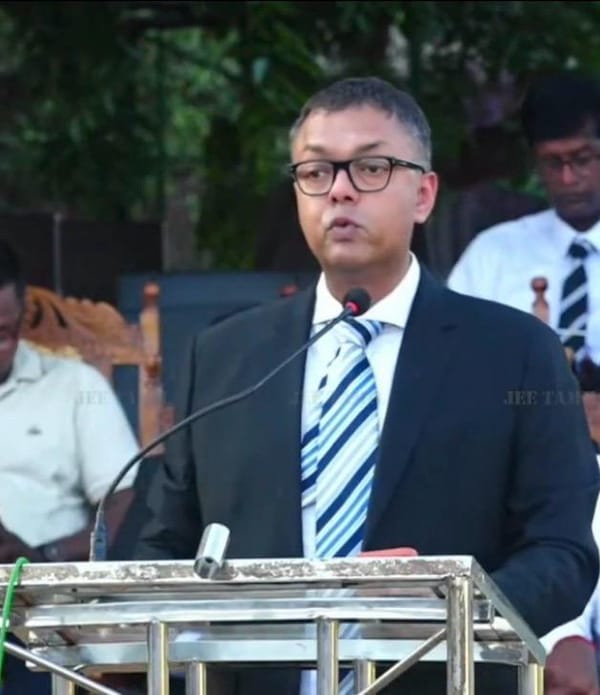
JAFFNA, Sri Lanka — March 20, 2026 — “They tried to silence this ground once… but tonight, listen carefully — it is still speaking.”
With that line, Abethan “Abbi” Kanthasamy brought a hushed sports field to stillness on Friday evening, addressing students, teachers, and alumni gathered at the grounds of Jaffna Hindu College.
Nearly four decades after he last stood there as a schoolboy, Abbi Kanthasamy — now a Malaysia-based entrepreneur and managing director of the Cinnamon Group — returned as chief guest for the school’s annual inter-house sports meet. But his speech quickly moved beyond ceremony, returning again and again to memory and endurance.
MEMORIES OF THE SAME GROUND
“Nearly forty years ago, I stood on this very ground as a student of this school,” he said. “Like many of you, I ran on this track and played cricket on this field.”
“One afternoon, our Under-15 cricket team was practising here. Then a helicopter gunship appeared overhead — and in that instant, everything changed.”
“Everyone scattered. Only two of us ran towards a tree. We used it as our shield, making sure the trunk was always between us and the helicopter,” he told the students.
“The sound,” he said. “The low hum of the engines. The sudden bursts of gunfire. The metallic clatter of empty shell casings hitting the road beside us.”
“It is a sound that has stayed with me all these years.”
RETURNING, AFTER DISTANCE
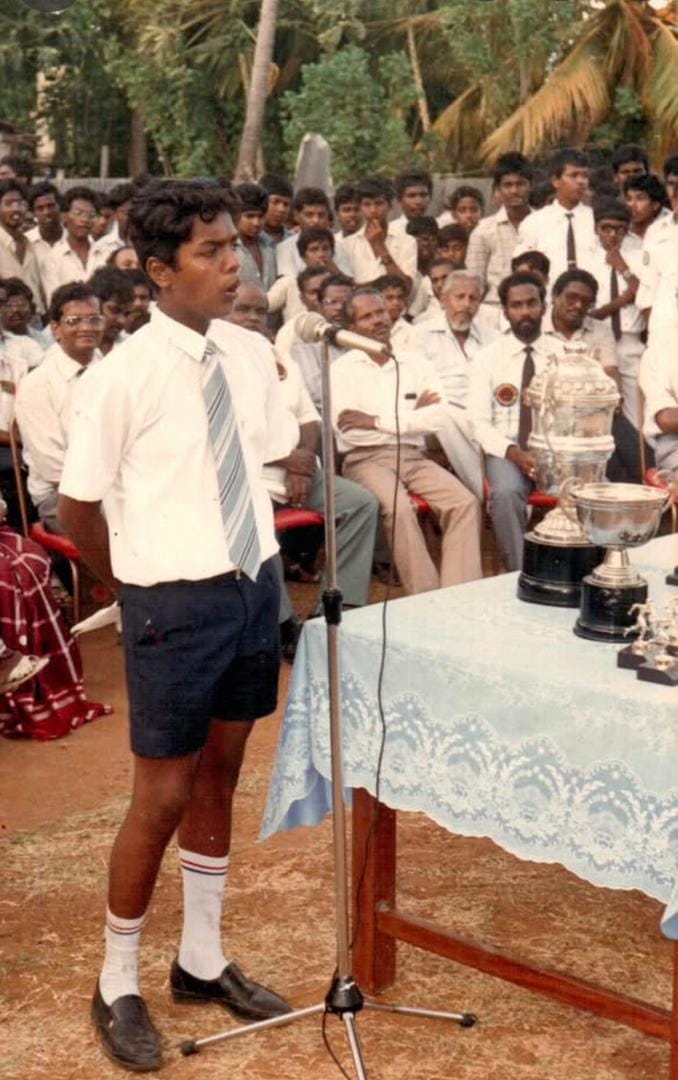
Abbi Kanthasamy would later leave Jaffna, study engineering at McGill University in Canada, and build a career in Malaysia’s hospitality sector. But his return, he suggested, was shaped less by success than by memory.
“This is not just a ground,” he said. “It is a witness.”
A witness, he explained, to moments that shaped a generation.
It has known fear. It has known loss. It has watched boys grow into adulthood far earlier than they should have.
And yet, it has also held something else.
“It has seen endurance,” he said. “It has seen defiance. It has seen the refusal of a people to give in.”
WHAT SPORT TEACHES
“It is not about how many times you win,” he said. “It is not even about how many times you fall.”
“It is about how quickly you get back up.”
“You will fall. You will fail. That is certain. But what defines you is not the fall — it is your response.”
“How fast you rise. How hard you fight. And whether you have the courage to step forward again.”
He invoked a line familiar in sporting culture.
“You miss 100 percent of the shots you don’t take,” he said. “The greatest tragedy is not that you failed — it is that you were too afraid to try.”
ABSENCE, AND WHAT REMAINS
At one point, his voice turned to those who were no longer there.
“Many of the boys I studied with in this school are no longer with us,” he said. “They should have grown old alongside us… built lives, families, professions.”
Instead, they exist now only in memory — and in places like this field.
Yet, he insisted, something endured beyond loss.
“The spirit of this place,” he said.
“The spirit to compete without bitterness.
The spirit to endure without surrender.
The spirit to build, even after everything has been broken.”
Turning to the students before him, he reframed the meaning of the day’s races and competitions.
“Years from now, you may not remember every race,” he said. “But you will remember who you became on this field.”
“You will remember the mornings you showed up tired… the days you wanted to give up but did not.”
“Sport teaches us this: pain is temporary. Character stays.”
AN ENDING — AND A CONTINUATION
“This ground has seen dark days,” he said. “But tonight, it is alive again — with running feet, cheering voices, and the fire of a new generation.”
He let the thought linger before closing.
“And that, to me, is victory.”
“Not just winning a race. Not just breaking a record,” he told the students.
“But standing here — alive, unbroken, still running.”