

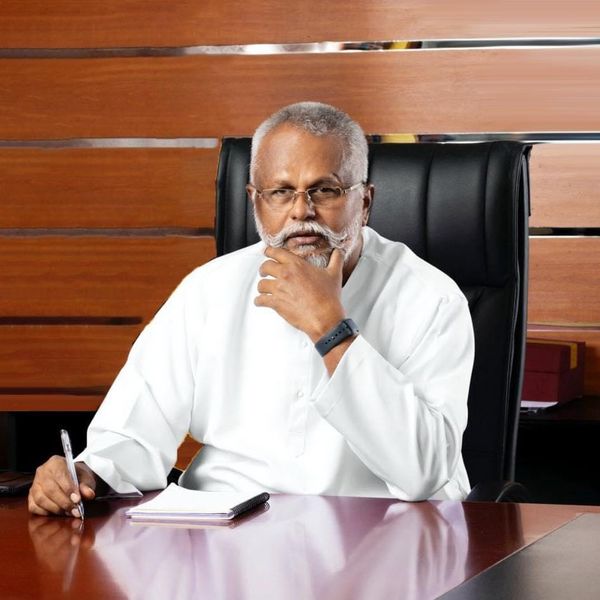
Douglas Devananda Slams Tamil Leaders for “Wasting” Meeting With Indian Vice President

Douglas Devananda Slams Tamil Leaders for “Wasting” Meeting With Indian Vice President


Share this post

COLOMBO — Douglas Devananda, a former minister and leader of the Eelam People’s Democratic Party, has sharply criticized fellow Tamil leaders for what he described as a missed opportunity during a recent meeting with C. P. Radhakrishnan, saying they failed to effectively press the needs of the Tamil people.

Mr. Douglas Devananda said the discussions appeared to focus more on internal disagreements among Tamil politicians than on substantive demands affecting their constituents.

Speaking to reporters on Wednesday, he said the meeting — held during the Indian Vice President’s recent visit to Sri Lanka — had left both him and the public “disappointed,” arguing that Tamil representatives had not used the opportunity to advance key political and economic concerns.

“Instead of raising the needs and aspirations of the Tamil people, it appears they took their internal disputes to him and sought solutions,” he said.

Mr. Douglas Devananda acknowledged that the visit itself was “welcome,” but said the failure to articulate clear demands reflected a broader pattern of fragmentation within Tamil politics.

He contrasted the episode with his own past engagements with Indian leaders. Recalling a 2010 visit to India as part of a delegation led by former President Mahinda Rajapaksa, he said he had helped secure development initiatives, including a 50,000-house program, agricultural assistance, and the Jaffna Cultural Centre.

He also reiterated his longstanding position that Sri Lanka’s 13th Amendment — which provides for limited devolution of power to provinces — should be viewed as a starting point for resolving the ethnic question, though not a final solution.

Mr. Douglas Devananda further accused some Tamil politicians of prioritizing “self-serving political interests,” a charge likely to deepen divisions within an already fragmented political landscape.

There was no immediate response from the Tamil parties involved in the meeting.

Mr. Douglas Devananda, a party general secretary, an early figure in Tamil militancy, and a long-serving Tamil minister, was not invited to the meeting with Mr. Radhakrishnan.

Political observers say he has not been included in Indian diplomatic engagements in recent months following his loss of both his parliamentary seat and ministerial portfolio in the last election.

Some analysts note that such exclusions risk reinforcing perceptions of selective outreach by Indian officials, potentially narrowing the range of Tamil political voices engaged at a time when broader representation may be critical.


Share this post

Be the first to know

Join our community and get notified about upcoming stories

Subscribing...
You've been subscribed!
Something went wrong
From Remittances to Investment: Rethinking the Tamil Diaspora’s Role

From Remittances to Investment: Rethinking the Tamil Diaspora’s Role

The Tamil diaspora has long been an integral part of Jaffna’s social, economic, and cultural landscape. Spread across countries such as Canada, the United Kingdom, Australia, and parts of Europe, this global community has maintained strong and enduring ties with Northern Sri Lanka. These connections have been expressed through family relationships, financial support, cultural exchange, and political engagement. During periods of conflict and immediate post-war recovery, diaspora contributions p


Colonel Nalin Herath

Colonel Nalin Herath

Exclusive: Iran’s Ambassador Sets Out Tehran’s Position on the Strait of Hormuz

Exclusive: Iran’s Ambassador Sets Out Tehran’s Position on the Strait of Hormuz

By: Dr. Alireza Delkhosh, Ambassador of the Islamic Republic of Iran to Sri Lanka On 28 February 2026, the United States and the Zionist regime, through an unlawful act of aggression contrary to the fundamental principles of international law, acted against the territorial integrity and national sovereignty of the Islamic Republic of Iran. In response, and within the framework of the inherent right of self-defense pursuant to Article 51 of the Charter of the United Nations, the Government of th


Dr. Alireza Delkhosh

Dr. Alireza Delkhosh

The Business of Hope: How IMHO Helped Rebuild Lives in Sri Lanka

The Business of Hope: How IMHO Helped Rebuild Lives in Sri Lanka

Two decades ago, a small group of Tamil professionals in the United States asked a simple question: instead of meeting and eating, why not do something for our people? What grew from that conversation has transformed hospitals, restored sight, saved hearts, and quietly rewritten the story of a community that war nearly erased.  By: Aruliniyan Mahalingam I have no formal connection to the medical profession. Yet, in a way that feels almost inevitable, I have always found myself surrounded by do


Aruliniyan Mahalingam

Aruliniyan Mahalingam

Appointed, Then Abandoned: The Betrayal of Northern Health Volunteers

Appointed, Then Abandoned: The Betrayal of Northern Health Volunteers

By: Jeevan Thiagarajah A Travesty of Justice in the Northern Province In the annals of public service recruitment, few stories are as harrowing or as indicative of systemic failure as the plight of the Health Services Volunteers in the Northern Province. This is a saga marked by a cruel travesty of justice, where the hopes of the most vulnerable were raised and dashed by the very system designed to protect them. The most damning aspect of this tragedy is that letters of appointment to gove


Jeevan Thiyagaraja

Jeevan Thiyagaraja