Nearly two weeks after Cyclone Ditwah claimed 644 lives and wreaked destruction on a scale larger than the 2004 tsunami, one question continues to demand an answer: how did a second-category storm—tracked for sixteen days in advance—become Sri Lanka’s deadliest weather disaster in recent memory?
From Natural Disaster to Man-Made Tragedy
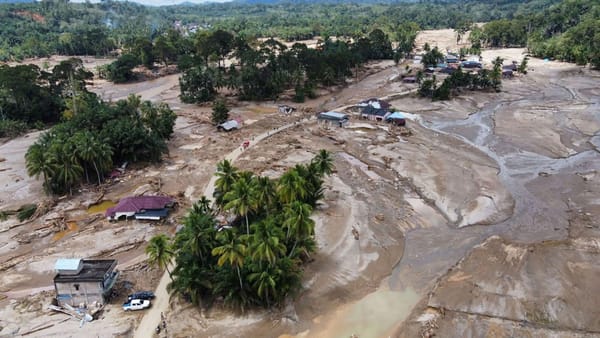
Sri Lanka's encounter with Cyclone Ditwah has moved beyond natural disaster into man-made catastrophe. Official figures confirm 644 deaths, 183 people still missing, and more than 1.36 million affected by flooding, landslides, and infrastructure collapse. Entire communities have been displaced, livelihoods erased, and essential public infrastructure damaged in every province.
Governance is not tested in speeches or slogans, but in crisis. Cyclone Ditwah was such a test. What should have been a defining moment for a government elected on "system change" has instead become a sobering indictment of the state's capacity to protect its people from foreseeable and preventable harm.
A Weak Storm, a Catastrophic Response
What makes this failure inexcusable: Cyclone Ditwah was not an extreme cyclone by regional standards. Classified as a cyclonic storm—the second-lowest category—it was significantly weaker than many storms routinely managed in South Asia. Wind speeds ranged from 60 to 90 kilometres per hour, well below catastrophic wind-damage thresholds. Stronger, faster-moving cyclones have struck India with far lower human cost.
Crucially, Ditwah was not unforeseen. The India Meteorological Department (IMD), Regional Specialised Meteorological Centre for the Indian Ocean, identified a developing depression in the Bay of Bengal on November 13—nearly two weeks before landfall. On November 20, the IMD issued alerts warning of possible cyclogenesis. From November 23 onwards, frequent three-hourly and six-hourly updates tracked the system's evolution.
IMD Director General Mrutyunjay Mohapatra confirmed these forecasts were shared with Sri Lankan authorities "in a routine manner." The storm's origin, path, speed, and rainfall potential were forecast in advance. Sri Lanka had more lead time than countries often receive facing stronger cyclones.
Warnings Ignored—and Allegedly Silenced
The warnings were neither subtle nor late—and they were plentiful.
On November 12, Athula Karunanayake, Director-General of Sri Lanka’s Department of Meteorology, appeared on Derana television’s Big Focus programme and issued a clear public warning. A severe weather system was developing in the Bay of Bengal, he said, and its impact on Sri Lanka could be “unprecedented.” Conditions, he cautioned, could “take a turn for the worse” on or after November 14. The discussion lasted nearly an hour and included the Director-General of the Disaster Management Centre and a scientist from the National Building Research Organisation.
International alerts followed.
Warnings also emerged from within Sri Lanka’s own disaster-management apparatus. On the morning of November 25, the Irrigation Department issued a pre-flood advisory explicitly cautioning of a developing low-pressure system, the likelihood of very heavy rainfall exceeding 200 millimetres, and the risk of severe flooding. The advisory urged relevant authorities to take “all necessary preparedness and mitigation measures.”
Yet despite this accumulation of alerts, there was little visible response from the highest levels of government.
The Cost of Linguistic Exclusion
More troubling are allegations that information was actively constrained. In Parliament, Opposition Member of Parliament Ranjith Madduma Bandara alleged that the Defence Secretary summoned the Director-General of Meteorology and instructed him not to speak to the media. If substantiated, such an action would constitute a grave breach of public duty, particularly in a disaster context where timely communication can mean the difference between life and death.
Equally disturbing was the systematic exclusion of Tamil-speaking citizens from life-saving information. Research by digital rights activist Sanjana Hattotuwa shows that of 68 Disaster Management Centre Facebook posts between November 25 and 29, only 12 contained Tamil content. The disparity was most pronounced during the cyclone's most dangerous hours—the night of November 27 to morning of November 28. Sinhala-speaking audiences received detailed updates at 8:26 p.m., 11:19 p.m., 2:02 a.m., and 5:48 a.m. Tamil-speaking audiences received none.
Tens of thousands were left unaware of what was approaching. In Jaffna, Batticaloa, Trincomalee, and Mullaitivu, Tamil-speaking residents reported receiving little or no timely warning. Official bulletins were issued in Sinhala and English; Tamil translations were delayed for hours or never issued at all. Faced with this vacuum, residents turned to Facebook, WhatsApp, and informal networks, relying on unofficial sources.
Amid this failure, Prof. N. Piratheeparajah, Professor of Geography at the University of Jaffna, emerged as a crucial source for Tamil-speaking communities. By sharing forecasts in Tamil on social media, he proved his assessments strikingly accurate, enabling many to take precautionary measures in the absence of official guidance.
An individual academic fulfilled a role that should have been the state's.
Failure to Prepare: A Council Asleep at the Wheel
Even as weather forecasts grew increasingly dire, government preparedness was either absent or dangerously delayed. The National Disaster Management Council (NDMC)—the apex body legally responsible for disaster preparedness—was paralysed at the moment it was most needed.
Under Sri Lankan law, the NDMC, chaired by the President, must meet at least once every three months to assess risks and coordinate national disaster readiness. Yet according to opposition records presented in Parliament, no NDMC meeting was convened between August 7 and the day Cyclone Ditwah struck. As the cyclone intensified through November, the country's highest disaster-planning authority never assembled to assess the threat, mobilise resources, or issue coordinated directives.
Only on November 27, when floodwaters were already inundating homes and displacing thousands, did the government finally convene the NDMC. By then, the window for meaningful preparedness had closed.
The Public Holiday That Paralysed Response
The government declared a nationwide public holiday on the day Cyclone Ditwah made landfall—in principle, a defensible precaution to keep people off the roads. The administration announced that essential services would remain operational: healthcare, electricity, water supply, transport, disaster-response agencies, and key administrative functions.
However, international best practice requires such decisions to be accompanied by explicit operational protocols—advance designation of duty officers at every level, publicly accessible emergency contact numbers, round-the-clock multilingual hotlines, and clear legal protection for officials making urgent decisions. In Cyclone Ditwah's case, either these mechanisms did not exist, or they were not effectively communicated.
On the ground, implementation was marked by widespread confusion. Residents in affected districts reported uncertainty about which government offices were open, which officials were on duty, and how to access essential services on a day designated as a public holiday. Many attempting to contact local administrative or disaster-response authorities were unsure whether offices were closed entirely, operating with skeleton staff, or reachable only through informal channels.
Although essential services were officially designated, public guidance on duty rosters, access points, and emergency contact mechanisms appeared inconsistent and fragmented—particularly at the local level. This lack of clarity led to hesitation and delays at critical moments. In worst-affected areas, officials appeared reluctant to authorise emergency evacuations or relief measures, citing absence of explicit instructions and concerns about potential scrutiny for acting while technically off duty.
What was intended as a safety measure instead exposed serious weaknesses in coordination, communication, and administrative confidence.
Abrupt Dam Releases and Man-Made Floods
Another failure came sharply into focus: the catastrophic mismanagement of the country's dams and reservoirs.
Rather than cushioning the impact of floods, Sri Lanka's ageing water infrastructure became a force multiplier of destruction. Poor anticipation and panicked decision-making turned dams from safeguards into hazards, as authorities resorted to abrupt, large-scale water releases rather than controlled, pre-emptive drawdowns.
The most glaring example was the Victoria Reservoir in the central hills. One of the island's largest and most critical dams, Victoria, was allowed to fill to near-capacity as the storm intensified. Then, on November 27, with no meaningful prior drawdown, all six automated spill gates were opened simultaneously. The result was an emergency discharge of 95,000 cubic feet per second, a torrent that surged into the Mahaweli River, overwhelming communities downstream.
By one scientific comparison cited by water-management experts, the volume released from the Victoria Reservoir during the peak discharge period approached levels normally associated with some of the world’s largest river systems—an extraordinary and destabilising outflow for Sri Lanka’s comparatively narrow river channels. For communities already enduring days of relentless rainfall, the sudden release acted as an artificial flash flood, inundating bridges, riverside settlements, agricultural land, and commercial centres downstream.
Much of this damage, hydrologists argue, could have been mitigated had reservoir levels been lowered gradually in the days leading up to Cyclone Ditwah, in line with standard flood-management protocols that prioritise pre-emptive drawdowns over emergency discharges.
One of the worst-affected areas was Gampola, a major commercial town located downstream of the Victoria Dam. Large sections of the town were submerged within hours of the spill-gate release, paralysing transport, destroying inventories, and causing fatalities, according to local authorities and emergency responders. While official casualty figures specific to Gampola are still being consolidated, the town accounted for a significant share of the human and economic toll recorded in the upper Mahaweli basin.
The financial damage has been severe. Initial assessments from local business associations and traders suggest that economic losses in Gampola alone amount to several thousand crores of rupees, spanning destroyed shops, warehouses, small industries, vehicles, and agricultural supply chains. Though final figures await formal assessment, the scale of destruction reflects not just the force of the rain, but the consequences of flood-management decisions.
In the Eastern Province, the Mavil Aru reservoir dam in Trincomalee District collapsed, its bund breaching under mounting pressure and sending floodwaters tearing through downstream settlements. The Sri Lanka Air Force was forced to airlift more than 120 people to safety, while over 2,000 residents were evacuated to higher ground.
This was not an unavoidable act of nature. If the reservoir was nearing capacity, why were the sluice gates not opened earlier to relieve pressure? Local residents report that warnings about rising water levels were ignored until it was too late.
Similar failures played out across the country. From Deduru Oya to Kalametiya, ageing irrigation tanks and smaller dams overflowed or failed in rapid succession, not solely because of rainfall, but because reservoir levels had not been lowered despite clear forecasts of extreme precipitation. In effect, mismanaged water infrastructure created additional floods on top of Ditwah's deluge.
Senior officials have since attempted to deflect responsibility, insisting that spill gates had to be opened and that dam failures were inevitable given the scale of the rain. There is no dispute that Ditwah was historic. But competent disaster governance anticipates extremes. Standard flood-control practice dictates early drawdowns, precisely to avoid desperate, last-minute discharges.
Instead, reservoirs were allowed to reach critical levels, leaving authorities with no option but to resort to reckless, eleventh-hour releases.
Disorganised Relief: Communities Left to Rescue Themselves
If the lead-up to Cyclone Ditwah exposed failures of foresight, the aftermath revealed failures of execution. In the critical first 48 to 72 hours after the storm, the Sri Lankan state appeared largely absent, disorganised, or immobilised, forcing devastated communities to fend for themselves.
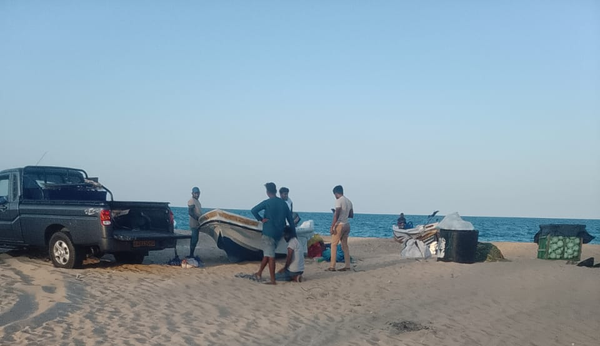
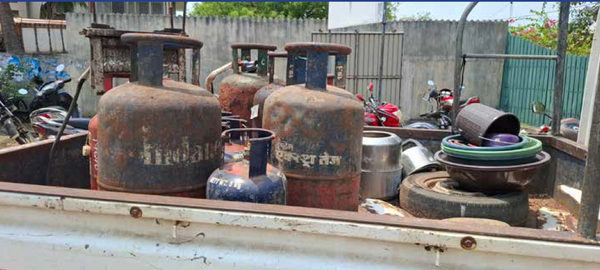
In that vacuum, ordinary citizens became the first responders. Across the island—from the flooded suburbs of Colombo to the low-lying villages of Mullaitivu—residents formed ad-hoc rescue teams, commandeering fishing boats, tractors, and trucks to pull neighbours from rising waters when official assistance failed to arrive. These spontaneous, grassroots efforts saved lives. They were also born of necessity: the government's emergency response was slow, fragmented, and visibly unprepared.
The pattern repeated itself in the relief phase. Much of the initial aid—dry rations, clothing, blankets, and medicine—was mobilised not by the state but by private citizens, religious institutions, civil society groups, and the Sri Lankan diaspora. Donation centres overflowed within days, while official relief distribution struggled to gain momentum, plagued by delays, coordination failures, and complaints of uneven access.
What a Competent Government Would Have Done: The Sixteen Days That Should Have Saved Lives
Best practice in disaster governance is neither novel nor contested. When credible cyclone forecasts are issued, national leadership is expected to move swiftly—activating high-level coordination mechanisms well before a storm makes landfall. In countries with functioning disaster-management systems, this means convening the apex disaster authority days in advance to assess risk, mobilise resources, and assign clear operational responsibility.
In Sri Lanka, that responsibility rests with the National Disaster Management Council (NDMC). Chaired by the President, the council brings together the Disaster Management Centre, the Department of Meteorology, the Irrigation Department, the armed forces, provincial administrations, and key technical agencies such as the National Building Research Organisation.
During Cyclone Ditwah, that mechanism failed to activate in time. Despite early and repeated meteorological warnings, the President convened his first emergency coordination meeting only on November 27—just one day before landfall. By then, heavy rainfall had already set in across several districts, sharply limiting the scope for preventive action.
Elsewhere in the region, governments typically shift into emergency coordination mode seven to ten days ahead of an anticipated cyclone, recognising that disaster outcomes are largely determined in the preparation phase. Sri Lanka's delayed response meant that critical opportunities—for advance evacuations, controlled reservoir releases, and the pre-positioning of personnel and supplies—were lost.
By the time the state's highest coordination mechanism was finally activated, the window for prevention had already closed.
The Warnings That Should Have Reached Everyone
From November 14 onward, Sri Lanka's early-warning apparatus should have shifted into full emergency mode. Households should have received frequent alerts in Sinhala, Tamil, and English through every channel. Television and radio should have carried rolling updates, while mobile phone users—Sri Lanka has 30 million active connections for 22 million people—should have received SMS warnings detailing cyclone developments, high-risk districts, evacuation guidance, and emergency contacts.
Telecommunications resilience proved catastrophic during the crisis. In a disaster, early warnings and rescue coordination are only as effective as the networks that carry them. During Cyclone Ditwah, widespread service disruptions were reported across several flooded districts, particularly affecting users of Dialog Axiata, Sri Lanka's largest private mobile operator by subscriber base. Residents, volunteers, and first responders reported prolonged outages or severe signal degradation at precisely the moments when communication was most vital. In a country where mobile phones are often the primary—sometimes the only—means of accessing emergency information, such failures are not a peripheral issue.
One incident near Rajanganaya exemplifies this failure. Sixty-two passengers stranded in a bus surrounded by floodwaters could not place emergency calls using Dialog and Airtel connections. The only working connection belonged to a passenger using SLT-Mobitel, through which distress calls mobilised a rescue operation. Tragically, that phone's owner—Thanigasalam Pathmanikethan, a young man from Jaffna—was later swept away and drowned.
With more than two weeks' warning, the government should have coordinated with Dialog, Airtel, SLT-Mobitel, and the Telecommunications Regulatory Commission to ensure backup power, hardened infrastructure, and minimum emergency operability in flood-prone districts.
The Reservoirs That Should Have Been Pre-Released
Between November 15 and November 27, Sri Lanka's major reservoir systems should have been managed through controlled, graduated water releases, in line with protocols recognised by the World Bank and the World Meteorological Organisation as international best practice.
The principle is simple and well established: release water before heavy rainfall arrives, when rivers are still within safe carrying capacity. Doing so creates buffer space in reservoirs, allowing them to absorb intense cyclone rainfall without forcing emergency discharges during peak flooding.
International best practice recommends that, 12 to 15 days before anticipated landfall, controlled releases begin at roughly 20–30 per cent of maximum storage capacity. As forecast models confirm the cyclone's track and rainfall intensity, releases are gradually increased to 40–50 per cent, then 60–70 per cent. By around five days before landfall, reservoirs should be operating at safe levels with sufficient buffer capacity to manage extreme inflows. Throughout this process, downstream communities must receive at least 48 hours' notice, evacuation planning must be coordinated, and local authorities must prepare shelters and emergency services.
This should have been applied across major systems, including Kotmale, Victoria, Randenigala, Rantambe, Moragahakanda, Kala Wewa, Rajanganaya, Senanayake Samudra, Maussakelle, and Castlereigh. The Irrigation Department had the expertise. The forecasts were available. The time existed.
Instead, reservoirs remained near capacity. When rains intensified, emergency spillways opened during peak rainfall, precisely when rivers were already at flood stage. The Irrigation Department's post-disaster statement—"When the rains started to intensify, we opened the sluice gates"—amounts to an admission of reactive crisis management replacing anticipatory flood control.
The Infrastructure That Should Have Been Maintained
Between November 15 and 22, every critical flood-defence system in Colombo should have undergone emergency maintenance and full operational testing. It was the bare minimum required once credible warnings of extreme rainfall had been issued.
Colombo's pumping stations—the city's primary defence against urban flooding—required immediate readiness checks. Motors and electrical systems needed servicing. Intake screens should have been cleared of debris. Backup generators and fuel reserves required verification. Automated controls needed testing. Spare parts had to be pre-positioned, and maintenance teams placed on standby.
When Cyclone Ditwah struck, multiple pumping stations failed. The Chairman of the National Water Supply and Drainage Board acknowledged "disruptions at several major pumping stations." Independent reporting confirmed simultaneous failures from lack of prior servicing.
The same pattern of failure extended to Colombo's drainage network. Major canals and storm drains should have been cleared of accumulated silt, garbage, and debris well in advance. Illegal encroachments obstructing waterways should have been temporarily removed. Canal outlet gates regulating discharge to the sea should have been opened and tested. Floodgates along major waterways required inspection and repair.
When experts later concluded that Colombo's "decades-old drainage systems could not manage the volume of water," they were diagnosing a failure of preparation, not engineering. The infrastructure existed. What was missing was routine maintenance, operational readiness, and administrative urgency.
The Evacuations That Should Have Happened
By November 21—seven days before Cyclone Ditwah made landfall—the outcome of the disaster was already being decided. Risk mapping should have been completed. Evacuation plans should have been in motion. The data existed. The danger was known. What was missing was not information, but action.
Sri Lanka did not lack warning maps or institutional memory. The National Building Research Organisation has long maintained district-level hazard maps identifying landslide-prone terrain. Decades of hydrological records clearly mark flood-vulnerable river basins. These are not new discoveries. They are documents produced, updated, and filed by the state itself.
Tea-estate line rooms in the central hills have been recognised for decades as among the most structurally vulnerable forms of housing in the country—especially under sustained rainfall. Low-lying settlements along the Kelani River basin, stretching through Kegalle, Kurunegala, Gampaha, and into Colombo, flood with near-predictable regularity during major rain events. The hazard maps identifying these dangers are maintained by Sri Lankan state institutions.
Between November 21 and November 27, the state should have been moving decisively. Grama Niladharis should have issued clear evacuation instructions in high-risk zones. Maps showing safe routes and shelter locations should have been distributed. Transport should have been arranged for vulnerable populations—the elderly, people with disabilities, hospital patients, and estate workers on unstable slopes. By November 25, when the Irrigation Department warned of "very heavy rainfall exceeding 200 millimetres," mandatory evacuation orders should have been in effect. Military vehicles should have been deployed for prevention, not rescue. Temporary shelters should have been prepared in safe locations, stocked with water, rations, blankets, first-aid supplies, and medical teams.
Instead, families were forced to improvise for survival. People climbed onto rooftops and trees. Children were passed through rushing water. When military helicopters later carried out dramatic rescues, they reflected extraordinary bravery by rescue personnel—but also the collapse of a system that should have prevented such last-minute emergencies. Every person winched from a rooftop represents a failure of preparedness: they should have been evacuated safely by bus days earlier.
The Leadership That Should Have Been Visible
On the evening of November 26, as the IMD confirmed that a depression had formed offshore, the President of Sri Lanka should have addressed the nation on every television and radio channel. The message needed to be clear and direct: a major cyclone was approaching, lives were at risk, and evacuation orders must be followed. Specific instructions for each district. Explanations of reservoir management plans to prevent panic. Announcements of school closures, government office closures, and transport suspensions in forecast impact areas.
It is what presidents are expected to do when their citizens face mortal danger. It signals governmental seriousness, coordinates the public response, and establishes accountability for the actions that follow.
Instead, President Dissanayake's social media posts on November 26 concerned meetings with film producers and road development engineers. His first emergency meeting occurred on November 27. The state of emergency—which should have been preventive—was declared on November 29, after the cyclone struck and hundreds were dead or missing.
The Coordination That Should Have Functioned
From November 26 onwards, every level of government should have been operating on emergency footing. The Disaster Management Centre, the Meteorology Department, the Irrigation Department, and military command centres should have been functioning in 24-hour coordination. Provincial emergency operations centres should have been fully staffed with direct communication links to the national centre and authority to deploy resources without waiting for Colombo's permission. All 25 district secretariats should have activated their disaster management committees with real-time coordination through Grama Niladhari networks.
This coordination structure exists in law. It appears in policy documents and organisational charts. What was absent during Cyclone Ditwah was its actual activation. Multiple post-disaster analyses documented that different arms of the state were not operating in sync, that officials lacked real-time data needed to make confident decisions, and that agencies operated in isolation rather than in coordination.
When the Irrigation Department issued its red notice at 1:00 PM on November 28, warning of flooding "of a level not experienced in recent history," the warning came after the cyclone had already made landfall at 6:00 AM. This is the signature of systemic coordination failure—warnings issued after the crisis they were meant to prevent has already begun.
From Outrage to Accountability: The Road Ahead
President Anura Kumara Dissanayake faces the defining test of his political career—not merely rebuilding infrastructure, but restoring shattered public trust.
Anger must now translate into accountability. Officials whose negligence contributed to this disaster must be held responsible—without exception, without political protection. We join the growing call for a full parliamentary inquiry or Presidential Commission to examine every critical failure: early warning breakdowns, lapses in the National Disaster Management Council, dam mismanagement, and flawed relief operations. Where laws were broken or duties neglected, criminal charges must follow.
Cyclone Ditwah is a warning shot. Climate change guarantees more extreme weather—with increasing frequency and intensity. The question is not if another disaster will strike, but whether Sri Lanka will be better prepared.
That requires structural reform, not rhetoric. Disaster management must be depoliticised and professionalised. The state must invest in meteorological technology, data-sharing, and early warning systems—ensuring no future alert is missed, delayed, or suppressed through incompetence or censorship.
The hundreds who died cannot speak. Their families deserve truth, accountability, and justice.
The Responsibility to Question Power
It is often argued that the immediate aftermath of a national tragedy is not the time to criticise the government—that grief must come before scrutiny. There is wisdom in allowing space for mourning. But grief does not cancel accountability; it demands it.
Journalism exists to hold power to account—especially when that power fails in its most basic duty: protecting life. Scrutiny of authority is not hostility; it is a civic obligation. To question the state after tragedy is not to weaken governance, but to insist that it learns, corrects, and acts with the seriousness upon which future lives will depend.
At Jaffna Monitor, we have no political allegiance to any party or government. We are neither supporters nor opponents of the National People’s Power administration. Our responsibility is not to those who govern, but to the people who are governed.