By Vijitha Yapa
An Unlikely Recruit
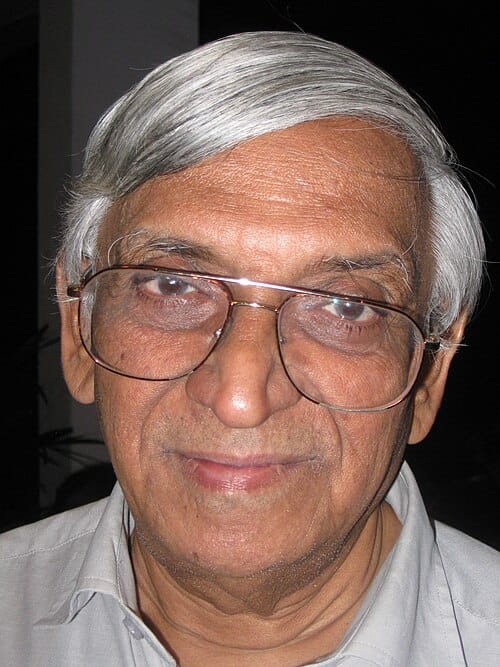
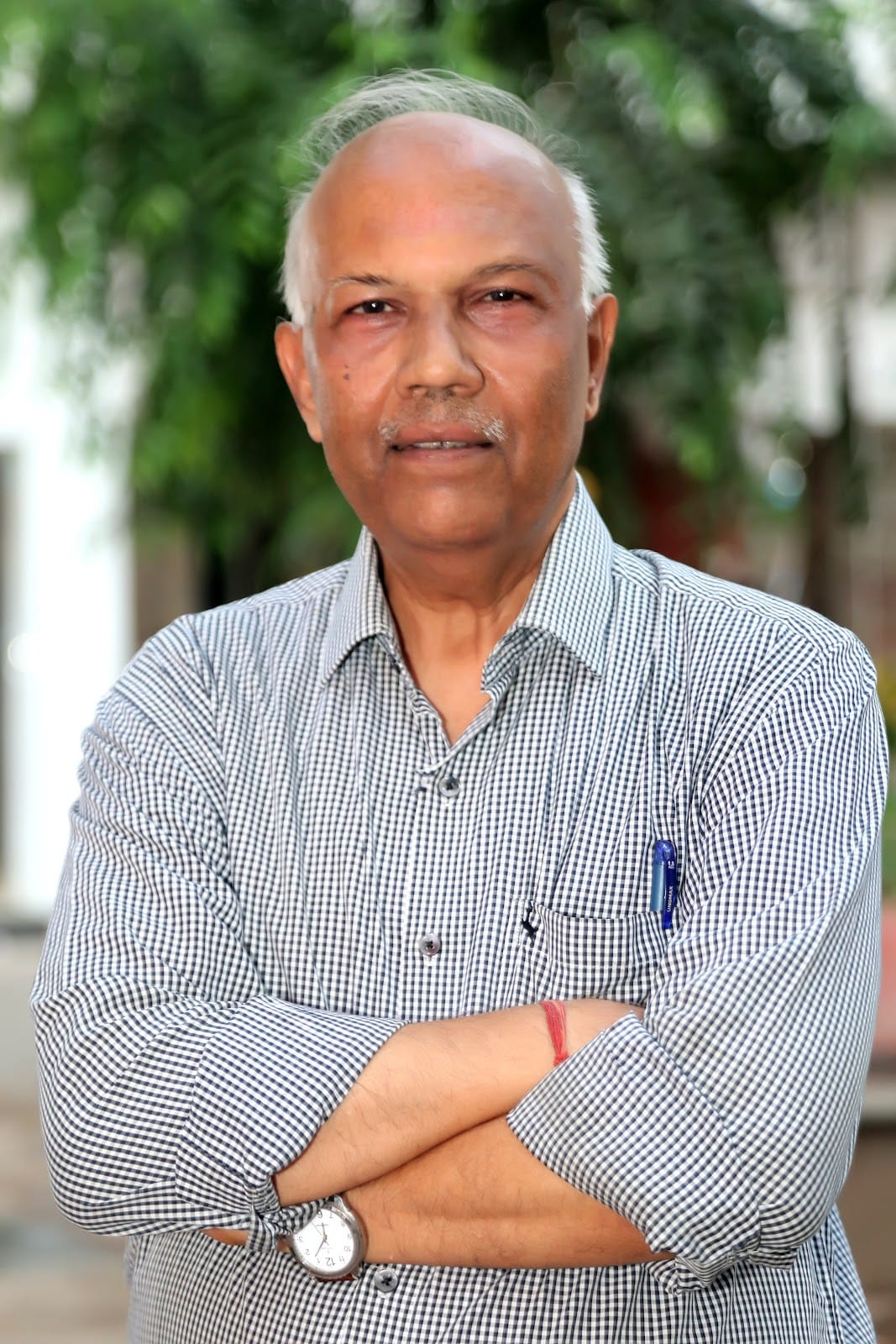
Dressed in a well-ironed white shirt — unusual for a journalist — the man standing in front of me to be interviewed was a scribe working for the Tamil newspaper Veerakesari. D.B.S. Jeyaraj was a friend of our Features Editor, Ajith Samaranayake, and had come for an interview to join The Island newspaper in 1981. I was a bit sceptical, as I soon found out that he had never worked for an English-language newspaper. But since Ajith was a good, responsible journalist, I decided to interview Jeyaraj with an open mind.
I found that he was well informed about news pertaining to Tamil politics and decided to test his skills by asking him to cover the cabinet briefing by Cabinet spokesman Ananda Tissa de Alwis and write a report. He could not type, but he wrote out the report and gave it to me in the afternoon. His handwritten text was in large letters, and each foolscap page contained only about ten words. But the report was good.
Mr. Upali Wijewardene had given me the authority to recruit journalists and offer them high salaries on the spot, which helped in recruiting people at short notice. I asked Jeyaraj what salary he was receiving at the time and offered him double that amount.
Jeyaraj opened his eyes wide and said he would give a month’s notice and then join. I told him the offer was valid for only three hours, and that if he wanted the job, he had to make a decision immediately. That is how Jeyaraj joined The Sunday Island.
A picture I had seen of him earlier showed him with a grown beard. But in front of me was a person on whom there was no trace of hair on his face. I didn’t question him about that, but discovered later that Ajith had advised him to cut off his beard “because Mr. Yapa does not like bearded people.” That fact was false, but anyway, Jeyaraj got the job.
Behind the Cadjan Curtain
At that time, I felt that the biggest problem in the South was that people did not understand what was happening in the North. I wanted someone who would write about events, personalities, and the evolving trends in the North and East, and unravel the divisions that I could see were developing. But what should his column be called? Various suggestions were made until we agreed on four words. Thus was born Jeyaraj’s “Behind the Cadjan Curtain” — similar to the term “Behind the Bamboo Curtain,” which referred to news unravelling from China at that time.
The column was enthusiastically received by readers and was one of the main articles in The Sunday Island. The information in it was scrutinised carefully by the Government to understand what was occurring in the North, according to intelligence sources.
Jeyaraj’s beard began to grow back. On a number of occasions, I sent him to Jaffna, Trincomalee, and Batticaloa to write and report on developments there.
The Biryani Incident
Apart from politics, there is one incident involving Gamini Weerakoon, my Deputy Editor, and Jeyaraj that remains embossed in my mind. On Friday nights, we had to work on two newspapers, The Sunday Island and The Daily Island. Friday night was Biryani night, and we usually sent one of our staff members to get the food. But on that night, Gamini decided to fetch it himself and asked Jeyaraj whether he could accompany him to Lion House in Bambalapitiya.
They left at about ten o’clock, but even by midnight there had been no communication from them. There were no mobile phones like today, and we did not know the reason for the delay. Finally, at about 1 a.m., there was a call from Gamini at the Fort Police Station. He had been arrested by the police for driving through the only functioning red traffic light signal in the city at the time, at the Colpetty junction.
The policeman at this stage decided to grab the phone from Gamini, and I asked him what the problem was. He said this person was drunk and that he wanted him to undergo a breathalyser test. Gamini had refused and said that he could not blow into used condoms. In addition to crossing the red traffic light signal, this verbal exchange had annoyed the traffic policeman, and both Gamini and Jeyaraj were taken to the police station.
Despite my pleas, he refused to release Gamini. I then had no alternative but to wake up a friend who was a DIG, explain the situation to him, and plead with him to get the two journalists released — along with our biryani packets, as we could not finish the newspapers without them. He laughed and told me to go personally to the police station, and that he would ask the police officer to release them.
Black July
I never found any occasion where we had to explain or clarify Jeyaraj’s writing. This was a major achievement for any journalist and demonstrated the quality of his reporting.
In July 1983, during the Black July riots, Ajith and Jeyaraj came to see me in the editor’s room and said that although Jeyaraj was sleeping in the office because he could not go to his boarding house, some Sinhala people had threatened him and he feared for his safety. I was very concerned and told Jeyaraj to bring whatever clothes and other items he had and to come with me.
Straight to my house in Colombo 05. There, I explained the situation to my wife, and her mother said that she would like to give him a room for a few days. They were very worried, but agreed because of the crisis situation.
I had worked in many countries around the world with Rajmohan Gandhi, the grandson of Mahatma Gandhi, and knew firsthand what it was like to live in countries where there was animosity due to racial hatred. This was a realistic situation in which theories about humanity were deaf chants. What was needed was treating people as individuals and not looking at them through race-coloured spectacles.
Suddenly, the situation became real. Though we all realised that there could be dangerous racial mobs, here was a real situation in which a person’s life was at stake.
Even in a column he wrote last year, Jeyaraj was appreciative of the action we had taken to safeguard him.
The Sunday Times and the Dixit Years
When I started The Sunday Times as Editor in 1987, Jeyaraj was one of the first people I sought to assist us with the birth of the new newspaper. One of the first stories he wrote was about Indian High Commissioner J.N. Dixit burning files in gunny bags at the back of his residence on Thurstan Road. He was worried that if mobs took over his house, his confidential documents falling into the hands of enemies would create an embarrassing situation for India. The story was never contradicted by the Indian High Commission.
Jeyaraj came under tremendous pressure from Mr. Dixit, who was called — by him and another Sunday Times staffer, Qadri Ismail — “India’s Viceroy.” After the Indian Peace Keeping Force arrived in Sri Lanka in 1987, Jeyaraj’s writings caused tremendous pressure for J.N. Dixit. An interview with LTTE deputy leader Mahattaya invoked the wrath of Dixit, who pressured the Sri Lankan government to arrest Jeyaraj and keep him on the fourth floor of the CID Building.
Unbowed in Toronto
After his release from custody, he ventured to Harvard University and then made his way to Canada. Jeyaraj not only raised the ire of Dixit, but also that of Prabhakaran, due to his writings on how the LTTE even got rid of Tamils who were opposed to its activities. These were spotlighted in a newspaper that Jeyaraj published in Toronto.
When warnings to curb his negative criticism of the LTTE were ignored, Canadian supporters in Toronto accosted him in a car park and assaulted him, including breaking his legs. But when Jeyaraj continued his writing, they visited Tamil shops in Toronto that sold his newspaper and stopped the sale of his publications.
Jeyaraj kept in touch, and we met when I visited Canada for a family function. Jeyaraj spent a lot of time with me talking about his experiences. Physically, he was down, but his spirits were sky-high. He would not be cowed down by threats and physical assaults. He said he was working on his autobiography and would like me to publish it. But it was never completed.
A True Journalist
In January this year, I sent him a copy of Prof. G.L. Peiris’s book on negotiations between the Government of Sri Lanka and the LTTE, which he began to read with interest. The book review was never completed because Jeyaraj became very ill and finally died last week.
He was the embodiment of a true journalist who could not be intimidated. He was an example of a man who not only wrote about the Tamils, but also actively stood up for fair play, irrespective of whatever race or religion he was born into.
Vijitha Yapa is the Founder Editor of The Sunday Island, The Daily Island, and The Sunday Times.
(courtesy Sunday Times)