By Sidhartha Thamby
There is a particular cruelty in watching a party that once raged against the abuse of power quietly settle into practicing it. Sri Lanka has seen this before. What is new is that we are watching it happen to Provincial Council elections — a decade overdue — and to the constitutional architecture of devolution itself, piece by piece, coordinator by coordinator, committee by committee.
We are watching the slow installation of party-aligned coordinators, the bypassing of elected structures, and the substitution of party machinery for constitutional process.
We have diagnosis for this. In October 1989 — as the south of Sri Lanka convulsed under the JVP’s second insurrection and institutions buckled under the pressure of the Premadasa presidency — a Presidential Commission on Youth was appointed to understand what had driven the country’s young people to rebellion. Its findings, delivered with unusual clarity, identified the root cause not as poverty, not as unemployment, but as the abuse of political power and the collapse of institutional integrity.
The Commission’s report opened with what it described as virtual unanimity among those who gave evidence: that politicisation, and the perception that political patronage had corrupted every layer of public life, lay at the heart of youth unrest. Disenchanted youth told the Commission they were not averse to hardship — hardship was the ordinary condition of a developing nation. What they would not tolerate was hardship compounded by palpable injustice. Deprivation accompanied by unfairness, they said, was what drove people to the streets. Its pre-eminent recommendation was the creation of a Nominations Commission to insulate key public appointments from political interference.
That recommendation became the Constitutional Council, introduced by the Seventeenth Amendment in 2001. The irony deserves to sit in plain sight: the institutional remedy that Sri Lanka painfully devised from the wreckage of the late 1980s — the very architecture designed to keep political parties from colonising the state — is what is now being quietly circumvented, appointment by appointment, coordinator by coordinator.
The North needs no lecture on what commissars look like. The Tamil people did not endure that darkness only to watch a new aspiring state rehearse the same choreography in a different ideological costume. When MPs are appointed as district health coordinators, bypassing provincial structures that the Constitution assigned to elected bodies, it is not merely an administrative convenience. It carries the unmistakable silhouette of the commissar — the party’s man in the province, answerable upward, not outward.
And then there is the Aragalaya. Whatever one’s assessment of its limitations, the uprising of 2022 was an unmistakable public verdict: that the governed are no longer willing to be managed. Sri Lanka’s people — across ethnicity, class, and province — stood in queues for fuel and then stood in the streets for something larger: the principle that power must answer to those it governs. To fiddle with elections, to subvert the Constitution, to defer democratic participation through administrative attrition — these are not bold acts of transformation. They are the oldest tricks in the playbook of those who trust themselves more than they trust the people.
What the Court Said — and What It Means Now
In August 2024, a five-judge bench of the Supreme Court ruled on four consolidated fundamental rights applications arising from the deliberate non-holding of the Local Authorities Elections of 2023. The facts were stark: funds had been budgeted. The Election Commission had appointed returning officers, gazetted nominations, and announced a date. Then the executive intervened — a Cabinet circular directed district secretaries not to accept deposits. The Government Printer failed to deliver postal ballot papers. Treasury circulars declared elections non-essential expenditure. The President, doubling as Minister of Finance, never approved the funds.
The Court found the executive branch liable for infringement of fundamental rights under Articles 12(1) and 14(1)(a) of the Constitution. It confirmed what earlier jurisprudence had established: that casting a vote is an exercise of freedom of speech and expression — “no less,” in the Court’s own words, “than the most eloquent speech from a political platform.”
It found that the Election Commission had also failed — through poor planning and a failure to use its own powers — and it singled out one member, P.S.M. Charles, for having filed an affidavit that deliberately misrepresented facts. The machinery of obstruction had reached inside the Commission itself. The Commission was pushed to delay the elections as much as possible, fearing a NPP wave. Once the days ran out, the playbook was to denigrate the image of the Commission. The ugliness of it came out in the submissions and wrap on the knuckles by the Court. The planners included a few at the top. The quid pro quo required rewarding services rendered with high-profile removals and rewards in place for a conspirator.
The Court directed that elections be held at the earliest opportunity. It awarded compensation. It established unambiguously that the franchise cannot be subordinated to fiscal preference — that a government citing financial difficulty must demonstrate genuine total incapacity, not merely competing priorities. That ruling now stands on the record. Its logic applies equally to Provincial Council elections. The party now in government knows it. The party was also a petitioner in the case.
The NPP’s Inconvenient Inheritance
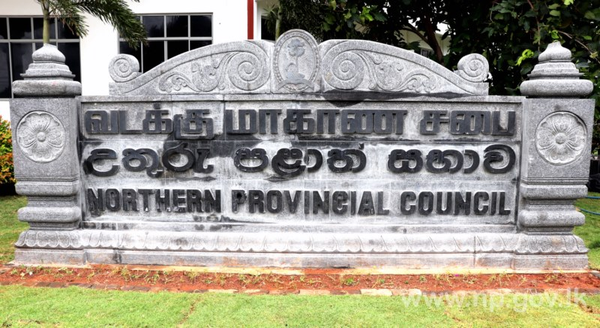
When Anura Kumara Dissanayake and the National People’s Power came to office in late 2024, they inherited a constitutional obligation that had been deferred since 2014. Provincial Council elections had not been held in over a decade. All nine councils had expired by 2019. The provinces were — and remain — governed by presidential appointees, with governors functioning as transmission belts for the will of the central government. The devolution promised by the 13th Amendment, however imperfectly, had been reduced to administrative theatre.
The NPP’s stated position had always been that it believed in the Constitution. It would hold elections. It would restore democratic governance at the provincial level. That position is now, by the party’s own General Secretary’s admission, no longer operative — at least not this year.
Tilvin Silva, JVP General Secretary, announced that Provincial Council elections budgeted for 2025 would be deferred to 2026. He cited two reasons: the Rs. 500 billion redirected to disaster relief following Cyclone Ditwah, and unresolved legal complications stemming from the 2017 Provincial Councils Elections (Amendment) Act. The Centre for Policy Alternatives immediately identified a structural problem: the announcement came not from a Cabinet minister accountable to Parliament, but from a party official holding no parliamentary seat and no ministerial portfolio. If the NPP genuinely believes in parliamentary accountability, its party secretary should not be the one announcing the deferral of elections. A minister should make that statement in the House, subject to scrutiny.
The Ditwah Precedent and Its Dangers
The cyclone argument is, on its face, more sympathetic than Ranil Wickremesinghe’s 2023 position, which was essentially that economic stabilisation was a higher priority than democratic participation. But the Supreme Court’s logic does not bend to the sympathy of the excuse. The principle established is this: franchise is a fundamental right. Fiscal decisions do not automatically override it. The state must demonstrate genuine total incapacity — not merely a competing priority, however pressing.
This matters because the Ditwah argument, once accepted, opens a template. Sri Lanka is a country of cyclones, floods, droughts, and debt crises. If a natural disaster of sufficient scale justifies deferring a budgeted election, then the calendar of democratic participation becomes hostage to the meteorological and the fiscal. There will always be a reason. The question is whether the courts, the Election Commission, and the public will allow reasons to accumulate into permanent deferral.
MP Nizam Kariyapper and others have proposed a simple interim solution: reverting to the old proportional representation system and holding elections now, while resolving the framework question afterward. The Government has not engaged with this proposal. The parliamentary committee announced in November 2025 did not have its members appointed until February 2026. That is not urgency.
Health Coordinators and the Slow Erasure of Devolution
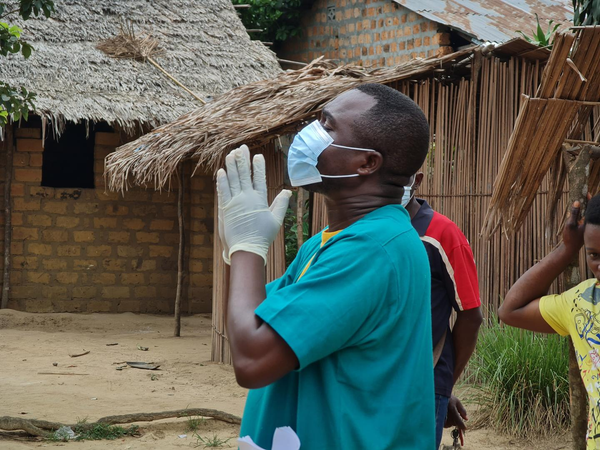
Against this backdrop, the appointment of Members of Parliament as District Health Coordinating Officers is not a minor administrative convenience. It is a signal — and a pattern. Health is a devolved subject under the 13th Amendment. Provincial Councils were constitutionally mandated to govern it. In the absence of elected councils, the central government has progressively filled the vacuum. The appointment of MPs as district health coordinators routes coordination through parliamentarians answerable to Colombo, not to provincial electorates — bypassing the Provincial Director of Health Services, the Regional Director, and the Provincial Health Minister, who should rightfully hold these functions.
This encroachment has precedent. During the Chandrika Kumaratunga government, certain health powers were drawn back toward the centre. What we are witnessing is not a new phenomenon — it is a continuation of a decades-long pattern in which the centre finds administrative means to hollow out what it cannot repeal by law. The 13th Amendment has not been abolished. It has been quietly circumvented, committee by committee, coordinator by coordinator, gazette notification by gazette notification.
Former Chief Justice C.V. Wigneswaran’s warning deserves to be heard plainly: in the north and east, where the absence of elected provincial representation intersects with ethnic marginalisation, the consequences are not abstract. People in those provinces have no say in their governance, no elected voice at the provincial level, and now see the administrative structures of devolved health governance overlaid by MPs accountable to Colombo. This is discriminatory in effect, whatever the intent.
The Election Commission’s Test
The Supreme Court’s 2024 ruling placed the Election Commission on notice. It found that the Commission’s own members had failed in their planning responsibilities and that at least one had misled the court. It directed the Commission to exercise its powers and authority to hold elections. The Commission has no independent budget — that structural dependency on Treasury releases is the real vulnerability. But silence, in this environment, is complicity. The Commission should be publicly, loudly communicating to Parliament and to the courts what it needs to hold Provincial Council elections and whether those resources are being provided.
What This Adds Up To
We are watching the accumulation of democratic debt: a decade without Provincial Council elections; governors running provinces by presidential fiat; devolved health governance bypassed through parliamentary appointment; electoral delays announced by party officials rather than ministers; and parliamentary committees appointed to study questions that already have simple interim solutions, only to be constituted months after they were promised.
Each of these, individually, can be rationalised. Together, they describe a system in which the constitutional architecture of devolution and democratic participation is being eroded not through repeal, but through administrative and political attrition — and in which the current government, which won power by condemning exactly this kind of behavior, has chosen to continue it.
A government that appoints MPs as district health coordinators, that defers elections through party announcements rather than parliamentary statements, that allows nine provincial councils to expire and remain vacant for over a decade — that government is not merely neglecting the Constitution. It is undoing, piece by piece, the hard-won lesson that Sri Lanka paid for with the lives of an entire generation.
A country that absorbed proscription, ethnic war, economic collapse, and mass uprising deserves better than a government that treats the architecture of its democratic republic as a set of technicalities.
The Supreme Court has given us the clearest possible statement of principle: the right to vote is a fundamental right, and the state cannot subordinate it to fiscal preference. That principle needs to be invoked again — and soon — before the template of deferral hardens into a precedent of a very different kind.
The question is not whether Sri Lanka can afford to hold Provincial Council elections. The question is whether Sri Lanka can afford not to. A constitution honoured only when convenient is not a constitution. It is a suggestion. And a democracy in which elections are held on the executive’s schedule, not the law’s, is not a democracy. It is an arrangement — and a dangerous one, in a country that has already paid the price of arrangements masquerading as governance.