Five years after Covid-19, simultaneous crises in central Africa and the South Atlantic are exposing how much global health cooperation has deteriorated.
In early April, a passenger aboard the Dutch expedition cruise ship MV Hondius fell ill with fever and respiratory distress while crossing the South Atlantic. He died on April 11. No tests were conducted. His body was removed from the vessel, and the ship continued its voyage.
By early May, health authorities across three continents were scrambling to trace the movements of 147 people from 23 countries who had shared the same cabins and recirculated air. On 2 May 2026, WHO received a formal notification from the United Kingdom of a cluster of severe acute respiratory illness aboard the Dutch-flagged vessel. By 4 May, seven cases had been identified — two laboratory-confirmed — including three deaths, one critically ill patient, and three individuals with mild symptoms.
The Centers for Disease Control and Prevention confirmed that the outbreak was caused by the Andes strain of hantavirus, the only known hantavirus capable of spreading from person to person. Unlike the coronavirus, which spreads rapidly through airborne transmission and casual social interaction, Andes hantavirus typically requires close and prolonged contact with a symptomatic individual, making widespread transmission far less likely. By May 24, health authorities had confirmed or classified 12 cases as probable, with additional infections detected after passengers returned to France, Spain, and Canada.

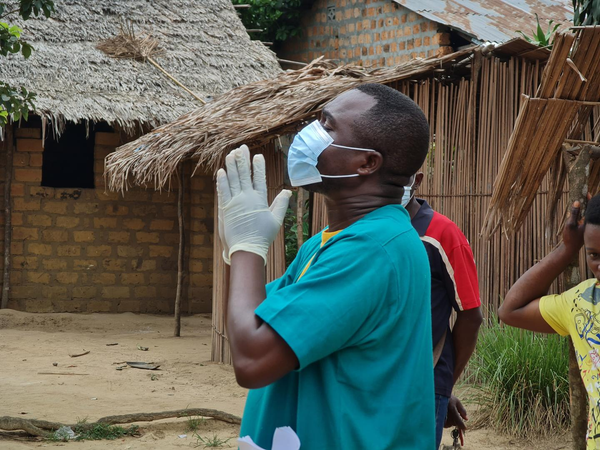
That outbreak was still being mapped when something far more alarming surfaced in central Africa. On 15 May, the Congolese Ministry of Health confirmed what investigators had already feared. The index case, reconstructed retrospectively, was a health worker in Bunia, Ituri Province, who had developed fever, vomiting, and signs of haemorrhagic illness in late April. He died at a medical centre in Bunia. By early May, four more healthcare workers in the same zone had died within four days.
As of 24 May 2026, the outbreak had recorded 1,010 suspected and confirmed cases and at least 231 deaths. Experts consider the true toll likely to be considerably higher. The outbreak has spread to Ituri, Nord-Kivu, and Sud-Kivu provinces within Democratic Republic of the Congo (DRC), with confirmed cases also reported in Uganda's capital, Kampala.
On 16 May, the WHO Director-General determined that the Ebola disease caused by the Bundibugyo virus in DRC and Uganda constitutes a Public Health Emergency of International Concern — but does not meet the criteria of a pandemic emergency.
Together, the two outbreaks have revived a question now being asked with growing urgency by global health authorities: Five years after Covid-19 killed millions, overwhelmed health systems and fractured international cooperation, is the world genuinely better prepared for the next pandemic — or has it merely been fortunate that no highly transmissible pathogen of similar scale has emerged again?
A Virus for Which No Vaccine Exists
What makes the current Ebola outbreak particularly concerning to health officials is the strain involved. The epidemic is being driven by the rare Bundibugyo strain of Ebola, for which there is no approved vaccine or specific antiviral treatment, complicating efforts to contain the disease quickly.
The vaccines used during previous Ebola outbreaks, including Ervebo, which helped contain the devastating 2018-2020 epidemic in eastern Congo that killed more than 2,200 people, were developed specifically for the Zaire strain of the virus. Experts have discussed the possibility of using Ervebo in patients infected with the Bundibugyo strain, but animal studies have suggested only partial effectiveness, while concerns remain over its safety and efficacy across different Ebola strains.
Dr. Anne Ancia, the W.H.O. 's representative in the Democratic Republic of Congo, warned reporters in Geneva that while a vaccine candidate could become available within two months, the outbreak itself was unlikely to be contained that quickly. Pointing to the 2018–2020 Ebola epidemic in North Kivu, which took nearly two years to bring under control, she cautioned that the current outbreak could become a prolonged public health crisis.
The outbreak is unfolding against a backdrop of humanitarian crisis, remote and densely populated terrain, insecurity, and high population movement and cross-border trade. The current epicentre, Mongbwalu Health Zone in Ituri Province, is a high-traffic mining area where militant groups, including the Islamic State, operate, and where 1.9 million people are estimated to be in need of humanitarian aid.
Africa is racing to contain an outbreak that is now threatening 10 countries as infections spill from eastern Congo into Uganda. Health officials stress that Ebola is unlikely to become a global pandemic — its transmission requires direct contact with bodily fluids, and it tends to burn out. But that assessment rests on a critical assumption: a functioning, coordinated international response. That assumption is no longer self-evident.
The Surveillance Gap
When the World Health Organization was first alerted on May 2 to the hantavirus outbreak aboard the MV Hondius, one absence stood out to global health officials: the United States, long regarded as the central force in international outbreak surveillance and emergency response.
The CDC confirmed that 18 repatriated American passengers from the ship were placed at the Nebraska Quarantine Facility for monitoring — a response that came nearly a month after the first death aboard the vessel. In the Ebola outbreak, American officials reportedly learned of the situation nine days after the WHO had already alerted other global health authorities — a delay that would have been unthinkable under the prior architecture of U.S. global health engagement.
The reason is not complex. The Trump administration withdrew the United States from the WHO and effectively dismantled USAID — the agency that for decades funded surveillance networks, laboratory capacity, and rapid-response capability across the developing world. Washington is no longer inside the information architecture that governs global outbreak alerts. It no longer has a seat at the table when the WHO emergency committee convenes. It is receiving news, not shaping the response.
What observers noted in both outbreaks was not simply an absent flag, but absent expertise, absent logistics, and absent institutional memory. The CDC and its partners once coordinated the architecture that allowed the 2014-16 West Africa Ebola epidemic — which killed over 11,000 people — to be brought under control before it became a global catastrophe. That architecture depended on American funding, American laboratories, and American willingness to move fast. None of those can now be taken for granted.
Science Advanced. Politics Regressed.
The 79th World Health Assembly, which convened in Geneva from 18 to 23 May, presented a paradox that delegates struggled to articulate without a certain institutional despair.
On one hand, the scientific tools available are genuinely better than they were in January 2020. Pathogen sequencing that once took weeks now takes hours. Vaccine platforms developed during COVID have demonstrated the ability to compress development timelines from years to months. Surveillance data flows faster.
On the other hand, the political infrastructure required to deploy those tools has visibly weakened. The Assembly concluded with member states agreeing to extend negotiations on the critical Pathogen Access and Benefit-Sharing annex to the WHO Pandemic Agreement, with an outcome now expected no earlier than May 2027, or at a special session later this year.
Under Article 31 of the Pandemic Agreement, the treaty cannot be opened for signature until the annex is adopted. Without it, the ratification process, which itself requires 60 parties, cannot begin. The Agreement, adopted in May 2025 amid considerable fanfare, cannot come into force.
The deadlock has a specific logic. Lower-income countries have agreed in principle to rapidly share pathogen samples and genetic sequences — the information that enables vaccines to be developed quickly. But they will not do so without binding guarantees that they will receive equitable access to the resulting vaccines and treatments.
Wealthier nations have repeatedly resisted making such commitments legally binding. For many lower-income countries, the mpox outbreak that began in 2022 reinforced their distrust of the global health system. Vaccines reached some poorer nations nearly two years after the outbreak began, even more slowly than Covid vaccines had during the pandemic, deepening perceptions across much of the Global South that access to lifesaving treatments remains dictated more by wealth and geopolitical influence than by public health need.
The Assembly convened this year under the theme "Reshaping global health: a shared responsibility" — a formulation that, in the context of a United States no longer present at the table, read to many delegates as aspirational rather than descriptive.
Sri Lanka: Better Than 2020, But Not Shock-Proof
For Sri Lanka, deeply integrated into global travel and trade networks and still struggling to recover from the economic collapse of 2022, the latest outbreak alerts carry particular significance. Health and economic analysts warn that the risks are compounded by mounting global economic instability following disruptions linked to the closure of the Strait of Hormuz, a critical maritime corridor for global energy supplies and trade..
The country has genuine assets. Its public health infrastructure, built over decades, is remarkably capable relative to its income level. The network of Medical Officers of Health, Public Health Inspectors, and the national Epidemiology Unit formed the institutional backbone of Sri Lanka's early Covid-19 response, which drew international attention for its effectiveness in the pandemic's first wave.
In October 2024, Sri Lanka was awarded an $18.4 million grant from the Pandemic Fund under the "One Vision, One Shield: Integrated One Health Pandemic Preparedness and Response" programme, running from January 2025 to 2028, implemented through the WHO, the World Bank, FAO, UNICEF, and the Asian Development Bank. The grant mobilised an additional $197 million in co-financing, targeting surveillance system upgrades, laboratory capacity, and a strengthened health workforce.
In October 2025, Sri Lanka hosted the WHO South-East Asia Region's annual preparedness meeting in Colombo, producing a strategic roadmap for pandemic response for 2026 to 2031. Sri Lanka also participates in the WHO South-East Asia Region's Unity Studies Network alongside Bangladesh, India, Nepal, and Thailand — a regional framework for epidemic investigation and early response.
Sri Lanka was recognized by the World Health Organization in 2019 for eliminating mother-to-child transmission of HIV and syphilis, a milestone public health officials often cite as evidence of the country’s historically strong preventive healthcare system. More recently, Sri Lanka has also been highlighted by regional health authorities for progress in hepatitis B control and broader “triple elimination” initiatives aimed at preventing maternal transmission of HIV, syphilis, and hepatitis B.
But the economic collapse of 2022 altered Sri Lanka’s healthcare landscape in ways that have yet to be fully reversed. Acute shortages of fuel, food and medicines severely disrupted healthcare delivery across the country, while large numbers of doctors and nurses migrated overseas amid worsening economic conditions. Procurement of medical equipment and essential supplies slowed sharply, leaving many hospitals struggling to maintain services.
Economists and public health specialists interviewed by Jaffna Monitor warned that Sri Lanka remains highly vulnerable to external economic shocks, particularly because of its dependence on imported fuel and essential goods. Several said that if disruptions to shipping and energy supplies linked to the closure of the Strait of Hormuz were to continue for a few more months, the country could once again face shortages and economic pressures resembling those seen during the 2022 crisis.
Public health specialists warned that the overlapping pressures of Covid-19 and the economic crisis were exposing vulnerabilities in Sri Lanka’s disease surveillance systems. Researchers noted that dengue reporting patterns shifted significantly during the pandemic, partly because lockdowns and strained healthcare services affected routine detection and reporting mechanisms.
In Jaffna, Doctors Warn of a System Already Under Pressure
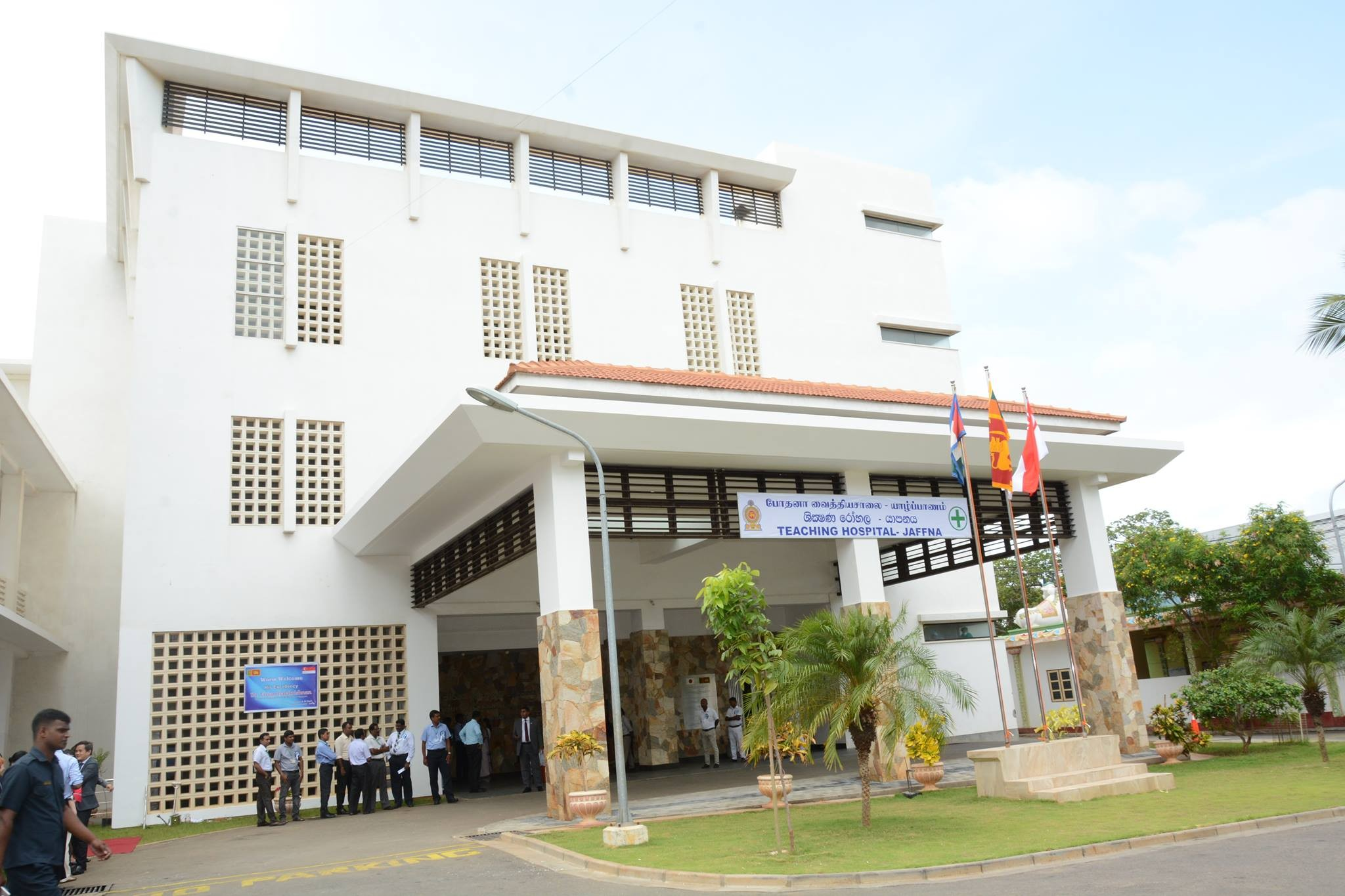
For Jaffna and the Northern Province, the vulnerabilities are more acute and deeply structural. The region’s healthcare system, still shaped by the long aftermath of the civil war, has historically received fewer resources than hospitals centered around Colombo and the Western Province. The nationwide shortages of medicines and medical supplies during Sri Lanka’s 2022 economic collapse hit peripheral hospitals particularly hard, exposing how fragile the North’s healthcare infrastructure remained despite years of postwar reconstruction.
Doctors and health officials in the North say the pressures are especially visible at Jaffna Teaching Hospital, the region’s main tertiary-care institution. While the hospital has a consultant workforce broadly comparable in some specialties to major state hospitals in Colombo, the number of junior doctors and Medical Officers assigned to wards is often only a fraction of what is available in larger southern hospitals, according to several physicians familiar with staffing patterns. In some units, doctors said, staffing levels can be as low as one-tenth of those seen in Colombo-based institutions, leaving junior doctors to work prolonged shifts under intense pressure, sometimes continuously through day and night duty cycles.
Healthcare workers interviewed by Jaffna Monitor said such chronic understaffing creates serious concerns about how the Northern health system would cope during a fast-moving infectious disease outbreak requiring surge capacity, isolation management, and sustained emergency response operations.
Several doctors also pointed to what they see as a long-running pattern of political neglect toward Jaffna Teaching Hospital by successive Sinhala-majority governments, including the current administration led by the National People’s Power alliance. Successive governments had, at various stages, discussed elevating the hospital to national hospital status, a designation currently reserved for a limited number of major state institutions, including those in Colombo and Kandy. But officials later shifted focus toward expanding Anuradhapura Teaching Hospital instead, a decision some Northern physicians privately describe as politically discriminatory and racially motivated.
Doctors said that if Jaffna Teaching Hospital were granted national hospital status even now, the institution would likely receive significantly greater allocations, staffing approvals, specialist expansion, and infrastructure investment in the years ahead, strengthening its ability to respond to future public health emergencies and large-scale outbreaks.
In a future pandemic scenario, public health experts say, those disparities could carry profound consequences. The gap between Colombo’s centralized response architecture and the realities confronting hospitals in the North may determine how effectively Sri Lanka can contain a major outbreak beyond the capital.
The Question Hanging Over Global Health
Senior health officials leaving Geneva after the World Health Assembly last week acknowledged that while the meeting underscored the urgency of preparing for future outbreaks, many of the core political disagreements that weakened the global response during Covid-19 remain unresolved.
Delegates approved resolutions and extended negotiations on the World Health Organization’s pandemic agreement, but critical disputes over pathogen sharing, vaccine access,, and long-term financing remained unresolved. The negotiations over the treaty’s Pathogen Access and Benefit-Sharing annex, considered central to the agreement’s implementation, are now expected to continue at least into next year.
Global health experts say the uncertainty reflects a broader shift in the international system that emerged after the pandemic. The global infrastructure that helped contain the 2014-2016 West Africa Ebola epidemic and accelerated vaccine development during Covid relied heavily on assumptions of sustained American engagement, multilateral cooperation, and relatively stable financing from wealthier nations. Many of those assumptions have weakened in recent years.
At the same time, scientists say the technical capacity to confront emerging diseases has improved dramatically. New pathogens can now be identified and genetically sequenced within hours, while vaccine platforms developed during COVID have significantly reduced development timelines.
But health specialists caution that scientific advances alone cannot prevent a pandemic. Effective outbreak response depends on early surveillance systems, functioning laboratory networks, reliable supply chains, trained healthcare workers, and sustained cooperation between governments.
Addressing reporters in Geneva, W.H.O. Director-General Tedros Adhanom Ghebreyesus said the Ebola outbreak in Congo and Uganda remained a Public Health Emergency of International Concern, while emphasizing that the organization continued to assess the global risk as low.
Many epidemiologists agree with that assessment for the current outbreak. But they also warn that future pathogens may present far greater challenges, particularly as climate change, deforestation, and expanding human activity in wildlife habitats increase the likelihood of zoonotic spillovers.
Public health experts say the decisive factor in the next major outbreak may depend less on scientific capability than on whether governments are able to maintain public trust, coordinate internationally, and respond quickly enough before a local epidemic escalates into a global crisis.