

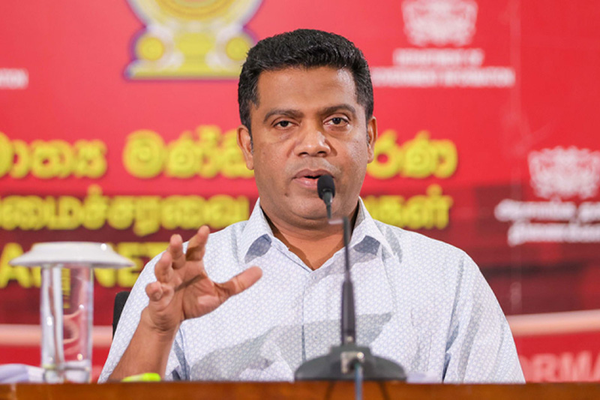
COLOMBO, Sri Lanka — Sri Lanka's Media Minister said Tuesday that future appointments to the top editorial position at the state-run Tamil daily Thinakaran would be made on the basis of qualifications, as the newspaper's management faces criticism over the interim appointment it made following the suspension of its Editor-in-Chief over alleged financial misconduct.
The minister, Nalinda Jayatissa, made the remarks at a government media briefing held to announce Cabinet decisions, after journalists pressed him on why the acting editor chosen was more junior than other available candidates.
R. Senthil Velavar, Thinakaran's Editor-in-Chief, was suspended by management at Associated Newspapers of Ceylon Limited — commonly known as Lake House, the state media conglomerate that owns the paper — following an internal investigation into allegations of financial irregularities.
Management subsequently named Suresh Raj, a more junior journalist, as acting editor, a decision that drew criticism from sections of Sri Lanka's Tamil media circles, with some arguing it bypassed more senior or qualified staff.
Mr. Jayatissa denied that the appointment had been made under political pressure, including claims that it followed recommendations from Deputy Minister Sundaralingam Pradeep.
"That decision was not taken in accordance with the request or pressure of any minister or deputy minister," he said.
He characterized the appointment as a temporary administrative measure to keep the newspaper running while the investigation proceeds, adding that it carried no implications for permanent succession.
"Generally, when someone is suspended during an internal investigation, it is common practice to temporarily appoint another person to that position," Mr. Jayatissa said. "That does not mean the person appointed in an acting capacity will permanently remain in that position."
Mr. Senthil Velavar is alleged to have misappropriated advertising revenue by personally collecting payments for advertisements that were never published in the newspaper's print edition. Sources familiar with the investigation told Jaffna Monitor that investigators were examining claims that fabricated newspaper pages featuring the unpublished advertisements had, in some cases, been shown to advertisers as proof of publication. Internal estimates reportedly place the amount potentially diverted at approximately 6.5 million rupees over an eight-month period, though the investigation is continuing.
Lake House is also expected to file a complaint with Sri Lanka's Criminal Investigation Department, according to sources familiar with the matter.