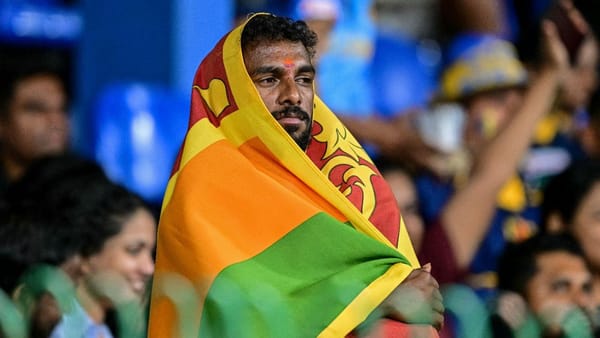
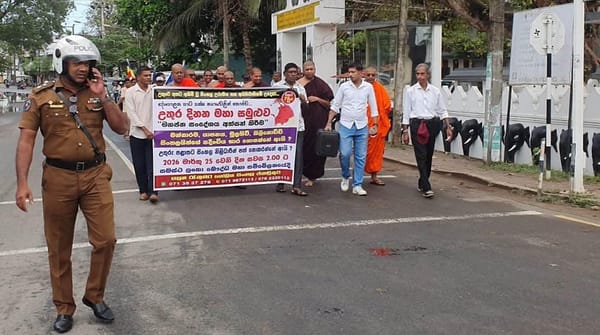
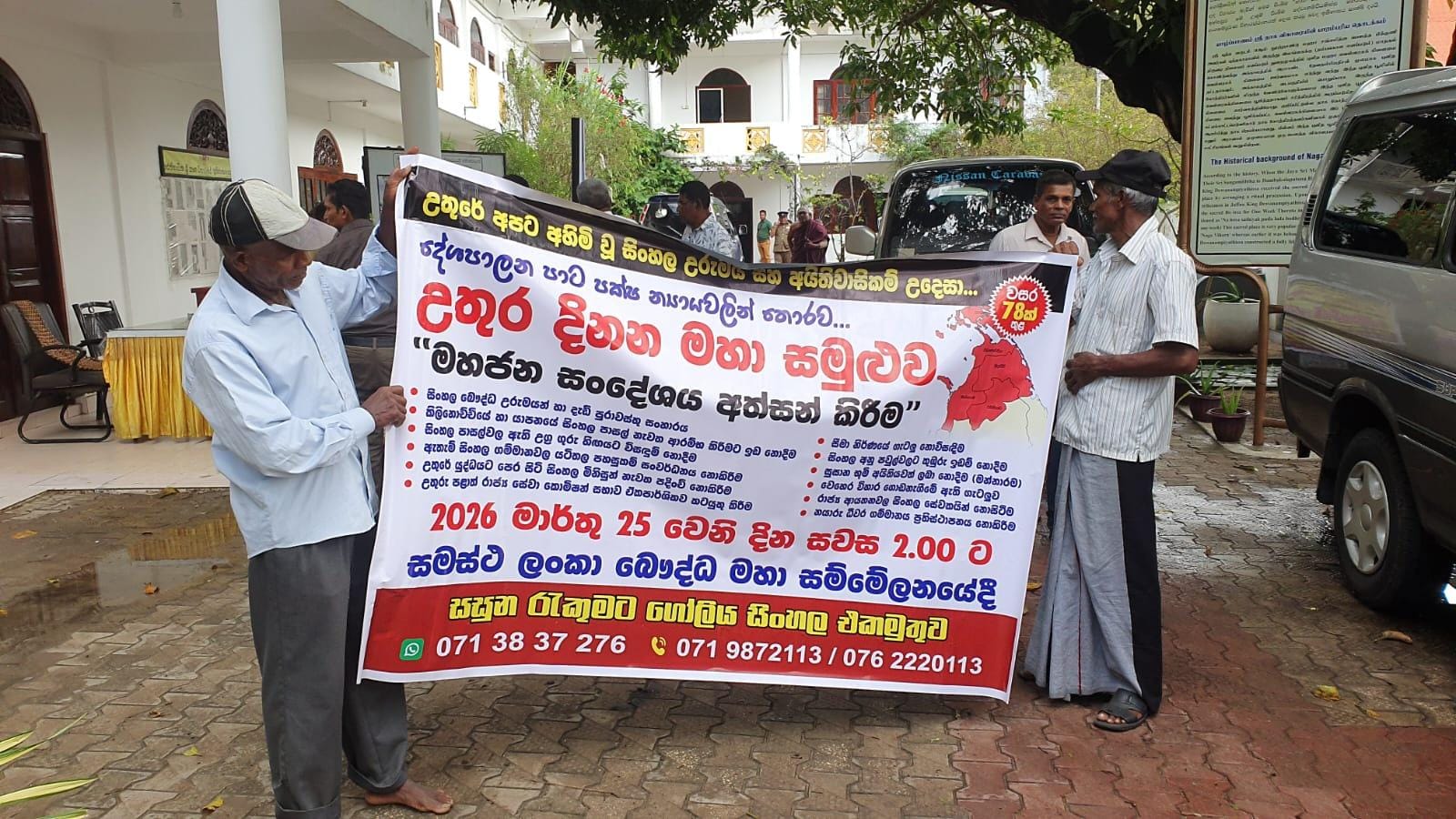
JAFFNA, March 19— A march and vehicle procession organised by a group of activists began in Jaffna on Thursday, aiming to draw national attention to the concerns of Sinhalese communities living in Sri Lanka’s Northern Province.
The initiative is expected to travel along the A9 highway through several towns before concluding in Colombo, where participants plan to meet President Anura Kumara Dissanayake and submit a memorandum.
Organizers said the campaign seeks to highlight grievances related to land ownership, livelihoods, and security, which they argue have received limited attention in post-war policy discussions.
They said disputes and administrative barriers affecting some Sinhalese families in the North have hindered efforts to rebuild livelihoods and secure long-term stability, and called for greater engagement from authorities to ensure equal access to state services and security.
Historical accounts indicate that prior to the escalation of Sri Lanka’s ethnic conflict in the late 1970s and early 1980s, several thousand Sinhalese lived in parts of the Northern Province.
Many were employed in state-linked industries such as the Kankesanthurai Cement Factory, while others worked as bakers and small traders. Longtime Jaffna residents told Jaffna Monitor that many of the town’s bakeries were once owned by Sinhalese families. Sinhala Maha Vidyalaya in Jaffna served the educational needs of Sinhala-speaking families at the time, they said.
With the rise of Tamil militancy and increasing ethnic tensions, many Sinhalese residents left the region, with various accounts pointing to displacement driven by threats and insecurity during the early years of the conflict.
Organizers of the march say some families who later returned or remained in the North continue to face unresolved legal and economic challenges.
Speaking to reporters in Tamil, a Sinhalese resident, Kalista Gamini, said her family’s roots in Jaffna stretched back generations.
“I am now living in the Navatkuli Sinhala settlement,” she said. “People say Jaffna belongs only to Tamils. But my father was born here in 1952. Most of the Sinhalese families in our settlement were either born in Jaffna or have direct roots here.”
Describing a strong emotional attachment to the region, she added: “Jaffna is our motherland, and we are deeply connected to this land.”
Gamini said her family returned to Jaffna in 2010 after years of displacement. “When we came back, it was Tamil people who helped us. At that time, we did not even have basic facilities like toilets. Tamil families opened their homes to support us. We will never forget that,” she said.
Fluent in Tamil, she said her identity reflected the region’s shared history. “I was born here and studied in Tamil, that is why I speak the language fluently,” she said, calling for coexistence. “We should not be divided as Tamils and Sinhalese. We should live united.”
She added that her family had lived in Jaffna until 1999 and had also been affected by earlier waves of violence. “We were forced to leave in 1983, but we returned because we always wanted to live in Jaffna,” she said.
“Our main request is for a Sinhala school,” one organizer said. “Right now, we don’t have one.”
It remains unclear whether the march will translate into concrete policy measures. Some observers say the ruling National People’s Power (NPP) leadership in the North has prioritised appeasing more hardline strands of Tamil nationalist sentiment. They add that the initiative has nevertheless brought renewed attention to a lesser-discussed aspect of Sri Lanka’s post-war landscape.