By M.R. Narayan Swamy
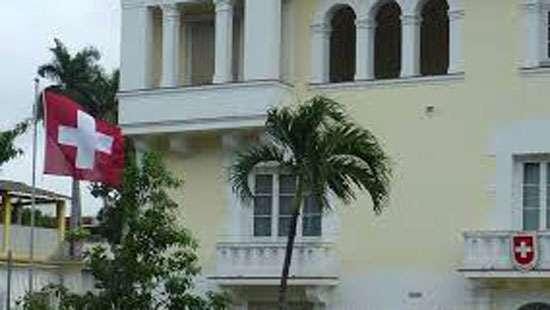
Switzerland’s sudden decision to indefinitely postpone a meeting of select Sri Lankan Tamil political parties scheduled for February 19 must be welcomed, as the gathering would likely have provided oxygen to a self-serving and divisive agenda rather than contributing anything positive to Sri Lanka.
The Swiss Embassy is understood to have invited the Tamil National People’s Front (TNPF), whose main constituent is the All Ceylon Tamil Congress (ACTC); the Ilankai Tamil Arasu Katchi (ITAK), also known as the Federal Party; and the Democratic Tamil National Alliance (DTNA) to Colombo in a bid to forge consensus on the way forward for Sri Lanka’s Tamil minority.
Also invited was a Tamil lawyer known for his close links with the Swiss Embassy and for his ideological proximity to the TNPF. He has consistently supported the party’s uncompromising political position, which argues that Tamils and Sinhalese cannot coexist without a clearly defined political boundary.
Naturally, eyebrows were raised over the narrow band of the Tamil participants as they do not represent the fragmented Tamil society where many now seek devolution within the existing constitutional framework rather than knock on fancy doors they know will not open. Unfortunately, Colombo is not listening to these Tamils.
Both in Sri Lanka and around the world, politically conscious Tamils wondered if the Swiss initiative, even if well meaning, was aimed at cementing a Tamil narrative that would insist on federalism or something akin to it when this is clearly a dirty word for a wide majority of the Sinhalese and even Muslims.
Fortunately, as criticism mounted, the Swiss embassy/government called off the ill-advised event. No reason was given for the U-turn and it was made clear that the adjournment was indefinite.
A TNPF leader in Jaffna, however, told confidants that the Swiss cancelled the meeting because they were embarrassed by the publicity it received in the media even before it began.
This argument is silly. Surely, an assembly of this kind could not have been kept under wraps. There is no way Sri Lanka in general and Tamils in particular would not have learnt about the participants and their agenda. The criticism would have still been aired.
Switzerland’s one-step-forward-one-step-back again shows the limitations of Western peace-making efforts, more so when the discussions are confined to a chosen elite who cannot influence the larger society due to political realities.
The TNPF, led by Gajendra Ponnambalam, is seen as a favourite among sections of the Tamil diaspora who remain aligned with the ideology of the defeated Tamil Tigers. However, it enjoys limited support outside Jaffna, Sri Lanka’s Tamil heartland. The more influential ITAK and other Tamil parties suffered significant setbacks in the 2024 parliamentary election, particularly in Jaffna, where the ruling National People’s Power (NPP) — whose principal constituent is the Marxist Janatha Vimukti Peramuna (JVP), or People’s Liberation Front —stole the show.
What is the road ahead for the Tamils? Should the community remain bogged down by unrealistic slogans and unattainable goals, all the time goaded by those in the diaspora who won’t return to Sri Lanka but who like to foment unrest in the island in the name of Tamil nationalism? Or should the Tamils try to seek autonomy in regions where they are in a majority within the existing constitutional structures?
There are rising calls to press the government to implement the 13th amendment to the constitution, an outcome of the India-Sri Lanka pact of 1987, and go for provincial council elections which the ruling JVP-led NPP had promised to hold. Unfortunately, the Swiss thought it wise to give credence to maximalist Tamils opposed to the provincial council system.
The Swiss initiative for the February 19 conclave would have been widely welcomed had the participants belonged to all shades of Tamil opinion, including elected Tamil representatives from the JVP/NPP. There are also other groups and thinking individual Tamils, including from the Jaffna University and outside, who could have articulated the benefits of the provincial councils and what these can achieve for the Tamils despite their limitations.
It is not surprising that the US Tamil Diaspora group welcomed the Swiss initiative while underlining that – note the words – “any political solution must be firmly anchored in historical reality and binding principles of international law, rather than being confined to internal constitutional or administrative arrangements”. For those who may see this as a riddle, the outfit made it clear “that a durable political solution cannot be confined to frameworks such as the 13th amendment, federalism or the unitary state model”.
In simple words, the likes of the TNPF and its diaspora backers want what the Liberation Tigers of Tamil Eelam (LTTE) could not achieve after a quarter century of fighting: an independent Tamil Eelam. They don’t say this in so many words but they camouflage their desire in political jugglery. And Western countries get taken in by this, more so when these are put up by a diaspora who earlier kept alive the LTTE with endless flows of money.
Unfortunately, despite a written pledge, Sri Lanka’s ruling party is displaying no urgency in holding provincial council elections which will act as an outlet for simmering political tensions in the Tamil areas. Indeed, voices like that of the US Tamil Diaspora neatly play into the hands of Colombo.
Switzerland probably wants to help but is unable to come to grips with the complexities of Sri Lanka, the Tamil society included. The Swiss last year hosted several Tamils from the island to educate them about federalism -- as if this was an unheard of word in the country. Switzerland also funded a grand-sounding Himalayan Initiative a couple of years ago but it crashed faster than anticipated. The February 19 meeting too would have gone nowhere if it had taken place.
This is not the first time the West has been taken by Third World ideologists who speak a language and idiom Westerners understand. The way the United States funded Pakistan with billions of dollars during the years the mujahideen fought the Soviets but was fooled by the deep state in Islamabad is a scandal; many in the US woke up to Pakistan’s games only after Osama bin Laden was killed near Rawalpindi.
The Swiss and other Europeans who encourage hardliners within the Tamil diaspora fall in the same boat. If Westerners want to do anything good in the Third World, they must employ the same yardstick of democracy they practice at home to measure others. Yes, there will be plenty of bumps along the way but peace making has never been a path of roses.