By Aruliniyan Mahalingam
On the morning of Dec. 17, 2024, W.S. Sathyananda, a Special Grade officer of the Sri Lanka Administrative Service with nearly three decades of experience, sent a brief WhatsApp message to his superior. Having just reported for duty as Additional Secretary at the Ministry of Transport, Highways, Ports, and Civil Aviation, he requested an appointment to pay a courtesy call.
The response he received that afternoon would lead to a Supreme Court case — W.S. Sathyananda v. Prof. Kapila Perera and Others (SC (FR) Application No. 8/2025) — a ruling that has drawn a firm constitutional line around the limits of executive authority over Sri Lanka's public service.
"Regret very much that we have consented with the concurrence of the Hon. Minister to another officer who brought a request," wrote Prof. Kapila Perera, the ministry secretary and former Vice Chancellor of the University of Moratuwa, in a message later produced before the Court as evidence. "Accordingly, I shall inform the Public Administration Secretary. Apologies."
Despite the message, Sathyananda reported for work the following morning. According to evidence before the Court, Prof. Perera visited his office shortly after noon and informed him that his services would not be required and that he should leave. Sathyananda described the language used as unbecoming of a senior public official.
In the weeks that followed, Sathyananda returned to the so-called "officers' pool" at the Ministry of Public Administration, where senior civil servants await assignments after transfers or postings. It was the second time in less than three months that he had found himself without a substantive appointment.
THE RULING
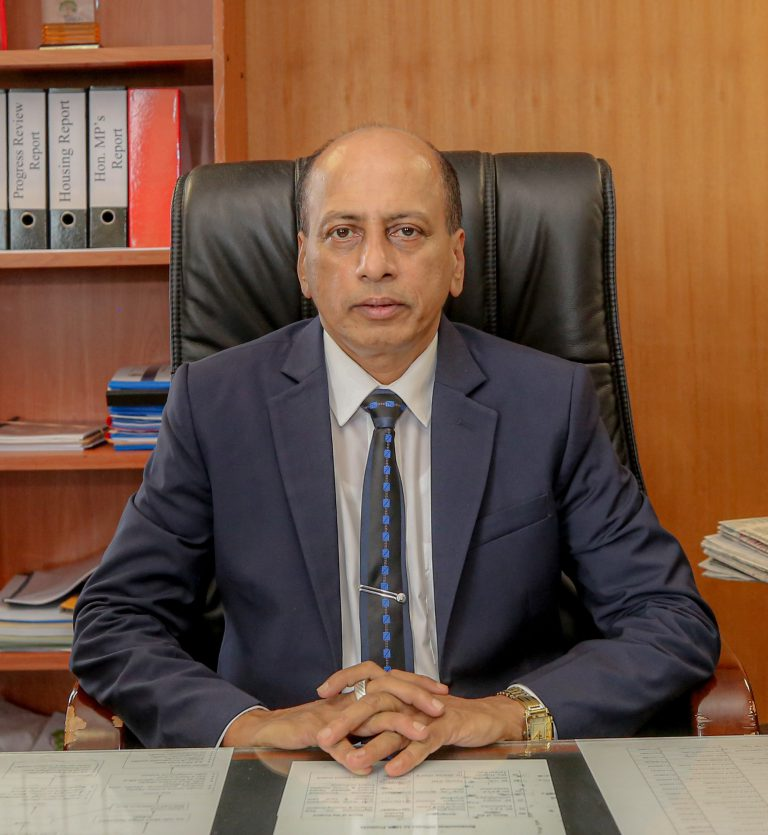
On 19 May 2026, the Supreme Court found that what Perera had done was not merely improper. It was unconstitutional.
In a judgment delivered by Justice Arjuna Obeyesekere, with the concurrence of Justices Janak De Silva and Dr. Sobhitha Rajakaruna, the Court held that Perera had acted arbitrarily and outside the scope of his authority by interfering with powers that are constitutionally vested in the Public Service Commission.
The Court found that these actions amounted to a violation of Sathyananda's fundamental rights guaranteed under Article 12(1) of the Constitution — the right to equality before the law and equal protection of the law.
In its 22-page judgment, the Court grounded its ruling in the Public Trust Doctrine — the principle that power conferred on a public official is held in trust for the people and may be exercised only for the purposes for which it was conferred. The Court found that Perera's conduct violated that trust, breached the constitutional guarantee of equality, and undermined Sathyananda's dignity both as a human being and as a public officer.
No compensation was awarded. The Court said, with evident deliberateness, that no amount of money could restore what had been taken: "the loss of dignity, the embarrassment and the humiliation that the Petitioner had to undergo as a result of the arbitrary actions of the 1st Respondent."
THE FACTS
The sequence of events, meticulously reconstructed from affidavits, official correspondence, and the WhatsApp exchange, reveals a Ministry Secretary operating well outside his constitutional lane — and, crucially, doing so with the concurrence of his minister.
Sathyananda had been assigned to the officers' pool in late September 2024, following the post-election restructuring of Cabinet Ministries under the incoming NPP administration. Unable to secure a posting through passive waiting, he identified his own vacancy — an opening for Additional Secretary at the Transport Ministry — and applied for it. The Ministry of Public Administration, acting on his application, sought approval from the Public Service Commission and directed him to report on 16 December 2024, subject to the Commission's covering approval. That formal approval was granted on 19 December.
By that point, however, Perera had already acted. Before the Commission had even deliberated, he had identified his own preferred candidate — an officer attached to the Irrigation Division of the Ministry of Agriculture — and, with the concurrence of Minister Bimal Rathnayake, committed to appointing her to the vacancy. He then told Sathyananda, face-to-face, to leave the building.
The Court was pointed in its assessment of Perera's stated justification. In his letter to the Ministry of Public Administration dated 18 December 2024, Perera had argued that the officer he preferred possessed expertise relevant to the Ministry's subject area. The Court found that claim unsupported by the facts: the preferred candidate worked in project management within the irrigation sector, while the vacancy Sathyananda had been appointed to fill was for administration and finance. "The claim that an officer with relevant expertise had been identified to fill the vacancy does not appear to be correct," the judgment states.
The preferred candidate's formal request to transfer to the Transport Ministry materialised only on 24 December — six days after Sathyananda had already been ejected from the building.
THE CONSTITUTIONAL STAKES
The judgment is explicit that the case is not merely about one civil servant's wounded dignity. "This application does not only concern the Petitioner," Justice Obeyesekere wrote, "but brings into play certain important Constitutional safeguards relating to the Public Service of this Country."
Article 55(3) of the Constitution vests the appointment, promotion, transfer, disciplinary control, and dismissal of public officers exclusively in the Public Service Commission — not in Ministry Secretaries, and not in ministers. Article 61C(1) goes further: it makes it a criminal offence, punishable by up to seven years' imprisonment, for any person to directly or indirectly influence or attempt to influence any decision of the Commission.
The Court found that by pre-selecting a candidate and then blocking the Commission's duly appointed officer from assuming duties, Perera had arrogated to himself powers the Constitution places solely with the Commission. "This conduct on the part of the 1st Respondent is clearly outside the confines of the Constitutionally recognized framework, undermines the Rule of Law and thereby contravenes the trust placed by the People in the 1st Respondent as a public officer," the judgment states.
"Recruitment and appointment of persons to positions in the public sector cannot be left to be decided according to the whims and fancies of persons in authority," the Court said, applying its own prior jurisprudence — then found that Perera had done exactly that.
The Court also directed pointed criticism at the Public Service Commission itself, which waited more than a month after receiving Sathyananda's formal complaint before issuing its letter upholding his appointment — by which time he had already filed the fundamental rights petition and, in what the Court described as "sheer frustration," accepted a different posting. "The delay of over a month in addressing the predicament faced by the Petitioner displays a complete lack of concern for the rights and interests of the Petitioner," the judgment states. The Commission, it added, must act not only independently but swiftly, since delay may itself amount to the denial of equal protection.
RESIGNATION AND WIDER CONTEXT
Days after the ruling, sources confirmed that Perera had formally informed the Ministry of Public Administration of his decision to resign, and that President Anura Kumara Dissanayake had been informed. Perera is expected to return to university service.
The resignation lands at an awkward moment for Minister Bimal Rathnayake's portfolio. The Court's judgment specifically noted that Perera had acted "with the concurrence of the Hon. Minister" in blocking Sathyananda — a finding that implicates the Minister in the constitutional breach, even though Rathnayake was not separately found to have violated the petitioner's rights. The Ministry has also seen a string of other high-profile departures, including the resignation of its Media Secretary, who publicly cited an inability to work with the Minister. Rathnayake was stripped of his Ports and Civil Aviation portfolio in a Cabinet reshuffle in October 2025.
The Court's final finding bound three threads together. Perera had acted arbitrarily. He had breached the public trust placed in him by the Constitution. And he had violated the dignity that Sathyananda was entitled to as a human being and as a public officer. Article 12(1), the Court held, is not an abstract guarantee — it is the instrument through which human dignity is protected against exactly this kind of conduct. The judgment declared the fundamental rights of the petitioner violated. It awarded no compensation. The Court said there was nothing money could restore.
Sathyananda had the resources and legal knowledge to fight back. Most do not. Officials and administrators across multiple ministries — many of them career civil servants with no affiliation to the NPP or its parent party, the JVP — told Jaffna Monitor that the case resonated because it reflected concerns they had quietly voiced for months. They described a public service increasingly shaped, in their view, by political loyalty rather than established constitutional norms.
The deeper problem, several observers argued, lies in the NPP leadership's attempt to transplant into government a culture forged within a highly disciplined party organisation.
In the JVP, the centre commands and the cadre executes. That model may function within a political movement. It does not function within a constitutional order that deliberately insulates the public service from partisan control — and that has spent decades building jurisprudence to enforce that insulation. The Kapila Perera case was a single judgment concerning a single officer. But for many of those who spoke to Jaffna Monitor, it illuminated something the Supreme Court had now said plainly: that the public service belongs to the people, not to those who happen to hold power over it.