

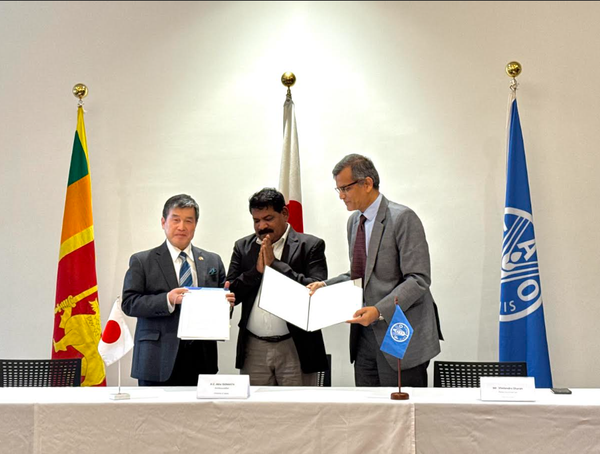
COLOMBO, Sri Lanka — The Government of Japan and the United Nations Food and Agriculture Organization (FAO), in partnership with the Sri Lankan government, have launched a $1.33 million initiative aimed at restoring inland fisheries and strengthening the resilience of fishing communities affected by Cyclone Ditwah in Sri Lanka’s Eastern Province.
The project, which will run from June 2026 through November 2027, will focus on the districts of Ampara, Batticaloa, and Trincomalee, where severe flooding caused by the cyclone devastated reservoir-based fisheries and disrupted the livelihoods of thousands of families dependent on inland fishing.
The agreement was signed at the Japanese Embassy in Colombo by Japan’s Ambassador to Sri Lanka, Akio Isomata, and FAO Representative for Sri Lanka and the Maldives, Vimlendra Sharan, in the presence of Fisheries Minister Ramalingam Chandrasekar.
Cyclone Ditwah triggered extensive flooding across the Eastern Province, damaging fisheries infrastructure, destroying fish stocks, and disrupting breeding and stocking cycles in reservoirs. According to project officials, the losses significantly reduced fish production and incomes in communities already facing economic hardship.
The initiative seeks to restore production through reservoir restocking programs, the installation of barrier nets, the introduction of floating fish-rearing cages, and the procurement of breeding materials needed to rebuild fish populations.
Officials said the project will directly assist 1,504 fishers across 30 reservoirs while indirectly benefiting more than 6,000 family members through improved food security and household incomes. It is expected to support the stocking of approximately 5.48 million fish fingerlings and establish community-managed cage systems capable of producing up to 16 million fingerlings annually.
Speaking at the launch, Mr. Chandrasekar said inland fishing communities in the Eastern Province had suffered severe setbacks from the cyclone and required sustained support to recover.
“This partnership with the Government of Japan and FAO will help rebuild fish stocks, restore incomes, and strengthen the resilience of vulnerable fishing families against future climate-related shocks,” he said.
Mr. Isomata described the project as both a recovery effort and a long-term investment in climate resilience.
He noted that measures such as floating rearing cages and barrier nets were intended not only to restore lost fisheries resources but also to reduce future damage from extreme weather events. He also highlighted the strategic importance of inland fisheries as a source of affordable protein at a time when marine fishing faces rising fuel costs.
Mr. Sharan said the program would focus on helping communities rebuild productive capacity while creating more sustainable and climate-resilient fisheries systems.
“Through reservoir restocking, improved fingerling production, protective infrastructure, and community capacity building, FAO is supporting affected fishers to restore livelihoods, improve food security, and strengthen resilience to future climate shocks,” he said.
The project will be implemented by FAO in collaboration with the Ministry of Fisheries, the National Aquaculture Development Authority of Sri Lanka, and local Culture-Based Fisheries Organizations. Planned activities include technical training on fish rearing, cage management, barrier-net maintenance, and sustainable fisheries governance.