By M.R. Narayan Swamy
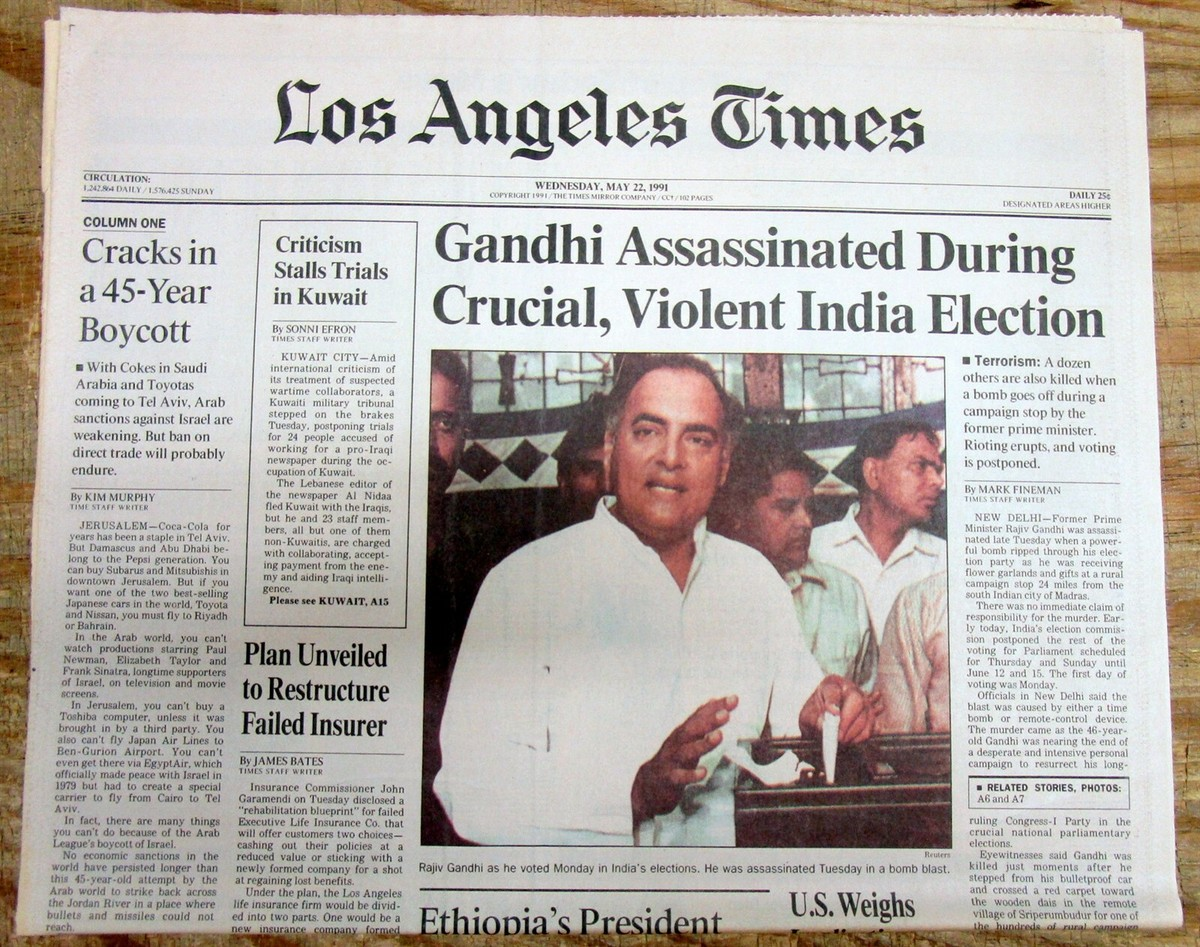
This happened just days after former Prime Minister Rajiv Gandhi was assassinated in May 1991.
A prominent Tamil Nadu politician, a known vocal backer of the Liberation Tigers of Tamil Eelam (LTTE), desperately invited me to his government-provided house in Delhi.
He badly wanted to know who had killed Gandhi at Siriperumbudur near Chennai. The Hindu newspaper had, until then, not scooped the infamous pictures of the killer team.
When I reached his house, two young aides to the politician were also present. Our friend told them to retreat into the house and not to disturb us.
In bizarre scenes I remember to this day, he shut both the doors of his drawing room and closed the windows too. He then moved to the sofa where I was seated and, looking very grim, asked in a low tone: “Who has killed Rajiv Gandhi?”
The LTTE, I replied, without battling an eyelid. I had no hard evidence. It was my surmise.
A ghastly expression gripped his face. “Are you sure?” When I replied in the affirmative, he wanted to know how I was so confident.
I told him that the killing bore all the hallmarks of the Tamil Tigers. No one could have planned and executed it in this manner, that too in Tamil Nadu.
After a few seconds during which I could hear his breathing, he asked a question which stunned me: “Does this mean I will be arrested?”
The man’s face had gone pale. He said he feared the worst because he was an undisguised supporter of the LTTE.
But so are thousands in Tamil Nadu, I argued. If merely supporting the LTTE cause can lead to arrests, then thousands would have to be taken into custody.
My reply brought some relief to him. After another half hour, I returned home, leaving him to brood on his own.
I recall this incident from 35 years ago to underline that many political leaders in Tamil Nadu, as elsewhere in the world, have two different personas — one for public consumption, and another that may be quite different.
This may not be true for all politicians. Nevertheless, it is prudent not to get emotionally swayed by what politicians say in public.
Sri Lankan Tamils, who often get swayed by the goings on in neighbouring Tamil Nadu, need to have a far better understanding of Tamil Nadu and the larger Indian politics.
There is nothing wrong with young Tamils in Sri Lanka celebrating superstar Vijay’s electoral victory in Tamil Nadu. After all, who doesn’t like seeing their hero win?
Vijay, like most Tamil Nadu political actors, has made the usual right noises about Sri Lankan Tamil aspirations.
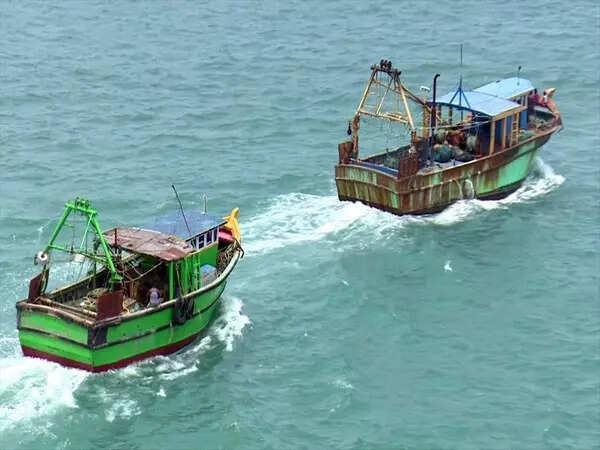
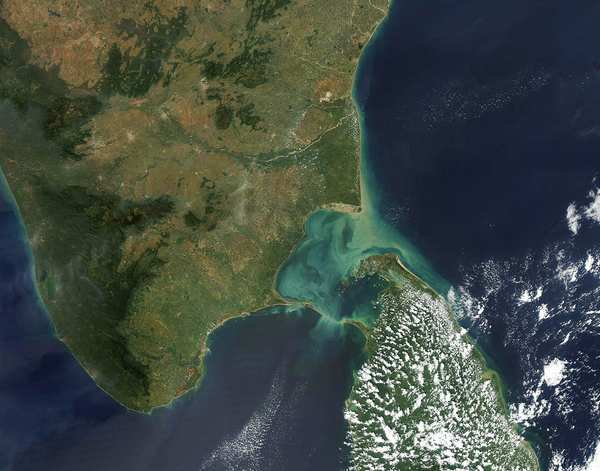
But even before taking office, he has failed to take a just position on the one issue bothering both sides of the Palk Strait: the fishermen’s dispute.
Like many of his colleagues, Vijay has come out in support of Tamil Nadu fishermen’s right to fish in waters that Sri Lanka says lie within its maritime zone.
One reason this row has dragged on for so long is precisely because of such positions taken by mainstream Tamil Nadu leaders. They either do not know, or do not care, about the thousands engaged in fishing in Sri Lanka’s Tamil regions who are seriously affected by intrusions from their Tamil Nadu counterparts. (In any case, the Indian government too has a role to play in ending this dispute.)
Has any leading politician in Tamil Nadu condemned the recent abduction and thrashing of a Jaffna fisherman by Indian fishermen? Have Tamil Nadu politicians called for his release on humanitarian grounds?
Sri Lankans need to remember that many – not all -- Tamil Nadu politicians are ignorant of the kaleidoscopic Tamil issue in the island nation.
Casting away the many complexities, it is convenient for those in Tamil Nadu to still view Sri Lanka from the Tamil-versus-Sinhalese binary.
To this class of politicians, the Tamil Tigers are heroes; no account is taken of the immense pain the LTTE caused to so many others, Tamils included.
The perennially loud nature of Tamil Nadu politicians often harms the Tamil cause by reinforcing the long-propagated Sinhalese myth that Tamils on both sides of the Palk Strait are out to swallow Buddhist Sri Lanka.
At the same time, I find it amusing to hear some Sri Lankan Tamils view Tamil Nadu politicians in terms of ‘Pure Tamil’, ‘Malayali Tamil’, and ‘Telugu Tamil’. I don’t know if there are more such classifications.
So, in line with this understanding, leaders like Seeman are supposed to be ‘Pure Tamils’ while those like (the late) M. Karunanidhi and M.K. Stalin are ‘Telugu Tamils’ and so not devoted enough to the Sri Lankan Tamil cause.
There can be nothing more baseless.
The fact is, the class of ‘Pure Tamil’ leaders in Tamil Nadu who wave the LTTE flag and hero worship Velupillai Prabhakaran are repeatedly rejected by voters in the state.
This is because the masses in Tamil Nadu got disenchanted with the LTTE’s killing spree a long time ago and, like much of the world, confuse the Tigers with the larger Tamil cause.
This is why no tears were shed on the streets when Karunanidhi’s government was sacked in January 1991 for turning a blind eye to LTTE activities in the state.
And this was before Rajiv Gandhi’s assassination triggered revulsion towards the Tigers and, unfortunately, even ordinary Tamils from Sri Lanka in Tamil Nadu.
I never heard anyone call Karunanidhi a “Telugu Tamil” as long as he was echoing the Tigers’ voice. And who does not know that M.G. Ramachandran, who embraced Prabhakaran, was a Malayali? No one had any complaints as long as he was donating money and patronage to the LTTE.
The Tigers and their supporters loved The Hindu newspaper as long as it gave wide space for their mission; it was dubbed a ‘Brahminical mouthpiece’ when it turned against the Tigers after Gandhi was murdered.
It is not that the Tamil Nadu political class cannot be faulted.
Irrespective of the rights and wrongs of the provincial government, the EPRLF formed in Sri Lanka’s north-east, Karunanidhi had no right to call for its ouster – simply because the LTTE wanted it. He had no business to lampoon A. Varadaraja Perumal, the chief minister of the province, as a dadi karan (bearded individual), that too in front of others, Indians and Sri Lankans.
The missteps of its politicians aside, Tamil Nadu has an admirable side to it.
It is among the rare states in India where outsiders, once accepted by the people at large, are put on a pedestal and worshipped.
This is why the Kandy-born MGR became a mass darling. No one viewed him as a Malayali. A man who once struggled to earn Rs 5 from Tamil dramas before becoming a multi-millionaire heartthrob was considered as Tamil as was Annadurai or Kamaraj.
This is also how actors like Rajanikanth and Kushboo became Tamil icons even though both have origins in Maharashtra. And who can forget that MGR’s successor, J. Jayalalithaa, was a Brahmin from Karnataka?
One can criticize Karunanidhi or Stalin for many things, but people in Tamil Nadu won’t find it amusing if these men are sought to be vilified as ‘Telugu Tamils’.
Tamil Nadu politicians did enormous disservice to the Sri Lankan Tamil community by blindly eulogising Prabhakaran and failing to use their stature to challenge the rebel leader when his actions harmed the Tamil cause. If only they had done so — and if Prabhakaran had heeded them — the horrific bloodbath of 2009 might have been avoided.
Sri Lankan Tamils should have a better and more nuanced understanding of Tamil Nadu politics. There are no ‘Pure Tamils’ or ‘Telugu Tamils’ in the state. Please stop viewing Tamil Nadu from a narrow Sri Lankan Tamil prism.