By M.R. Narayan Swamy
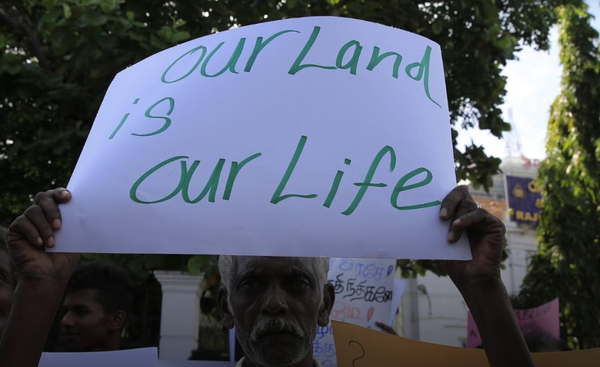
S. Krishna (assumed name) is a deeply frustrated doctor in Jaffna. He feels cheated that the Sri Lankan military is refusing to give up land belonging to his family, seized in the name of a war that ended way back in 2009.
The specialist doctor, like so many Tamils, had high hopes when Marxist Anura Dissanayake became president in 2024, promising to address many of the historical wrongs, including the continued occupation of land belonging to Tamil civilians, predominantly in the island’s north.
And like an overwhelming majority in the Tamil community, Krishna, 52, feels let down by the system today.
“We have lost hope, we are frustrated,” the doctor told Jaffna Monitor. Like others who spoke on the subject, he feels the government appears interested in giving back the land to the Tamils, but the military seems intransigent.
Krishna’s wife’s family was displaced from the Kankesanthurai area in Jaffna in 1990 as the war between government troops and the Liberation Tigers of Tamil Eelam (LTTE) resumed after peace talks failed.
The military slowly expanded its camp at Kankesanthurai, which remains a major naval base. As the complex ballooned, it submerged, among a lot more, two houses belonging to Krishna’s family.
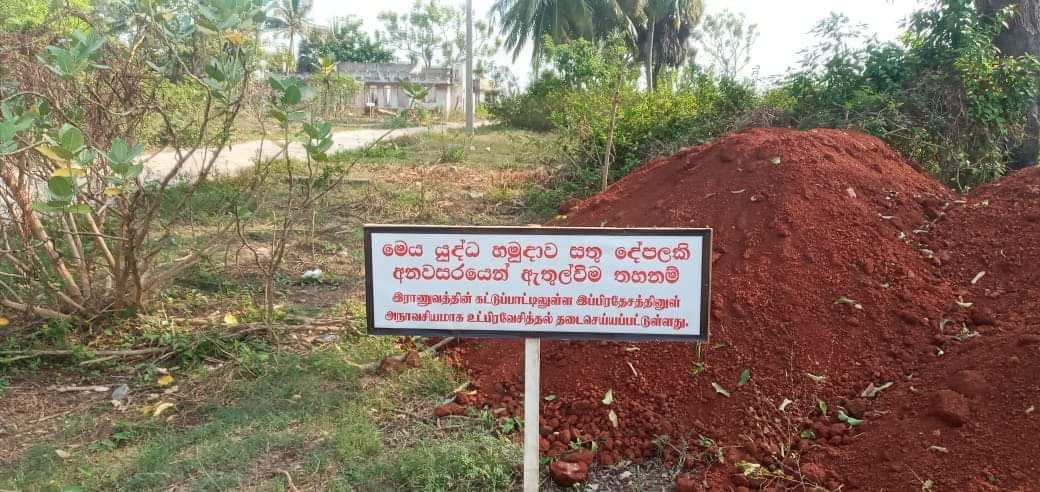
It was in November 2019, a decade after the war ended, that Krishna’s wife and two sisters (who live in the UK and Australia) wrote to a top military officer at Palaly, Jaffna, seeking a return of their family land.
The officer sent a junior to identify the land, one spread over 190 perches (1.188 acres) and another of 40 perches (0.25 acres).
The military promised these would be vacated. But nothing happened.
Krishna sent off a second letter in July 2020, and yet another in January 2023. The military did not respond to either.
When President Ranil Wickremesinghe was moved in 2024, the Ministry of Land sought proof of land ownership. The documents were submitted. Nothing happened, however.
Inspired by President Dissanayake’s promises, the anguished family petitioned him. Again, the defence ministry sought the same documents and transferred the matter to the Divisional Secretariat. Another deafening silence followed.
“The government keeps saying that all private land will be returned, but nothing really happens,” said Krishna, sounding hurt. “The army appears to be coming in the way. The government is reluctant to overrule them.”
He went on: “This is totally illegal. A government cannot do illegal things. A government is democratically elected. They have to respect the rule of law. We are only asking for our own property, but they don’t give us. Is it fair?”
Krishna is one of the thousands of Tamils in Sri Lanka’s Tamil-majority Northern Province who complain that the military is sitting tight over land and property belonging to them, unmindful of the legal and ethical issues.
The military took over both vacant land and other areas after driving away residents during the decades of war in order to strengthen its defenses against the Tamil Tigers.
The reason cited for occupying private land was “national security”.
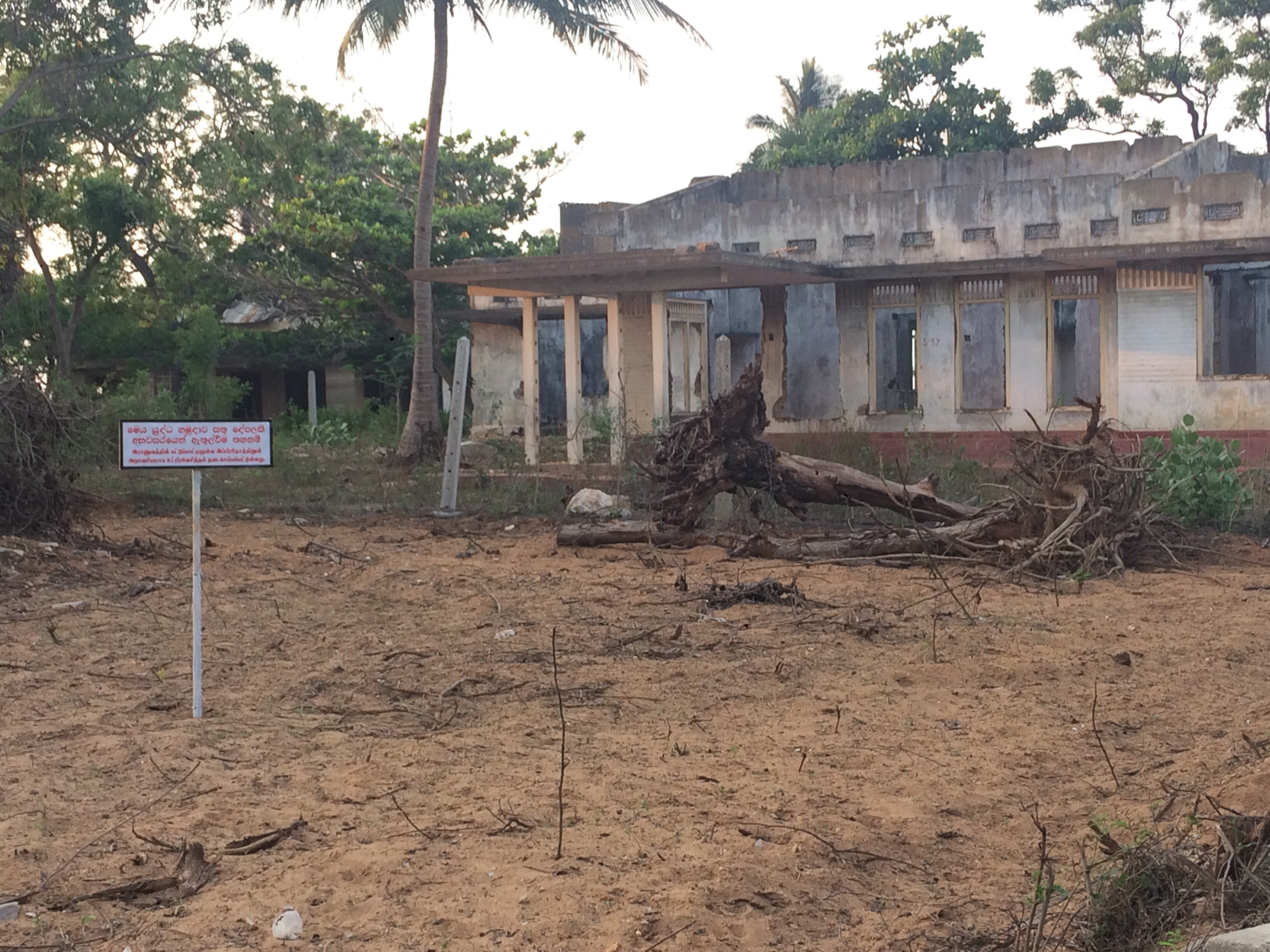
Once the LTTE was routed in 2009, everyone felt the military would slowly give up the private land. This did not happen. Repeated government promises did not lead to changes in the situation except in patches here and there.
Far from the supposed concerns of “national security,” the military now runs farms, boutiques, restaurants, and other commercial ventures within these camps, fueling the anger of those who legally own the land. Buddhist temples are also emerging in some military-occupied areas.
“The military produces vegetables in these lands with soldiers providing free labour. These are sold in the market where Tamils who actually own the land buy them,” said Somasundaram Sugirthan, 53, chairman of the Pradesiya Sabha at Kankesanthurai. “This is an irony, right? It is all so brazen.”
Sugirthan told Jaffna Monitor that people had begun protesting every Friday outside a huge army camp in the region.
“We keep petitioning the government. We have also spoken to the (local) army commander,” he said. “The government passes the buck to the military, and the military passes the buck to the government.”
Most Tamils said there may have been some logic, however flawed, in the initial takeover of the land because a bloody war was underway. It is the continued occupation of the land that has triggered massive resentment.
Some time ago, Sri Lanka’s Deputy Defence Minister, Aruna Jayasekara, a retired army officer, told parliament that more than 700 acres of land in the north and east had been returned to the public.
He said that as of January 1, 2025, a total of 672.24 acres of land had been given back in the north, including 86.24 acres of private land and 586 acres previously used by the military. Another 34.58 acres were let go in the east.
Jayasekara said the releases were approved after the submission of relevant information to the National Security Council and the Sectoral Oversight Committee of National Security.
But Tamil residents and activists say the release process is too slow, and betrays a bias against the Tamil owners who have been punished just because their land happened to be in the wrong place at a wrong time.
While Tamils like Krishna can bear the economic loss accruing from the continued illegal occupation of their property, most others find the hardships very painful.
Sugirthan said: “While their houses lie within the army camp, the owners live in rented property, paying at times Rs 10,000 a month. This has been going on for years.”
Prominent Tamil lawyer-cum-politician M.A. Sumanthiran said he did not know for certain the total extent of Tamil land held by the military, but believed it could amount to about 3,000 acres across Jaffna, Kilinochchi, Mullaitivu, Vavuniya, and Mannar — the five districts that make up the Northern Province.
According to him, the land under occupation totaled some 11,000 acres when the war was raging, but this has shrunk over the years.
Sumanthiran said that when present President Dissanayake’s Janatha Vimukthi Peramuna (JVP) was in the opposition, “they always raised this issue along with us.” Naturally, people were very hopeful when they came to power.
“But nothing major has happened in the past one-and-a-half years. We have met the president too. At one meeting, he said he needed time and he ‘cannot do everything overnight’.”
Like Jaffna doctor Krishna, Sumanthiran said Dissnayake sounded genuine. “But officials tell the government all kinds of things. Naturally, there is no light at the end of the tunnel. And we are forced to go to the court time and again.”
He said the government planned to seize a vast area in Vadamarachchi region in Jaffna. When a case was filed in a court, a ruling led to the withdrawal of the government gazette that permitted the land takeover. This happened in 2025.
“Archaeology is another big problem,” Sumanthiran said. “Unfortunately, many official institutions in Sri Lanka have a purely Sinhalese-Buddhist worldview... The whole mindset is like that.”
A young activist in Jaffna neatly summed up the mess.
The activist, who did not want to be named, said it was ironic that a party like the JVP, which spoke of revolution, was afraid to take on the military brass despite the blatant illegalities surrounding the land issue.
“Forget politics,” he said. “Sri Lanka follows Buddhism, right? Would Buddha allow such theft of people’s land and property? What is the point of quoting Marx if you can’t ensure justice to the people? How different is the JVP from others?”