
By Jeevan Thiyagaraja
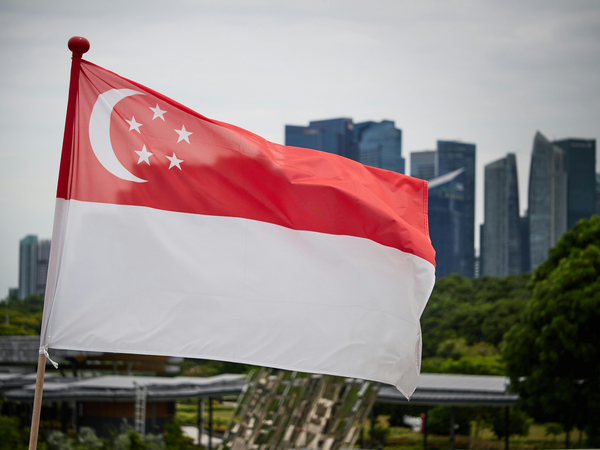
Singapore released its Economic Strategy Review on 13 May 2026 — a 32-recommendation blueprint built around three imperatives: sharpen competitive value, build agility, and embed resilience. At first glance, the two countries appear to occupy entirely different economic universes. Singapore is a mature, high-income city-state with USD 500 billion in GDP and decades of accumulated institutional capital. Sri Lanka is a lower-middle-income island of 22 million people, still emerging from its worst economic crisis since independence — a 2022 sovereign default that sent inflation past 70 percent, wiped out foreign reserves, and pushed millions below the poverty line.
And yet the ESR is more relevant to Sri Lanka than its authors perhaps intended. The structural forces Singapore is proactively repositioning against — geopolitical fragmentation, AI disruption, climate vulnerability, and the decoupling of growth from job creation — are already reshaping Sri Lanka’s operating environment, whether or not Colombo has a strategy to match them. The ESR is not just Singapore’s forward plan. Read carefully, it is a warning to every small open economy about what happens when strategic renewal is deferred.
Where Sri Lanka Stands
Sri Lanka’s economy is projected to grow at 4.6 percent in 2025, supported by a rebound in industry and steady growth in services, before slowing to 3.5 percent in 2026. Income poverty still affects around 22 percent of the population — roughly double pre-crisis levels — and child malnutrition remains alarmingly high. More than 80 percent of government spending is tied to public sector salaries, welfare programmes, and interest payments, leaving little room for growth-enhancing investments in infrastructure, education, and health. The country faces a 30 percent US tariff on its exports, threatening apparel, tea, seafood, and rubber — sectors that account for the bulk of foreign exchange earnings, with the US absorbing 20–25 percent of total exports and nearly 40 percent of apparel shipments.
This is the baseline against which Singapore’s ESR must be read: not as aspirational benchmarks Sri Lanka might one day reach, but as live strategic questions it must begin answering now, from wherever it currently stands.
The ESR’s Four Lessons — Applied
Trust is an economic asset, not a soft concept. The ESR’s most distinctive contribution is framing Singapore’s advantage not merely as location or infrastructure, but as accumulated credibility — the quality that makes it an indispensable node rather than simply a convenient one. The review proposes a new category of trust-based services: cybersecurity, AI governance, audits, assurance, and compliance.
Sri Lanka has an underexploited version of this opportunity. Colombo Port handles a significant share of South Asian transshipment and the country sits astride major Indian Ocean shipping lanes. Sri Lanka urgently needs to operationalise its FTAs with Singapore and Thailand, conclude long-standing negotiations with India, and resume stalled negotiations with China — moves that signal to investors that the country can make and keep commitments. But connectivity without trust infrastructure is just geography. Pairing port investment with credible regulatory institutions — anti-corruption enforcement, transparent dispute resolution, reliable contract law — is what transforms location into leverage. The trust deficit from 2022 has not fully closed in investor perception, and rebuilding it is the institutional work of years, not quarters.
AI is an asymmetric opportunity. Singapore explicitly decided not to compete on building the largest AI models or biggest data centres, recognising it cannot win that race. Its advantage lies in being the best place to deploy AI solutions at scale, in sectors where trust, governance, and human expertise remain central. This is a lesson Sri Lanka can apply almost directly. It will not build large language models or semiconductor fabs. But it has two under-leveraged assets: a large English-literate professional workforce, and a services export sector that is growing but not yet differentiated.
ICT and BPM export revenue grew 8.8 percent in 2025 to USD 1.645 billion, and the sector’s potential is far higher than official data captures — with minimal input requirements beyond skilled talent and technology, it is poised to become a key driver of export earnings and high-value employment, but policy barriers and foreign exchange procedure constraints continue to hold it back. Sri Lanka’s version of the ESR’s AI thrust is to stop competing on cost for commoditised services and start competing on capability — AI-augmented legal services, financial analysis, healthcare data, and software engineering. The workforce is largely there. The policy environment needs to catch up.
The ESR’s caution applies equally: AI must augment workers, not simply displace them. In Sri Lanka’s context, a deployment strategy that hollows out service jobs without creating new ones would be politically and socially destabilising. The sequencing matters enormously.
Good jobs must be designed for, not assumed. Perhaps the ESR’s most important conceptual contribution is its insistence that good jobs do not emerge automatically from economic growth. This runs against the implicit assumption in most of Sri Lanka’s recovery commentary, which treats growth itself as the solution to unemployment and poverty. The government has targeted 5–6 percent GDP growth and aims to more than double FDI to over USD 2 billion — legitimate goals, but the ESR’s warning is that growth driven by construction, tourism, and remittances may not produce the quality of employment that reduces poverty durably or builds a skills base for the next decade.
Sri Lanka needs what the ESR calls a deliberate jobs architecture. With child malnutrition alarmingly high and income poverty still at roughly double pre-crisis levels, investing in early childhood education, allied health, and social care creates jobs that are AI-resilient — requiring human judgment, physical presence, and emotional capacity — while simultaneously addressing the country’s most acute social deficits. Investing in these sectors is not welfare spending; it is labour market investment with a double return.
Resilience is a competitive capability, not an insurance policy. The ESR frames energy diversification, supply chain risk management, and trusted partnerships as core strategic assets, not contingency planning. Sri Lanka knows this lesson viscerally. The 2022 crisis was, at its root, a resilience failure: debt overconcentration, a narrow export base, and insufficient buffers against external shocks. Cyclone Ditwah, striking in late 2025, damaged agriculture, tea exports, garment production, and infrastructure simultaneously — a reminder that a country at Sri Lanka’s income level, in a region of increasing climate volatility, cannot treat resilience as something to be pursued after growth is secured. It must be built alongside growth, or it will be repeatedly undone by it.
The Honest Reckoning
There is one structural difference that must be named plainly: Singapore is running this strategy from a position of institutional strength, deep reserves, and decades of credibility. Sri Lanka is running its equivalent from within an IMF programme, with constrained fiscal space, recovering institutions, and a population still absorbing the shock of 2022.
This means Sri Lanka cannot adopt Singapore’s playbook wholesale. It must sequence differently — stabilisation and institution-building must precede bolder bets on AI deployment and enterprise internationalisation. It must prioritise differently — resilience and job quality over growth rate targets that look good in budget documents but may not materialise. And it must communicate differently — the ESR’s candour that not every strategic bet will succeed is a political statement Singapore can make from strength; Sri Lanka must first build the public trust that allows its government to take strategic risks at all.
How to Actually Get There
The answer is not to attempt everything at once but to make a small number of sequenced, high-leverage moves.
First, clear the friction in the digital economy. Sri Lanka has set an ambitious target for the digital economy to reach 12 percent of GDP by 2030, with USD 5 billion from digital exports, and is rolling out the Sri Lanka Unique Digital Identity programme — foundational infrastructure that mirrors Singapore’s Singpass model. Getting the Cyber Security Bill, data protection laws, and digital identity system live and functioning on schedule would signal to global clients and investors that Sri Lanka is serious. That shift in perception accelerates the sector faster than any subsidy. The bureaucratic friction around foreign payment receipt, company registration, and talent retention is a solvable problem that costs almost nothing in fiscal terms to fix.
Second, build institutional trust as an explicit programme. Anti-corruption reform must be made structurally durable — embedded in independent institutions, not dependent on any one government’s political will. Judiciary investment and contract enforcement matter concretely for foreign investors in services and infrastructure. And the FTA agenda is not just a trade matter; each agreement signed and implemented is evidence that Sri Lanka can be relied upon. That evidence compounds over time into the trust premium the ESR identifies as Singapore’s core advantage.
Third, design a jobs architecture before displacement arrives. Three sectors anchor this: care and health services (AI-resilient, socially needed, exportable as talent to ageing East Asian economies); advanced niche manufacturing in apparel, rubber, and ceramics upgraded toward quality and sustainability rather than cost; and green economy roles in carbon accounting, environmental compliance, and renewable energy engineering — areas where job-ready graduates can be produced within two to three years with the right training investment. Sri Lanka needs global supply chain integration and improved factor markets to capitalise on these opportunities.
Fourth, position Sri Lanka to Singapore explicitly as a complementary node. Singapore is seeking locations to extend its trusted hub, deploy AI solutions, and connect into regional supply chains. Sri Lanka — English language, common law system, Indian Ocean geography, growing digital infrastructure — is a natural candidate. The bilateral FTA needs to be operationalised urgently, but the deeper opportunity is positioning Sri Lanka as the place where Singapore-developed solutions get deployed at South Asian scale. This is a mutual relationship: Singapore’s strategy of becoming a hub nobody can afford to remove requires nodes it can trust. A credible Sri Lanka is exactly what that strategy needs.
The sequencing matters most of all. Institutional reform and digital enablement come first — low cost, high leverage, foundational. Jobs architecture and skills pipeline building come second — they take years to bear results and must start well before displacement arrives. The bolder bets come third, once the foundation is stable enough to support strategic risk.
What makes this achievable is that none of it requires inventing something new. Sri Lanka has the workforce, the geography, the legal traditions, and increasingly the digital infrastructure. What has been missing is the deliberate, sequenced strategy that Singapore’s ESR exemplifies — the willingness to say clearly what we are trying to become, why, and in what order.
Singapore built a better ship. Sri Lanka is still repairing the hull — but the blueprints are now available, and the window to use them is not indefinitely open.
Sources: Singapore ESR (May 2026), World Bank Sri Lanka Development Updates, ODI Global, ADB Asian Development Outlook, ICTA Digital Economy Blueprint, IPS State of the Economy 2025, Export Development Board, GovInsider, East Asia Forum, Reuters.