COLOMBO, Sri Lanka — India has opened applications for 200 fully funded scholarships for Sri Lankan students to pursue higher education at Indian universities during the 2026–27 academic year, in a program officials say reflects New Delhi’s continuing effort to deepen educational ties with its southern neighbor.
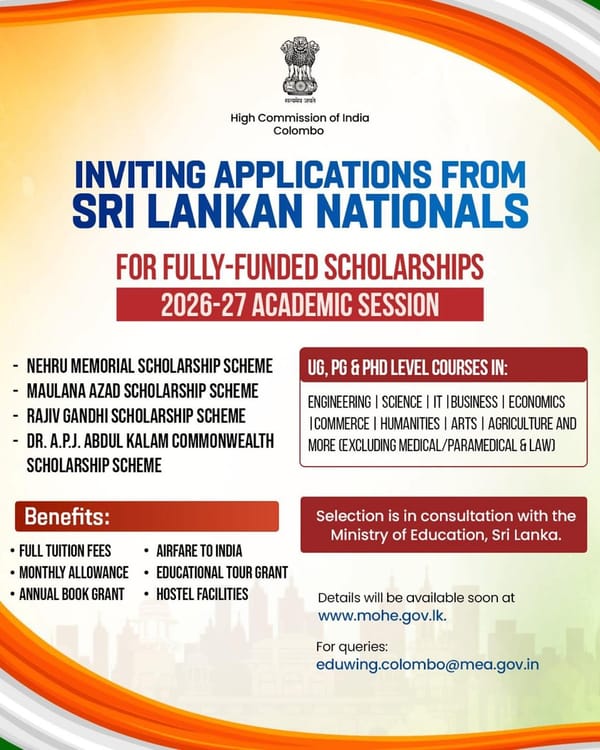
The scholarships are administered by the Indian Council for Cultural Relations (ICCR) and are offered under four schemes: the Nehru Memorial Scholarship Scheme, the Maulana Azad Scholarship Scheme, the Rajiv Gandhi Scholarship Scheme, and the Dr. A.P.J. Abdul Kalam Commonwealth Scholarship Scheme.
The awards cover undergraduate, postgraduate, and doctoral programs across a wide range of disciplines, including engineering, science, information technology, business, economics, commerce, humanities, arts, and agriculture. Courses in medicine, paramedical sciences, fashion design, and law are not included, officials said.
About 60 scholarships are available for undergraduate studies, including 50 under the Nehru Memorial Scheme for bachelor’s degrees in fields such as engineering, science, business, and the humanities. The Rajiv Gandhi Scheme provides 10 scholarships for information technology-related engineering programs, requiring applicants to have studied physics, chemistry, and mathematics at the G.C.E. Advanced Level.
At the master’s level, roughly 60 scholarships are available. Around 40 are offered through the Maulana Azad Scheme, primarily for engineering, science, and agriculture, while about 20 are provided under the Nehru Memorial Scheme for a broader range of disciplines.
A further 15 scholarships are allocated for doctoral studies, including 10 under the Nehru Memorial Scheme and five under the Dr. A.P.J. Abdul Kalam Commonwealth Scholarship Scheme.
The scholarships include full tuition coverage, a monthly living allowance, hostel accommodation at the host university, an annual grant for books and academic expenses, and one-way economy airfare to India, along with funding for academic tours within the country.
According to program guidelines, applicants must be Sri Lankan citizens aged 18 to 40, possess the relevant academic qualifications, and demonstrate proficiency in English. Undergraduate applicants must have three passes at the G.C.E. Advanced Level, while candidates for master’s and doctoral programs must hold the appropriate prior degrees.
Applicants must also be in good health and cannot be enrolled as internal students in a degree program at a Sri Lankan state university at the time of application.
Although the program does not have formal regional quotas, officials said candidates from Sri Lanka’s Northern and Eastern Provinces are given due consideration during the selection process, reflecting efforts to expand educational opportunities in historically disadvantaged regions.
Demand for the scholarships remains strong. Nearly 4,000 Sri Lankan students applied in the previous cycle, far exceeding the number of available slots.
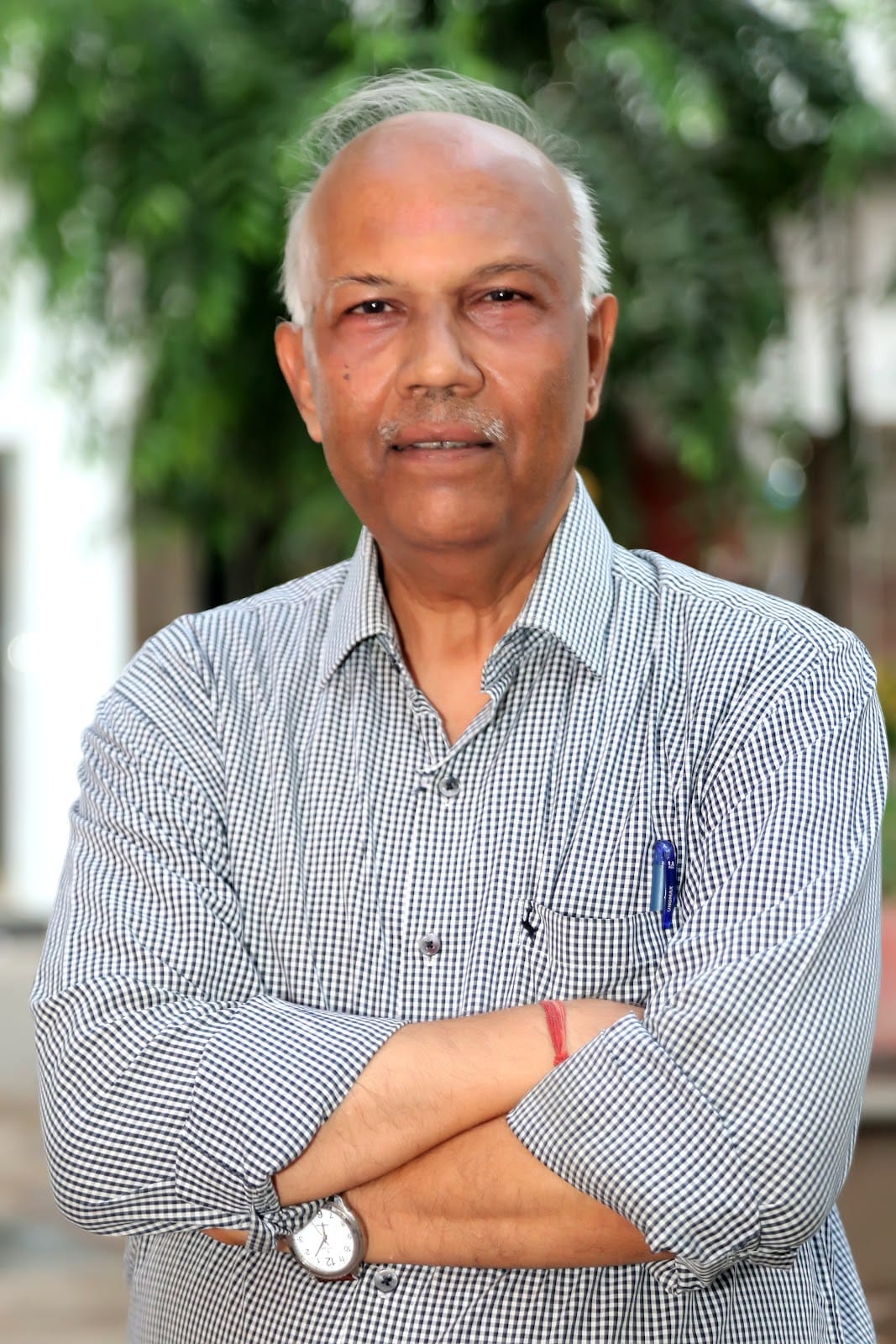
“India believes strongly in standing by its neighbors,” Prof. Ankuran Dutta, who recently concluded his tenure as director of the Swami Vivekananda Cultural Centre in Colombo, the cultural arm of the ICCR, said in an earlier interview with Jaffna Monitor.
Among the notable recipients of ICCR scholarships is Sri Lanka’s Prime Minister, Harini Amarasuriya, who studied sociology at Hindu College, University of Delhi, from 1991 to 1994.
Applications must be submitted online through Sri Lanka’s Ministry of Higher Education foreign scholarships portal by March 16, 2026. Candidates are allowed to submit only one application, and multiple submissions will lead to disqualification.
The selection process begins with screening by the Ministry of Higher Education, followed by further evaluation and interviews conducted jointly with the High Commission of India in Colombo.
Officials say the scholarship initiative is part of India’s broader effort to strengthen educational diplomacy with Sri Lanka, offering opportunities for Sri Lankan students to study in one of the world’s largest higher education systems while reinforcing long-standing cultural and academic ties between the two countries.