

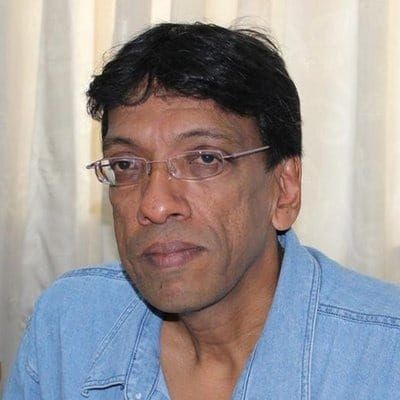
International Investigation Essential for Chemmani Mass Grave, Says Jehan Perera

International Investigation Essential for Chemmani Mass Grave, Says Jehan Perera


Share this post

The skeletal remains being recovered from the Chemmani mass grave constitute primary evidence of massacres and warrant an international investigation, said Jehan Perera, Executive Director of the National Peace Council of Sri Lanka, during a visit to Jaffna this week.

Jehan Perera emphasized that the discoveries at Chemmani represent undeniable proof of deliberate killings and called for professional international expertise to ensure a credible investigation into the site.

"The skeletal remains being recovered from the Chemmani mass grave stand as primary evidence of massacres. Therefore, an international investigation into this matter is essential," Perera told the media.

The Chemmani mass grave has emerged as a focal point in discussions about accountability and justice for Sri Lanka's Tamil community, which continues to face significant hardships in the post-war period.

"In Sri Lanka, Tamils continue to live under many hardships, and the issue of the Chemmani mass grave has become a major point of discussion," Perera said. "The skeletal remains unearthed in Chemmani are undeniable evidence of deliberate massacres."

Trust Deficit Drives International Appeals

Perera highlighted the erosion of Tamil trust in domestic accountability mechanisms, explaining why affected communities continue to seek international intervention.

“The Tamil people are no longer willing to place their trust in successive governments. That is why they continue to demand justice from the international community on Chemmani and similar issues. There is nothing wrong in that,” he stated.

The National Peace Council director stressed that professional international involvement is crucial for the credibility of any investigation at the site.

"As far as we are concerned, it is very necessary to obtain practical and professional expertise from abroad for the excavation of the Chemmani human mass grave," Perera said.

UN Position Under Scrutiny

Perera expressed concern about the United Nations Human Rights Council's apparent willingness to accept domestic mechanisms for investigating Chemmani, arguing that this approach may fall short of what is needed.

"However, the United Nations Human Rights Council seems inclined to accept a domestic mechanism in relation to Chemmani," he noted.

He concluded by emphasizing the standards required for any credible investigation: "What is required in this matter is an investigation that is both highly professional and completely impartial."


Share this post

Be the first to know

Join our community and get notified about upcoming stories

Subscribing...
You've been subscribed!
Something went wrong
Why Tamil Politics Cannot Be a Pensioner's Hobby

Why Tamil Politics Cannot Be a Pensioner's Hobby

A cut-out portrait of Judge M. Ilancheliyan from his farewell ceremony. If you trace the arc of Tamil political leadership from Independence to today, one pattern repeats with stubborn persistence: our fate has been decided almost exclusively by lawyers. From Sir Ponnambalam Ramanathan and G.G. Ponnambalam to Thanthai Chelva and Amirthalingam, and now to Sumanthiran and Gajendrakumar—the legal profession has monopolized Tamil political space for more than a century. Nothing personal against la


Kaniyan Pungundran

Kaniyan Pungundran

Jaffna Swami
Picture produced using GPT-4 https://chat.openai.com

Jaffna Swami

Translated from the original Tamil short story yāḻppānaccāmi  (யாழ்ப்பாணச் சாமி)  by Shobasakthi. The original story is available at his website. If you have any questions or feedback, please contact ez.iniyavan@gmail.com. This story is not about the Aruḷampalam Swami who was immortalized in song by the great Tamil poet Bharathiyār, calling him the eye of the world and the enlightened vessel that delivers sinners from their suffering. I am about to tell you the story of a different Jaffna Swami


Eḻuttukkiṉiyavaṉ

Eḻuttukkiṉiyavaṉ

WE ARE SORRY

WE ARE SORRY

Editorial Thirty-Five Years of Silence, Thirty-Five Years of Shame On October 30, 1990 — thirty-five years ago — the Liberation Tigers of Tamil Eelam, with we Tamils as mute spectators, committed an atrocity that erased whatever moral or ethical ground our struggle once stood upon. In an orchestrated act of ethnic cleansing — not in scale, but in spirit comparable to the mass expulsion of the Rohingya from Myanmar; reminiscent of the 1948 Palestinian Nakba; echoing the forced displacement of


Kaniyan Pungundran

Kaniyan Pungundran

No Minority Politician Can Solve Ethnic Issues Without the Trust of the Majority: Faiszer Musthapha
Faiszer Musthapha

No Minority Politician Can Solve Ethnic Issues Without the Trust of the Majority: Faiszer Musthapha

At Jaffna Monitor, we believe that meaningful conversations about ethnic representation, national unity, and pluralistic governance are essential for Sri Lanka’s democratic future. For decades, ethnic politics has shaped — and often fractured — the country’s political landscape and the fate of its people. Yet critical questions remain unanswered: What is the most effective path for minority communities to secure their rights and interests? Should minority leaders work within majority-led nationa


Jaffna Monitor

Jaffna Monitor