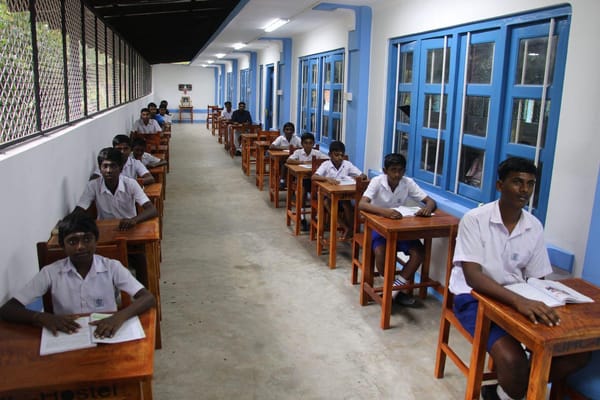
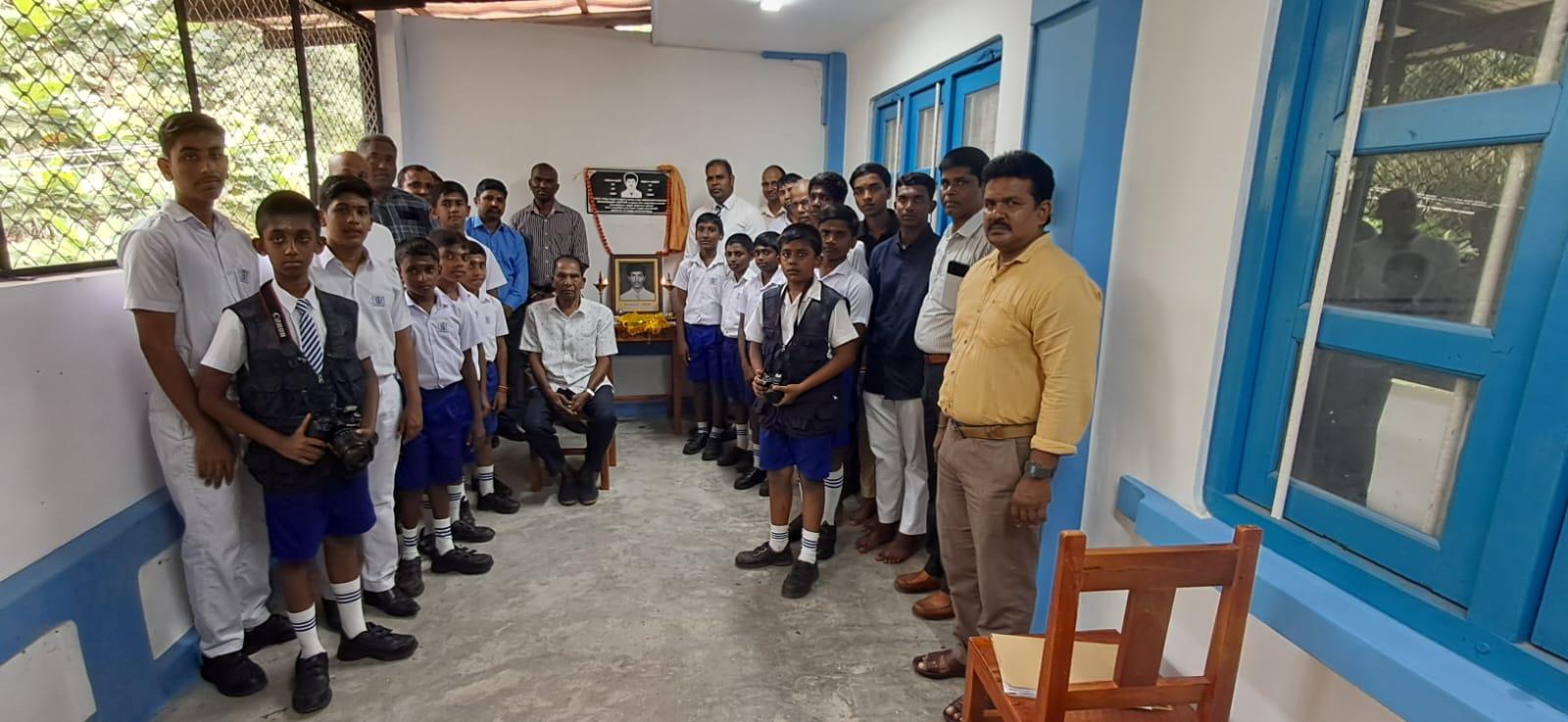
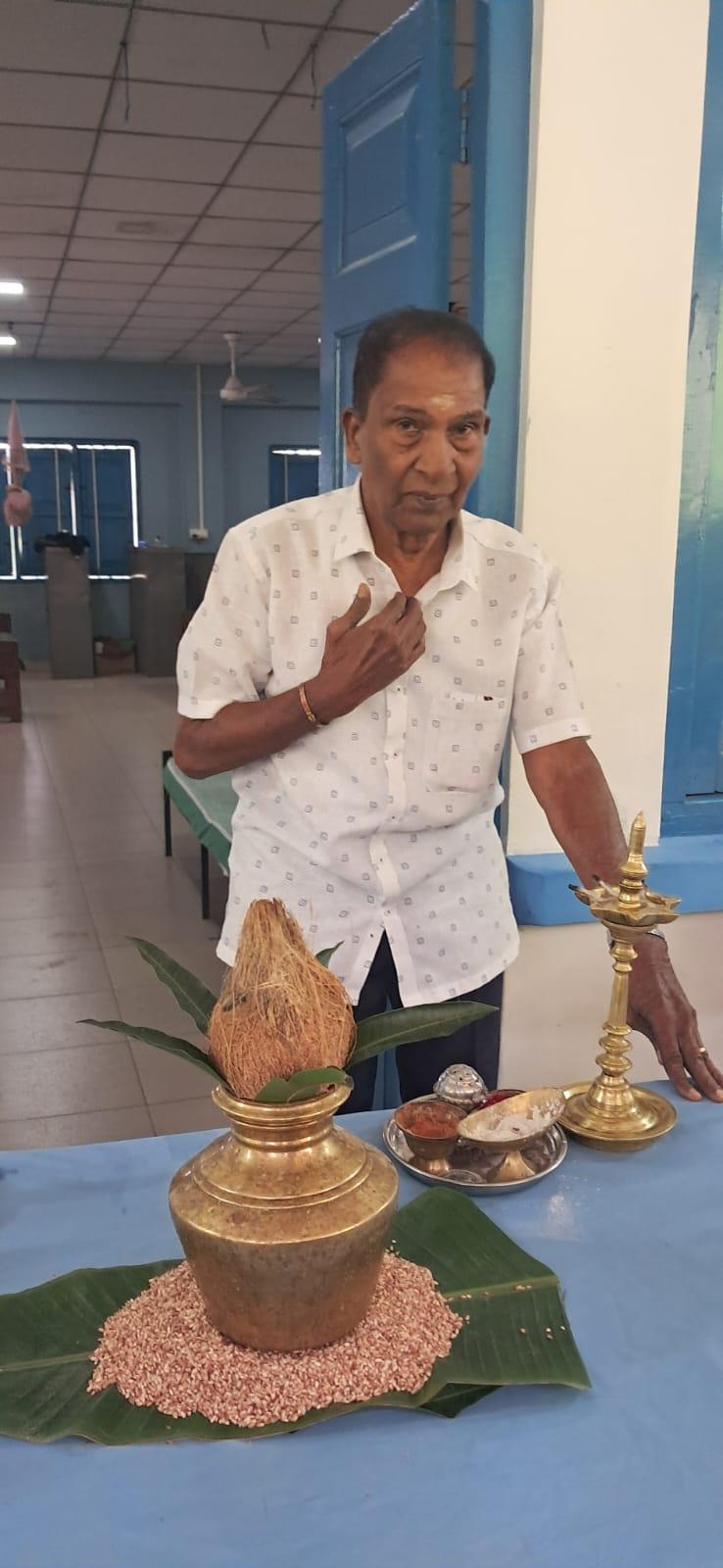
On a humid morning inside the premises of Jaffna Hindu College, a group of middle-aged men stood quietly as a plaque was unveiled on a newly constructed study hall for hostel students.
They were not donors in the conventional sense. They were former classmates — members of the school’s 2001 Advanced Level batch — returning more than a quarter century later to honour a friend whose life was cut short when he was killed by the military during the civil war.
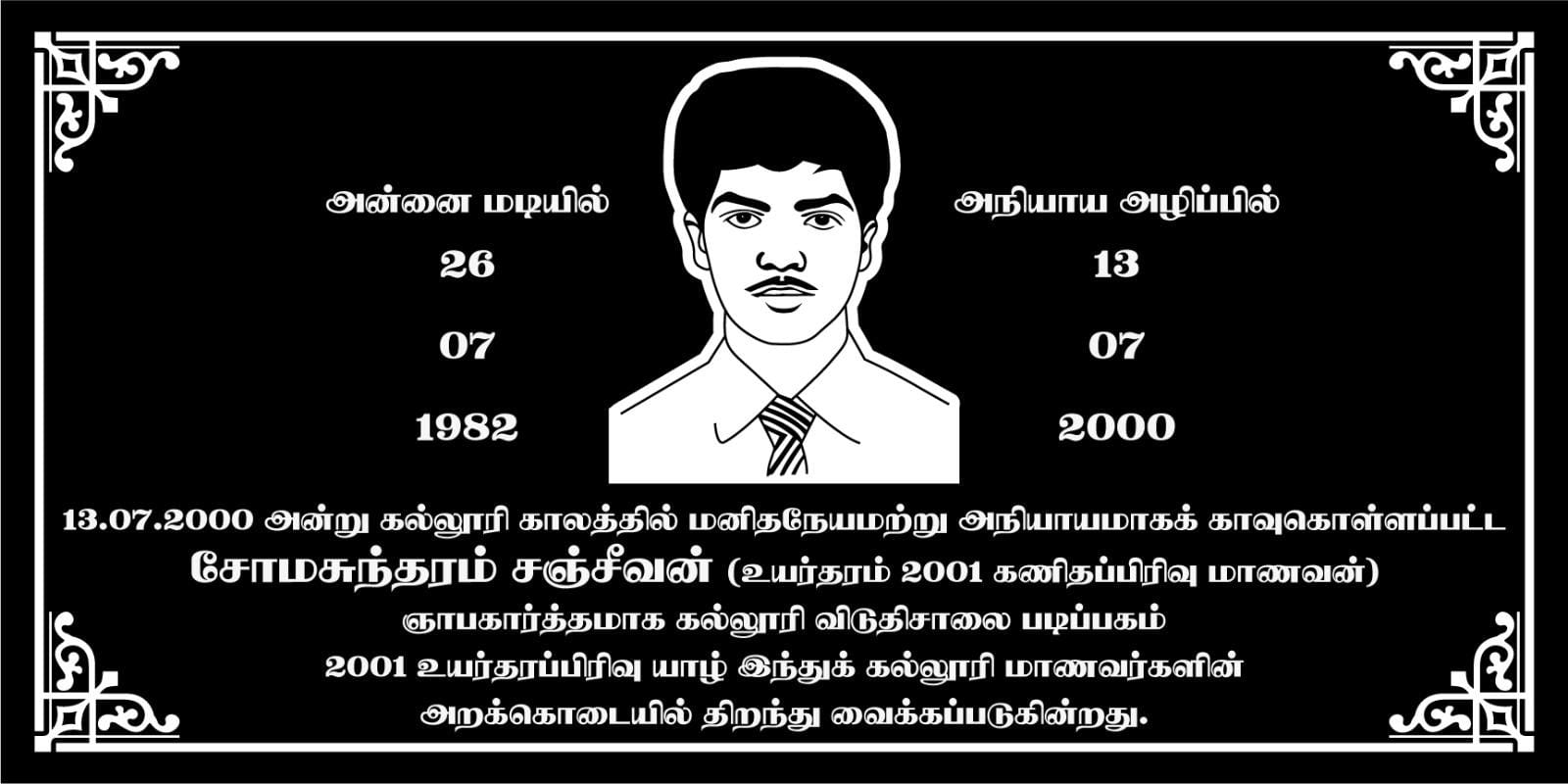
The facility, completed at a cost of 1.54 million rupees, has been dedicated to S. Sanjeevan, a 17-year-old mathematics stream student who was killed on July 13, 2000, during one of the most militarised periods in Sri Lanka’s northern peninsula.
Rather than erect a monument, the alumni chose to build something functional: a structured learning space for boarding students preparing for national examinations. “We wanted something that would continue to serve,” one former student said after the handover ceremony. “He was one of us. This is our way of remembering him.”
A Death in a Time of Suspicion
Born on July 26, 1982, Sanjeevan was remembered by peers as disciplined, physically active, and academically focused. He was preparing for his Advanced Level examinations when he was killed.
According to accounts from his family and former classmates, he was assaulted and later shot dead by members of a Sri Lankan Army Special Field Bike unit who suspected him of links to the Liberation Tigers of Tamil Eelam (LTTE).
Those close to him have consistently denied that he had any involvement with the LTTE. They say suspicion may have arisen from his muscular build — he regularly attended a local gym — and the gym belt he was wearing that day.
His death occurred during intense military operations across the Jaffna Peninsula, when extrajudicial killings and enforced disappearances were widely documented by domestic and international human rights organisations.
More than 25 years later, no prosecutions have been reported in connection with his killing.
Loss Within a Larger Conflict
For Sanjeevan’s family, the tragedy was not isolated. An elder brother had also been killed during the late 1980s, when the Indian Peace Keeping Force (IPKF) was deployed in Sri Lanka — reportedly as a result of shelling at a time when he was still a child.
With Sanjeevan’s death, the family lost both of its sons; only two younger sisters remained.
Among his peers, the killing reverberated deeply. Former students say incidents of this nature contributed to a growing climate of anger and alienation among Tamil youth during the final decade of the war.
The civil conflict, which lasted nearly three decades and ended in 2009, claimed tens of thousands of lives. Many wartime killings in the Northern Province remain unresolved, and accountability for abuses continues to be a central demand of Tamil political representatives and international human rights bodies.
Memory as Institution
In post-war Sri Lanka, memorialisation often carries political weight. At Jaffna Hindu College, however, remembrance took a quieter form. The study hall — modest in design but practical in purpose — will provide hostel students with a supervised academic space, particularly valuable in a school where many students from rural areas of the Northern Province, as well as a small number from the hill country, reside in the hostel to pursue their education. In doing so, it affirms a belief held by many in the region: that education is the only weapon that remains — not as a sign of defeat, but as a deliberate choice of progress over violence.