

JVP Government to Repeal Prevention of Terrorism Act, Says General Secretary Tilvin Silva

JVP Government to Repeal Prevention of Terrorism Act, Says General Secretary Tilvin Silva


Share this post

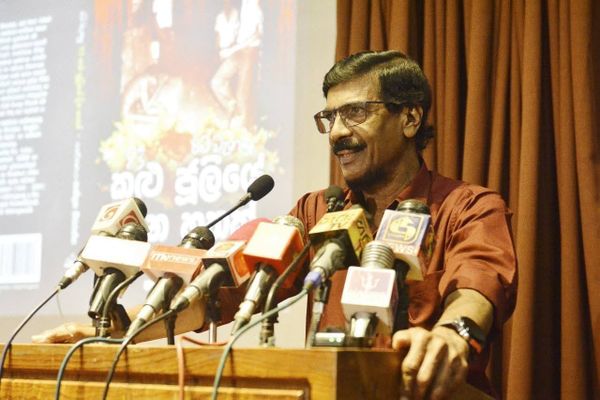
The General Secretary of the Janatha Vimukthi Peramuna (JVP), Tilvin Silva, has announced that the government has begun the process of repealing the Prevention of Terrorism Act (PTA), a controversial law that has been in force since 1979.

Speaking at a recent discussion held at the Mahaweli Centre in Colombo, Silva also characterized the 1983 Black July pogrom as a calculated political move by then-President J.R. Jayewardene to construct an authoritarian state through the mobilization of Sinhala nationalism and the repression of Tamils.

The event centered around the investigative book "Seven Days That Shook the Nation — Black July 1983," written by Nandana Weeraratne and translated into Tamil by Manoranjan.

Personal Impact and Historical Context

Silva recounted his personal experience during the 1983 violence, when he served as the full-time organizer of the JVP in the Kalutara-Beruwala district.

"After the riots, our party was banned, and we were forced to carry out political activities underground," he recalled.

The JVP leader argued that the pogrom and the government's subsequent actions were designed to suppress both the Tamil people and the political left, clearing the path for a highly centralized presidential system.

"J.R. Jayewardene wanted to establish an authoritarian regime. To achieve this, he unleashed repression against Tamils and promoted Sinhala nationalism," Silva said.

He linked these events to the presidential system introduced under the 1978 Constitution, which concentrated enormous power in the executive branch.

Rejecting Historical Narratives

Silva strongly rejected claims that the JVP had organized the 1983 riots, calling such assertions false propaganda used to justify further state repression.

"It was falsely propagated that the 1983 riots were organized by the JVP. But the truth is, we were deeply affected by those riots. Because of J.R. Jayewardene's lust for power, not just the North and East, but the entire country — including the South — paid a heavy price," he said.

Commitment to Tamil Community

Concluding his remarks, Silva pledged that the JVP would not betray the trust of the Tamil people, who he described as fellow victims of state oppression.

"We will never betray the trust placed in us by the Tamil people," Silva declared.

The Prevention of Terrorism Act (PTA) has been widely condemned by human rights organizations and the international community for enabling arbitrary detention and torture. Its repeal has been a longstanding demand of Tamil and civil society groups in Sri Lanka. The JVP-led National People’s Power (NPP) government, in its election manifesto, pledged to repeal the law immediately upon assuming office. However, even after a year in power, no concrete action has been taken so far.


Share this post

Be the first to know

Join our community and get notified about upcoming stories

Subscribing...
You've been subscribed!
Something went wrong
Why Tamil Politics Cannot Be a Pensioner's Hobby
A cut-out portrait of Judge M. Ilancheliyan from his farewell ceremony.

Why Tamil Politics Cannot Be a Pensioner's Hobby

If you trace the arc of Tamil political leadership from Independence to today, one pattern repeats with stubborn persistence: our fate has been decided almost exclusively by lawyers. From Sir Ponnambalam Ramanathan and G.G. Ponnambalam to Thanthai Chelva and Amirthalingam, and now to Sumanthiran and Gajendrakumar—the legal profession has monopolized Tamil political space for more than a century. Nothing personal against lawyers. But their craft is built on argument, narrative construction, and


Kaniyan Pungundran

Kaniyan Pungundran

Jaffna Swami
Picture produced using GPT-4 https://chat.openai.com

Jaffna Swami

Translated from the original Tamil short story yāḻppānaccāmi  (யாழ்ப்பாணச் சாமி)  by Shobasakthi. The original story is available at his website. If you have any questions or feedback, please contact ez.iniyavan@gmail.com. This story is not about the Aruḷampalam Swami who was immortalized in song by the great Tamil poet Bharathiyār, calling him the eye of the world and the enlightened vessel that delivers sinners from their suffering. I am about to tell you the story of a different Jaffna Swami


Eḻuttukkiṉiyavaṉ

Eḻuttukkiṉiyavaṉ

WE ARE SORRY

WE ARE SORRY

Editorial Thirty-Five Years of Silence, Thirty-Five Years of Shame On October 30, 1990 — thirty-five years ago — the Liberation Tigers of Tamil Eelam, with we Tamils as mute spectators, committed an atrocity that erased whatever moral or ethical ground our struggle once stood upon. In an orchestrated act of ethnic cleansing — not in scale, but in spirit comparable to the mass expulsion of the Rohingya from Myanmar; reminiscent of the 1948 Palestinian Nakba; echoing the forced displacement of


Kaniyan Pungundran

Kaniyan Pungundran

No Minority Politician Can Solve Ethnic Issues Without the Trust of the Majority: Faiszer Musthapha
Faiszer Musthapha

No Minority Politician Can Solve Ethnic Issues Without the Trust of the Majority: Faiszer Musthapha

At Jaffna Monitor, we believe that meaningful conversations about ethnic representation, national unity, and pluralistic governance are essential for Sri Lanka’s democratic future. For decades, ethnic politics has shaped — and often fractured — the country’s political landscape and the fate of its people. Yet critical questions remain unanswered: What is the most effective path for minority communities to secure their rights and interests? Should minority leaders work within majority-led nationa


Jaffna Monitor

Jaffna Monitor